The permit is for the activity, not the creature
A government permit for a “Bigfoot hunt” does not mean officials recognize Bigfoot as a real or legally huntable animal. In places where hunters need paperwork or must pay a fee, the requirement usually applies to what they plan to do: enter managed land, hunt regulated wildlife, camp overnight, set equipment, or carry out another controlled activity.
That distinction matters because land agencies and wildlife departments manage access and conduct whether or not a visitor’s target exists. A person searching for Bigfoot may still have to follow the same rules as anyone else using the forest.
Why a search can trigger ordinary rules
Rules vary by location and by the details of a trip. Public land may have limits on access, vehicle use, fires, or overnight stays. Hunting regulations may govern weapons, seasons, and the animals that can legally be taken. A search that involves cameras or listening for sounds may require no hunting license at all, while a trip involving firearms or traps can raise separate legal issues.
Calling an outing a Bigfoot hunt does not override those rules. Nor does buying a permit establish that the creature exists; it authorizes a specific use of land or activity under the applicable regulations.
Paperwork can turn folklore into a practical question
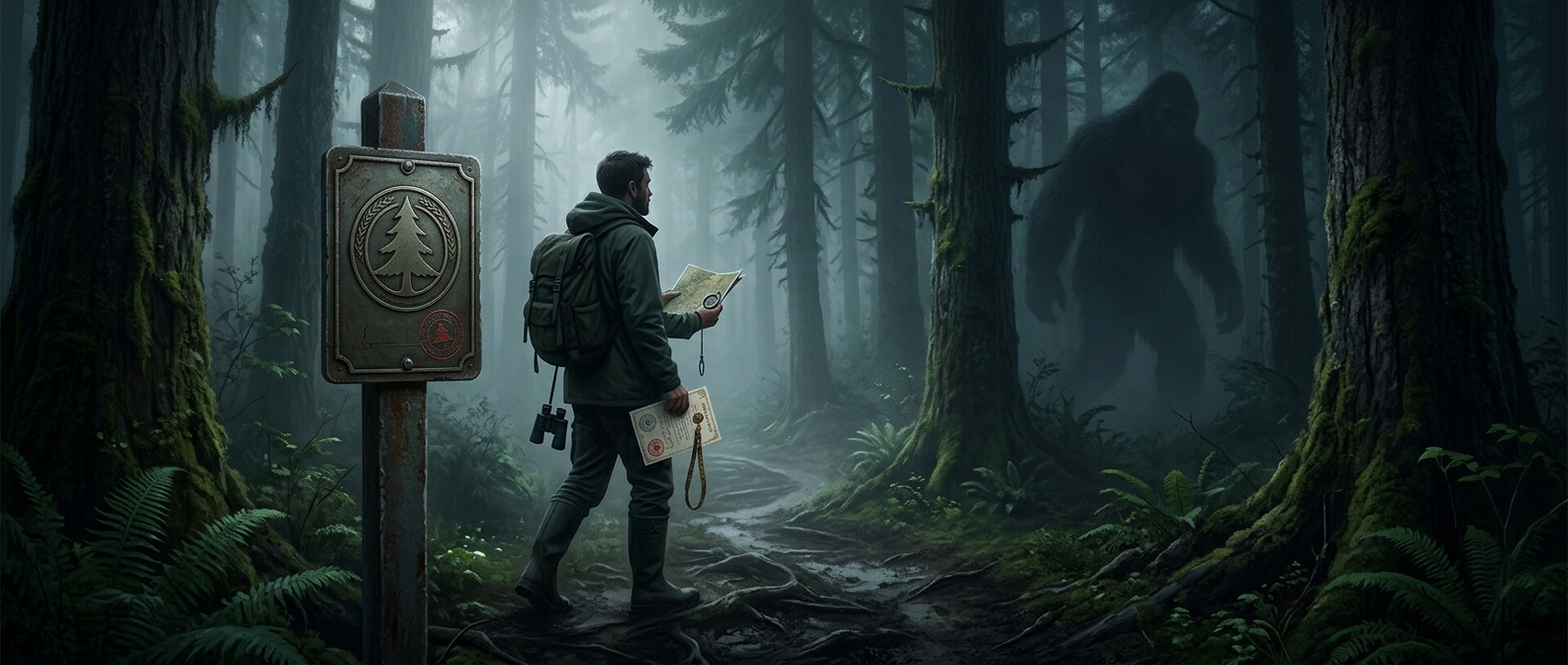
The surprising part is how quickly a legendary pursuit meets ordinary administration: before heading into the woods, a would-be hunter may need to ask not whether Bigfoot is on an official list, but what the land allows and which rules apply to the planned search. The permit governs the human visitor, not the mystery being pursued.