Why Harpies Took Food
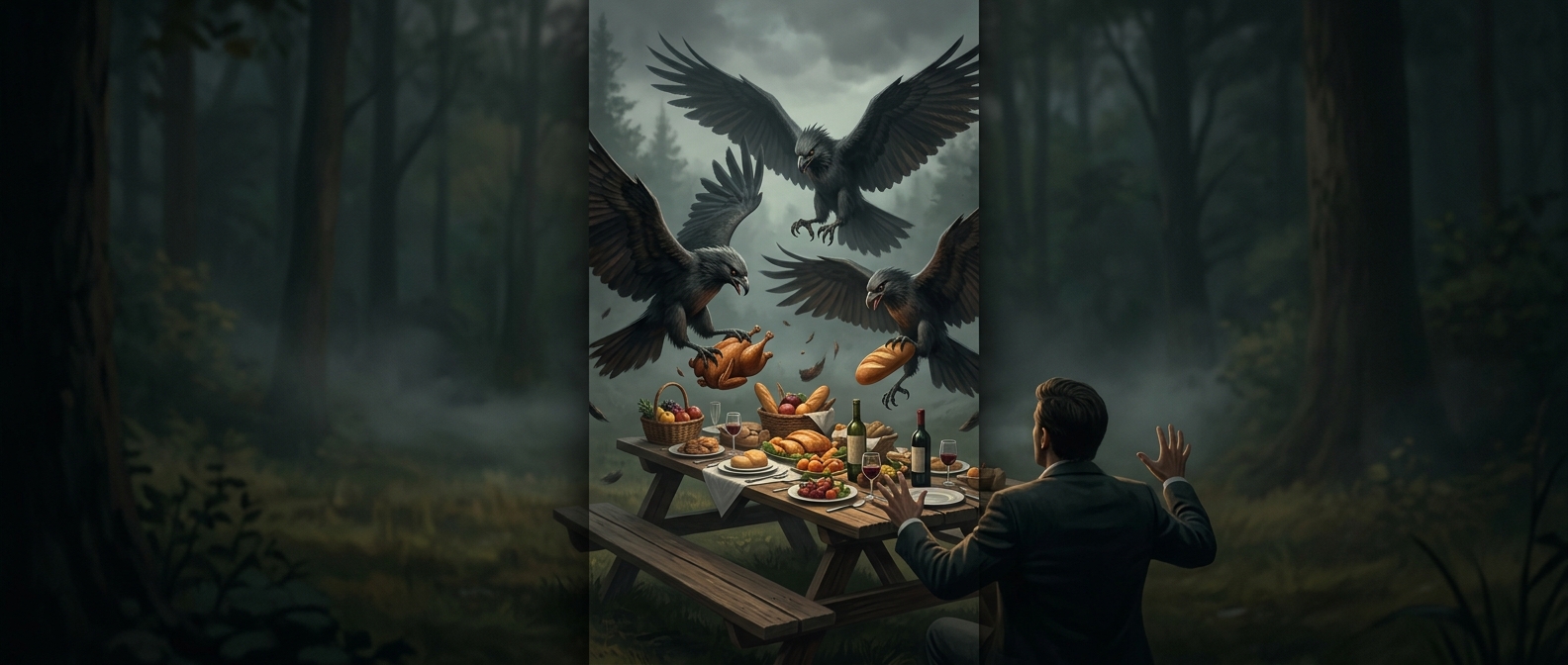
In Greek myth, a harpy’s theft was more than a nuisance: it could make a meal impossible to eat. The creatures were imagined as swooping in, snatching or fouling food, and vanishing before anyone could stop them. That made them a vivid way to picture hunger and helplessness imposed from outside.
A Punishment That Could Not Be Escaped
One famous story centers on Phineus, a king who had been given the gift of prophecy. As punishment, harpies repeatedly descended on his food. They either carried it away or left it filthy and inedible, so that even a feast could not sustain him. The torment was especially cruel because the food was always near, yet never reliably available.
The story also gives the theft a narrative purpose: it creates a problem for heroes to solve. In the Argonauts’ voyage, the winged sons of Boreas—personifications of the North Wind—drive the harpies away and free Phineus from the recurring attack.
From Monsters to Metaphor
Harpies later became a broad image of greedy, grasping figures. Their memorable trait was not simply that they had wings, but that they could swoop into a place of security and take what people depended on. A picnic-table thief is a small, familiar echo of that old image: food laid out in the open, then suddenly seized by an opportunistic intruder.