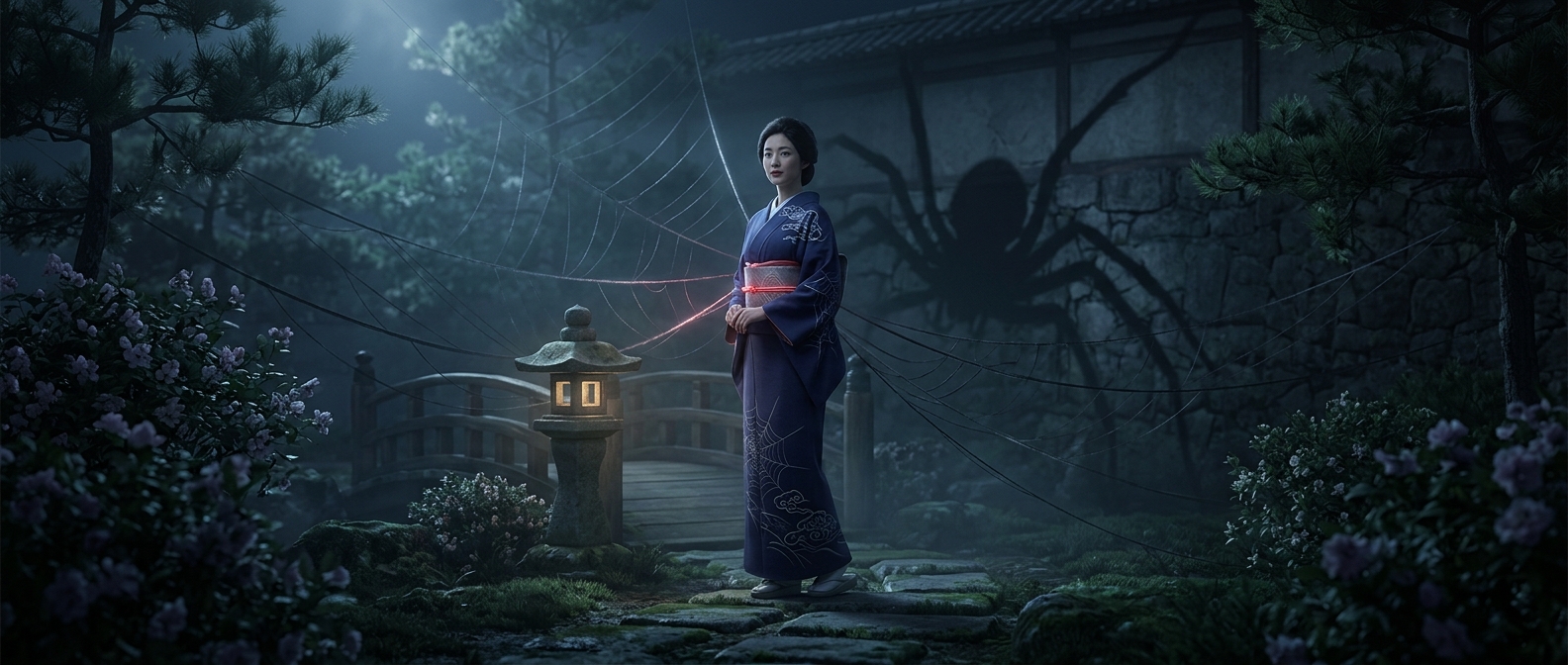
A spider’s age becomes a measure of danger
In this Japanese legend, four centuries of life mark a turning point: the spider is no longer merely an animal but a being able to take human form. The beautiful woman is not a separate character hiding a spider; she is the spider’s disguise, a way for a dangerous creature to move through the human world unnoticed.
Music makes the trap feel voluntary
The lute gives the encounter its first hook. Rather than attacking openly, the spider draws men toward an isolated hut by offering something they want to hear. The setting matters: away from other people, the visitor has fewer chances to recognize the danger or escape it. Silk then turns the apparent invitation into physical capture.
That sequence—attraction, isolation, entanglement—makes the tale more than a story about a monster’s strange appearance. It turns familiar signs of charm and entertainment into warnings about trusting what seems inviting when the circumstances are suspicious. The spider’s human beauty is effective precisely because it conceals the creature’s ability to bind its prey.