The Monster in St. Columba’s Story
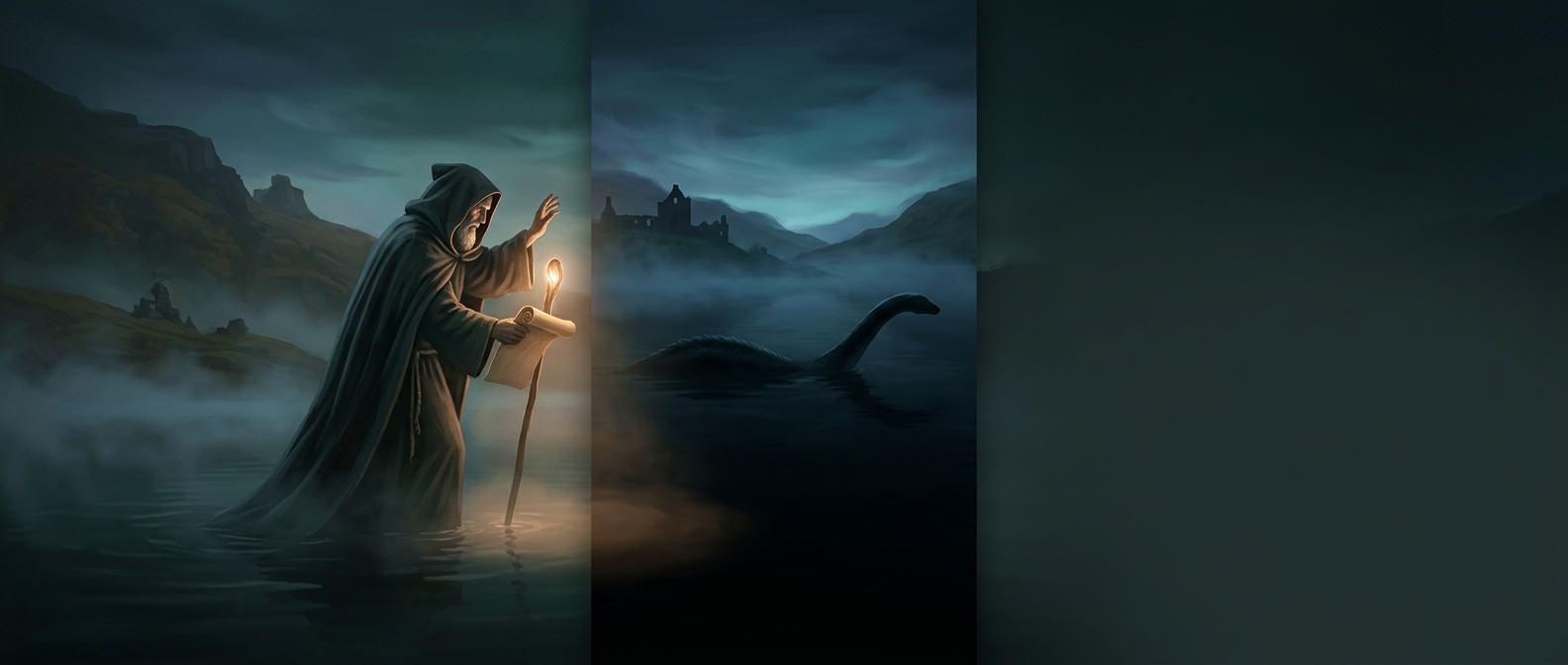
The oldest famous written account linked to the Loch Ness monster appears in The Life of St. Columba, a biography written by the Irish monk Adomnán in the late seventh century. It places the incident in the sixth century, when Columba was traveling among the Picts, a people who lived in what is now Scotland.
In the tale, a man swimming in the River Ness is attacked by a “water beast.” Columba orders one of his companions to swim to the rescue. As the creature rushes toward them, the saint makes the sign of the cross and commands it to retreat. The beast turns back into the water, and the man is saved.
A River Tale Became Part of a Lake Legend
The episode is set in the River Ness, which flows from Loch Ness—not in the lake itself. Over time, it became part of the wider lore surrounding the loch and its mysterious creature. The story is evidence that a water-monster tale was being told in the region’s religious tradition; it does not establish that a real animal was seen.
Adomnán’s account also serves a religious purpose: it presents Columba as a holy man whose authority could protect people from danger. That makes the episode more than an early monster anecdote. It shows how the legend’s oldest famous written chapter tied the fear of a dangerous river to a story of spiritual power.