How a small silhouette became a monster
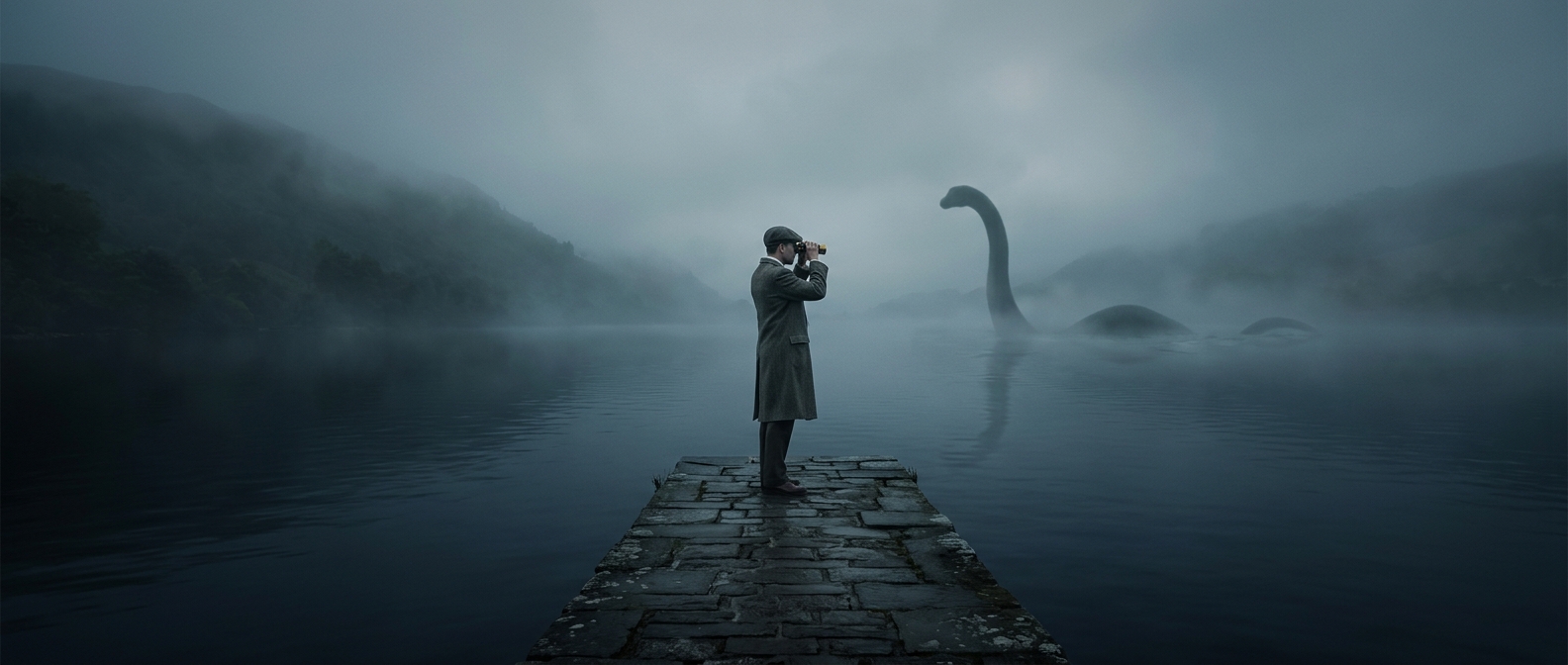
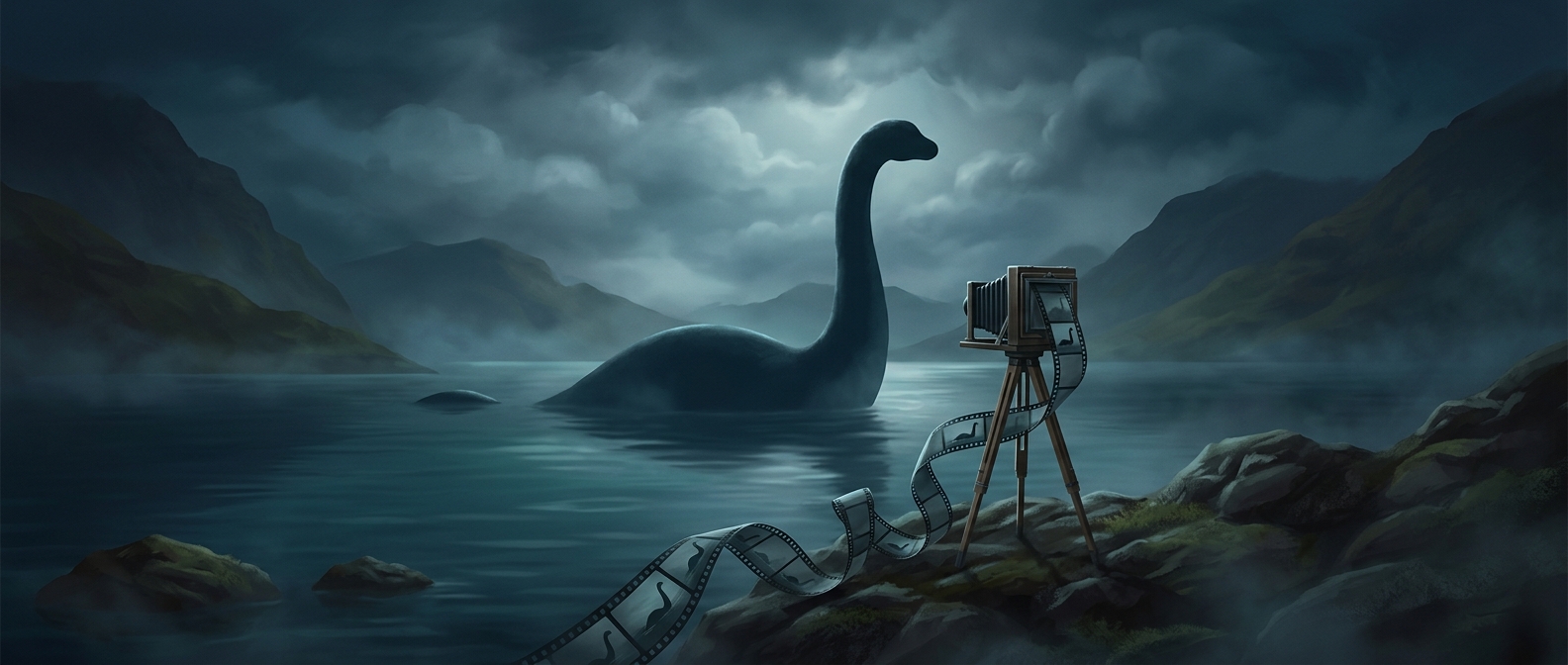
The famous 1934 image, later dubbed the “Surgeon’s Photograph,” showed a dark shape rising from the water with what looked like a long neck and head. Its low detail did important work: without a clear shoreline or other reliable scale cue, viewers could not easily tell how large the object was or how far away it sat. The picture invited people to supply the missing detail—and the monster story supplied a ready-made answer.
A photograph suited to newspaper circulation
The image spread through newspapers at a time when a photograph could make a reported sighting feel like direct evidence. Its stark outline was easy to reproduce and recognize, even when printed poorly. Each retelling reinforced the same impression: someone had captured the elusive creature on camera. The photo did not prove what the shape was, but its apparent visual certainty helped turn Loch Ness sightings into a lasting public sensation.
The scale was the trick
Decades later, the people behind the deception revealed that the object was a toy submarine fitted with a modeled head and neck. In water, photographed from a low angle, a small object could look like a distant animal; the image offered little to expose the mismatch in scale. Once the construction was known, the photograph became evidence not of a monster but of how framing and ambiguity can make an ordinary object seem extraordinary. The image remains famous partly because the deception was so compact: a toy, a camera, and enough open water to hide the scale.