The Beast That Could Not Look Up
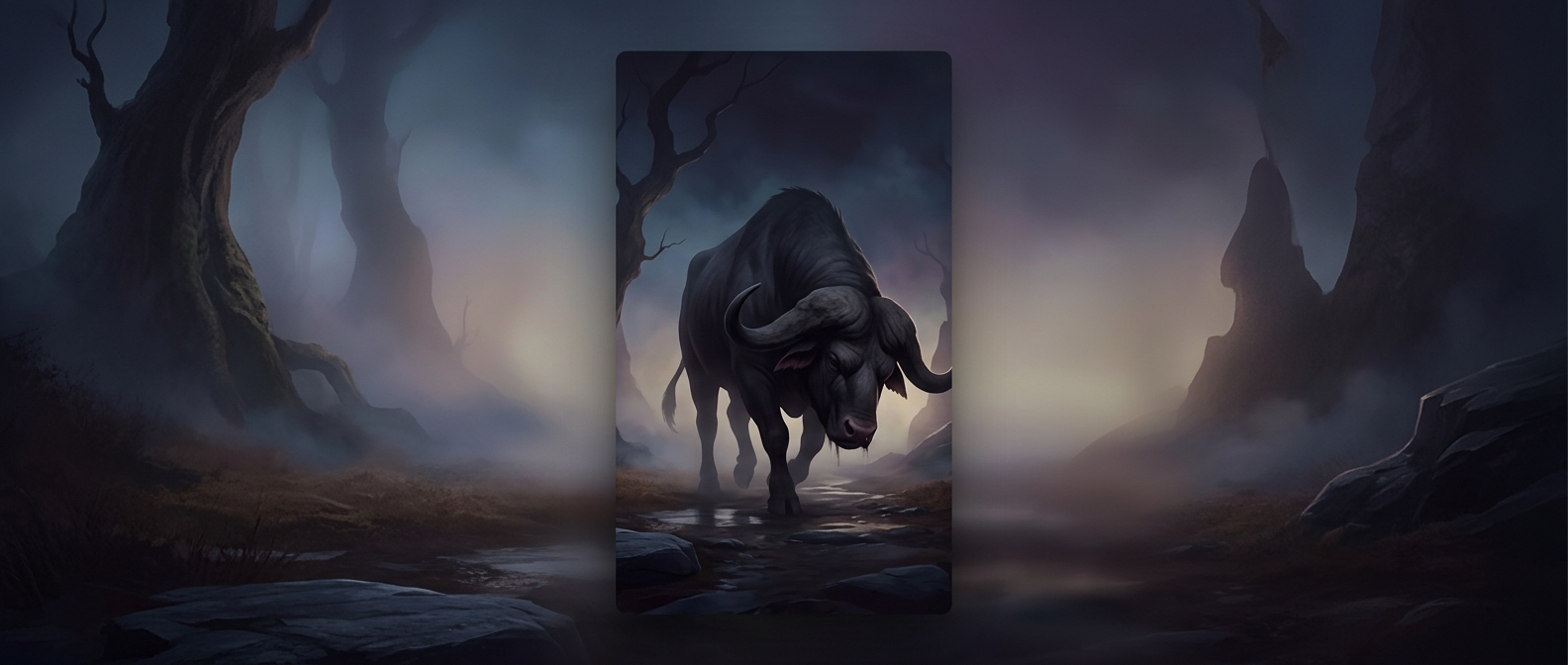
The catoblepas—its name comes from a Greek word meaning “looking downward”—was imagined as a creature whose own body kept its gaze fixed on the ground. In Pliny the Elder’s account, it had a buffalo-like form and an enormous, heavy head. The posture was not merely strange: it set up the story’s central danger. Anyone who drew in the beast’s breath was said to die.
A Marvel at the Edge of the Known World
Pliny placed the creature in Africa, near the headwaters of the Nile. To readers of ancient natural-history writing, such a location could lend a marvel the feel of a report from a distant landscape. Works of this kind gathered observations about animals alongside travelers’ accounts and extraordinary claims; the boundary between natural description and wonder was not drawn as it is in modern biology.
The catoblepas’s lowered head also made the threat part of its appearance. It did not need to chase a victim or strike with claws: the danger was an invisible cloud of breath, released close to the ground. That detail turned an awkward-looking animal into a creature people had to approach with care.
How the Image Endured
The catoblepas became a durable figure in later writing because its design is easy to grasp and hard to forget: a powerful body, a burden too heavy to lift, and a lethal presence that spreads through the air. Its story shows how an ancient account could make a distant place feel vivid by giving an unfamiliar animal one defining feature—and a consequence that followed from it.