When ordinary cloth becomes a night creature
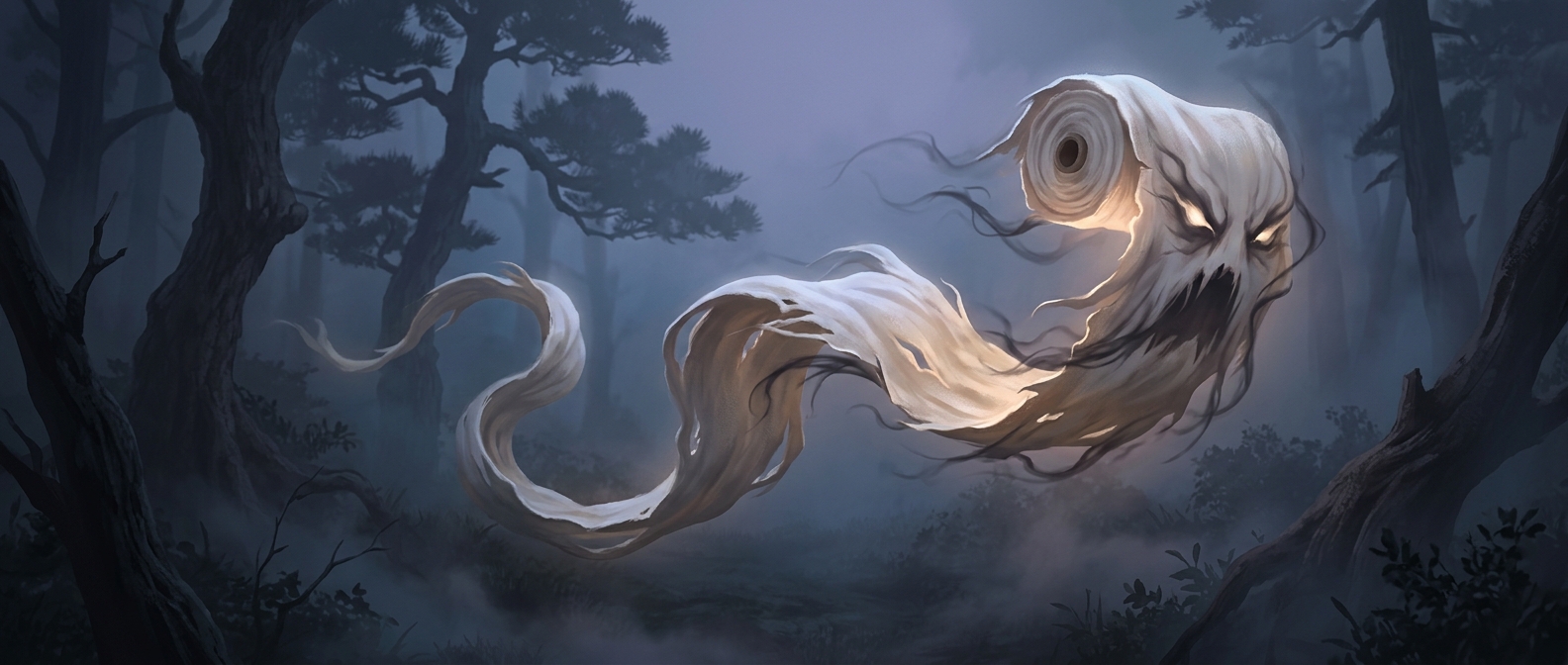
Ittan-momen belongs to the Japanese tradition of yōkai: uncanny beings that can emerge from familiar animals, objects, and places. Its name combines ittan, a traditional measure associated with a piece of cloth, and momen, cotton. The image is unsettling because the creature is not a beast wearing fabric; it is the fabric itself, moving with intention.
In the tale, a loose length of cotton becomes a sudden physical danger. It can swoop down and wind around a person’s face or neck, turning a soft, everyday material into something that can obstruct breathing. The threat depends on surprise and closeness, not on claws or teeth: a fluttering shape in the dark is already within reach before its purpose is clear.
The fear hidden in a familiar object
Stories like this make the household world feel less predictable. Cloth is normally folded, worn, or hung; it does not choose where to go. Giving it agency blurs that boundary, so an ordinary thing can become menacing without changing its appearance. The encounter also has a practical tension: a person caught in wrapping fabric cannot easily see or move, and struggling may tighten the hold.
Ittan-momen is especially associated with folklore from Kagoshima in southern Japan. Its memorable image carries the story’s whole mechanism: a strip of cotton leaves its expected place and turns the darkness itself into an ambush.