A Fallen Officer in a Pig’s Body
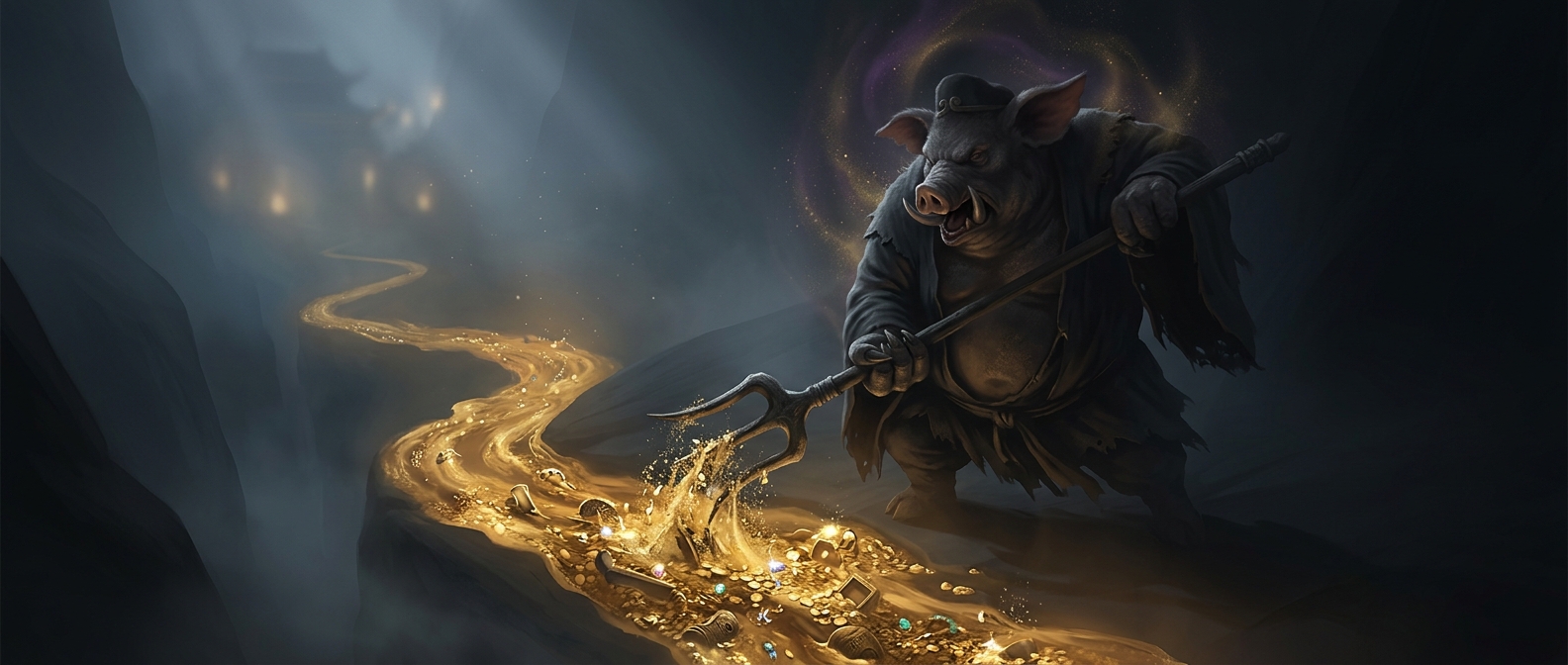
In Journey to the West, Zhu Bajie is more than a comic monster. He was once Marshal Tianpeng, a high-ranking commander in Heaven, before misconduct led to his banishment. A mistaken rebirth left him with a humanlike body and a pig’s face, placing a former celestial official among ordinary, hungry, easily tempted mortals.
That fall gives his appetites a point: Zhu Bajie carries traces of grandeur, but now struggles with the very ordinary pull of food, sleep, and comfort. His nine-toothed rake makes him look formidable; his wavering commitment makes him funny.
The Pilgrimage Tests His Better Side
Zhu Bajie joins the monk Tang Sanzang’s journey west and serves as a foil to the more disciplined Monkey King. A foil is a character whose contrasting traits make another character’s qualities easier to see. Monkey is quick and forceful; Bajie is often sluggish, grumbling, or distracted by a meal. Their friction turns the group’s dangers into comedy as well as adventure.
But Bajie is not simply useless or evil. He can fight, and he continues traveling with the others despite his recurring desire to quit. The tension between his selfish impulses and his role in a sacred mission keeps him recognizable: he wants the reward without always wanting the effort.
The Joke Is Also the Character
Bajie’s pig form and appetite make temptation visible, while his former rank hints at what he might have been. His story repeatedly brings lofty spiritual ambition down to earth—not by denying its importance, but by showing how difficult discipline can be when comfort is close at hand. That is why the rake matters less as a weapon than as a contrast: a grand-looking tool in the hands of a hero who may stop for a nap.