A Beast Built from Travelers’ Reports
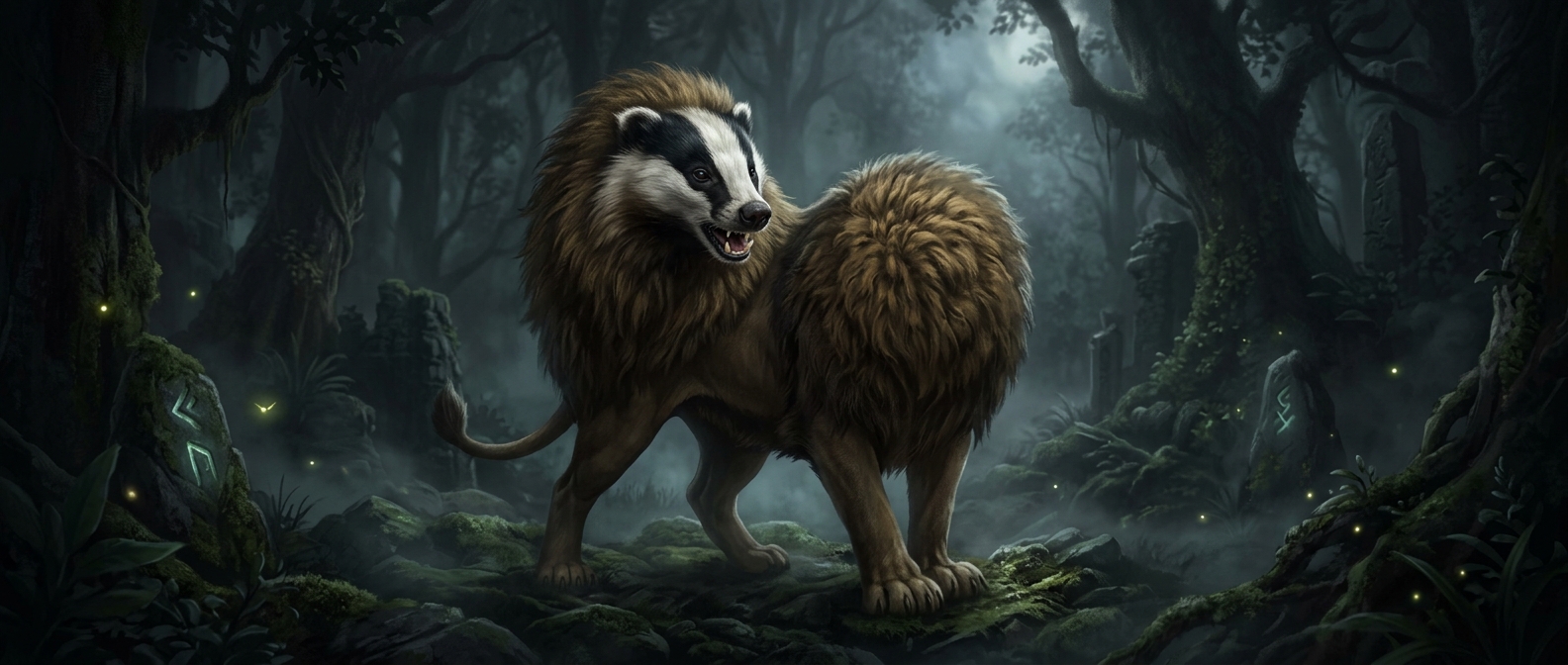
The leucrotta belongs to the old tradition of marvelous animals: creatures described in ancient natural-history writing as though they might inhabit distant lands, but whose features mix observation, rumor, and invention. The Roman writer Pliny the Elder included it among animals said to come from Ethiopia. His account gives it an uncanny humanlike voice as well as its unusual mouth.
That setting mattered. To readers far from the regions being described, reports from distant places could be difficult to verify. A writer might preserve them alongside more familiar accounts, leaving the boundary between zoology and wonder unclear.
Why the Mouth Makes the Creature Stranger
The leucrotta’s mouth was said to open unusually wide, with a single hard ridge where ordinary teeth would be. That detail makes the animal more than a simple mash-up of familiar beasts: it gives the imagined creature a distinct, unsettling way of feeding. A continuous bony surface suggests crushing or grinding rather than biting with separate teeth, though the old description does not explain its diet or anatomy in modern biological terms.
The feature also illustrates how legendary animals were made memorable. A recognizable body could anchor the description; one startling departure from ordinary anatomy gave listeners a reason to remember it. The leucrotta’s supposed mouth turns a collection of mismatched animal parts into a creature with its own particular menace.