Why a Bigfoot Suit Can Look Convincing on Film
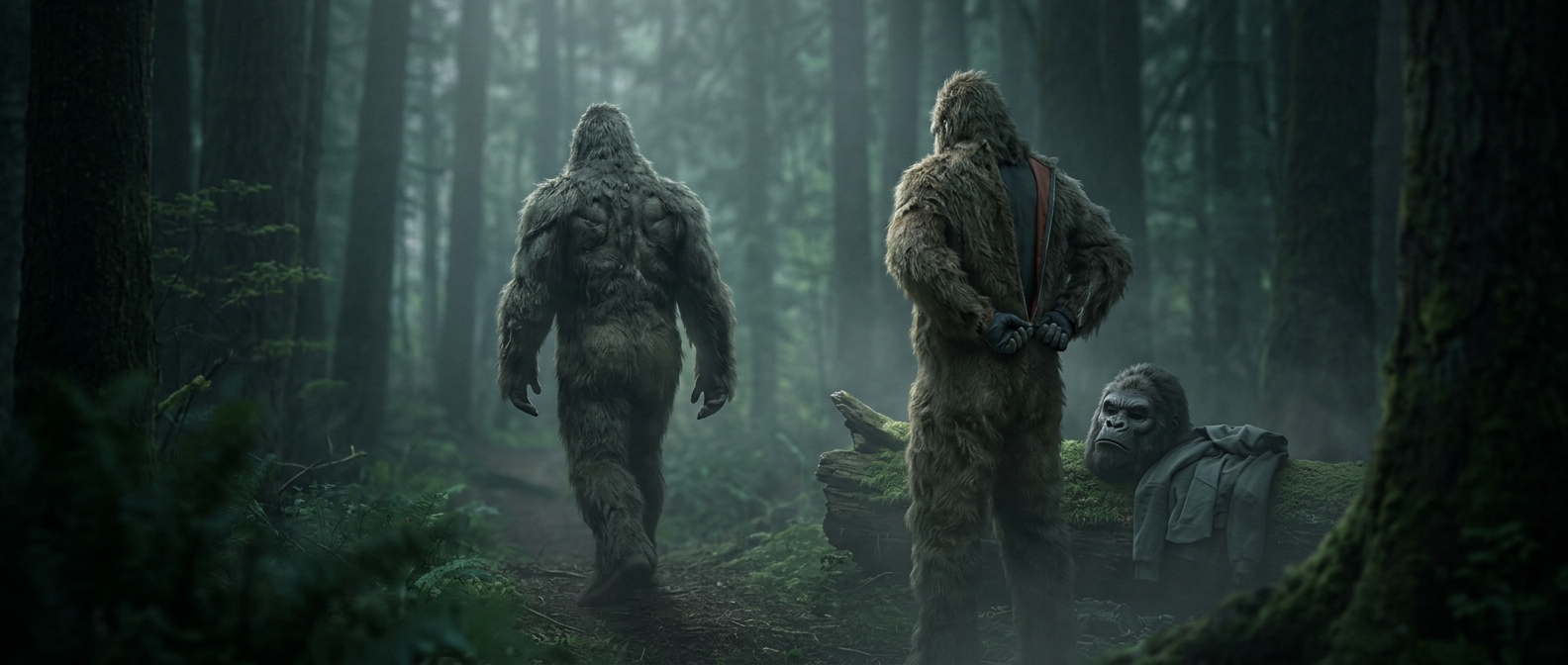
A bulky costume changes more than a person’s outline. Fur hides the joints and clothing seams that would normally give away a human body, while padding can make the shoulders, arms, and torso appear unusually massive. If the figure is filmed at a distance, those details blur together, leaving a simple impression: something large and hairy is walking through the trees.
That effect is strongest in grainy footage. Limited detail makes it hard to judge the figure’s proportions, see how the costume moves, or distinguish a bend in the fabric from the shape of a muscle. A viewer has to infer what the image cannot clearly show.
What the Clip Can—and Cannot—Establish
Skeptics interpret the famous forest clip as a person in a bulky gorilla-like suit. That explanation fits the visible setup: a human-sized figure moving across a wooded area, with the costume’s fur and padded shape doing much of the work. But the footage itself does not show a costume being put on or identify the person inside it. The suit interpretation is a claim about what is behind the image, not something the image independently proves.
That distinction helps explain why the clip has remained disputed. Its striking appearance invites viewers to treat the figure as evidence, but its blur conceals the very details that could settle the question. A costume can make a person look extraordinary; grainy film can make it difficult to tell where the costume ends and the evidence begins.