How an owl can look monstrous at night
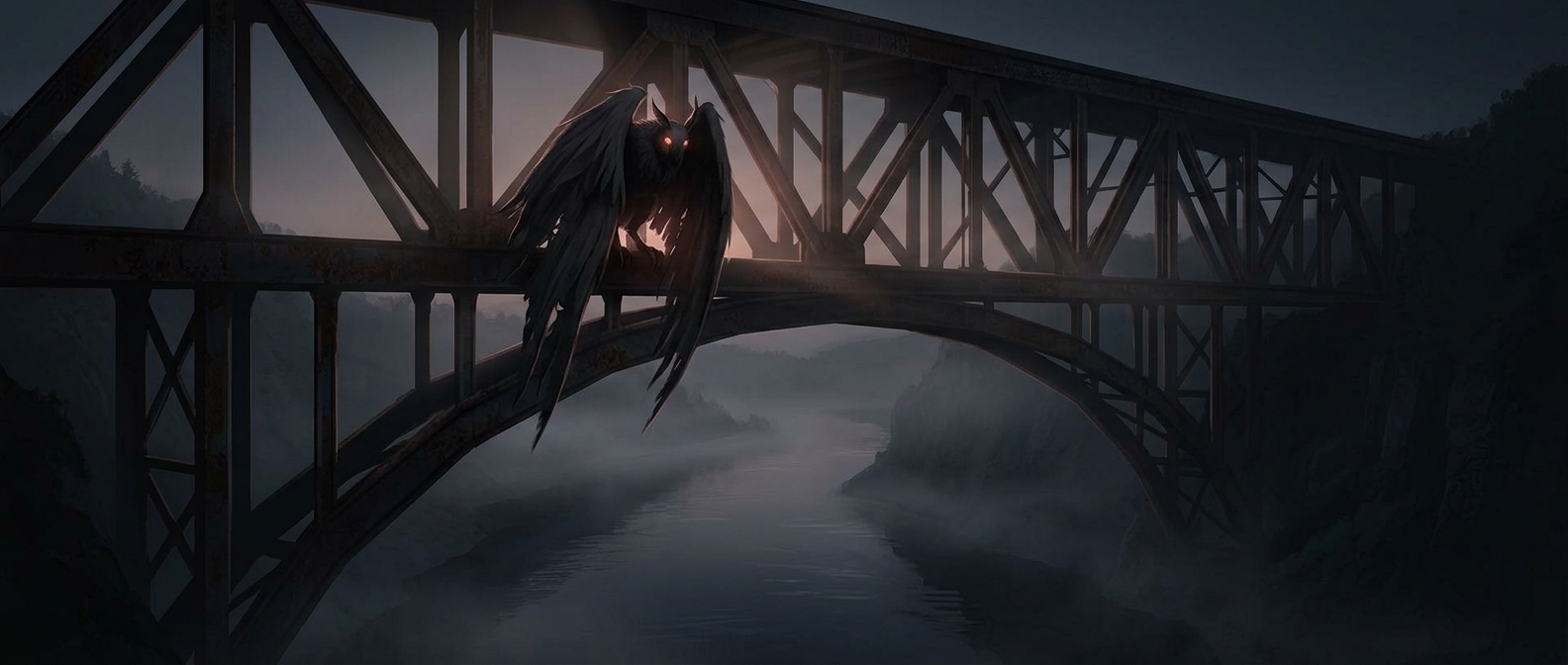
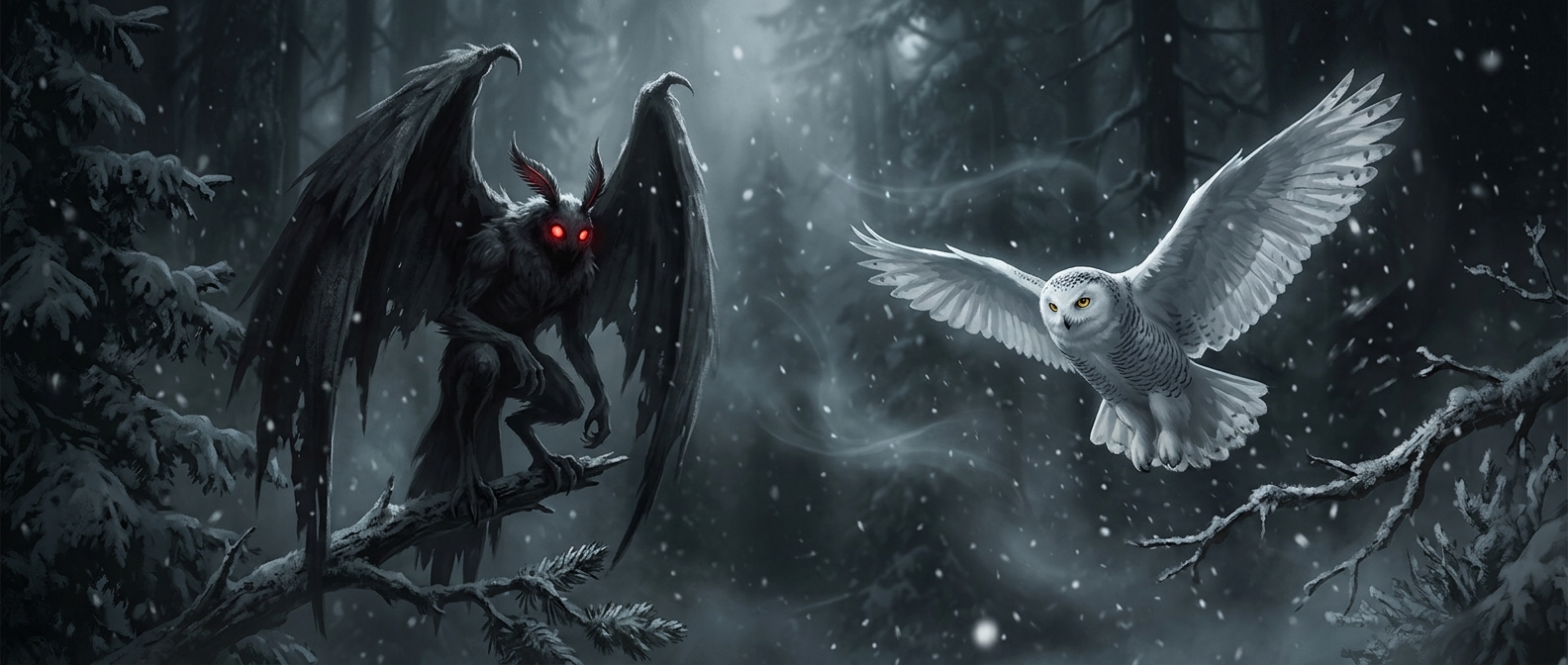
On a dark rural road, a bird appearing suddenly in a headlight beam can be hard to identify. Snowy owls are large, pale birds with broad wings; when one flies low across a road or perches near it, its shape can seem unusually large and unfamiliar. Light reflected from an animal’s eyes can also make them flash brightly, while darkness hides the details that would identify the bird.
That combination offers one possible natural explanation for some Mothman reports in West Virginia: a witness may have seen a real animal but misread it in a startling moment. It does not establish that every account had the same cause.
Why the road matters
A driver has little time to inspect something encountered at night. Headlights illuminate only part of the scene, and motion can blur the bird’s outline. If the owl crosses overhead, its wide wings may briefly fill the field of view; if it is seen near the roadside, a sudden eye-shine can draw attention before the observer makes out its body.
The setting can shape the memory as much as the first glance. An unexpected encounter produces alarm, and a witness trying to describe an indistinct silhouette may reach for a creature-like comparison. Once a frightening interpretation circulates, later sightings can be understood through the same legend.
A plausible explanation, not a verdict
Snowy owls migrate, so their appearance in a place can be temporary rather than evidence of a local population. Their presence could make unusual bird encounters more likely during a particular period, but the owl explanation remains a proposal—not proof of what any individual witness saw.
The memorable detail is how little a nighttime sighting may contain: a flash of eyes, a span of wings, and a few seconds to decide what is crossing the road.