A knot gives the fingers something to do
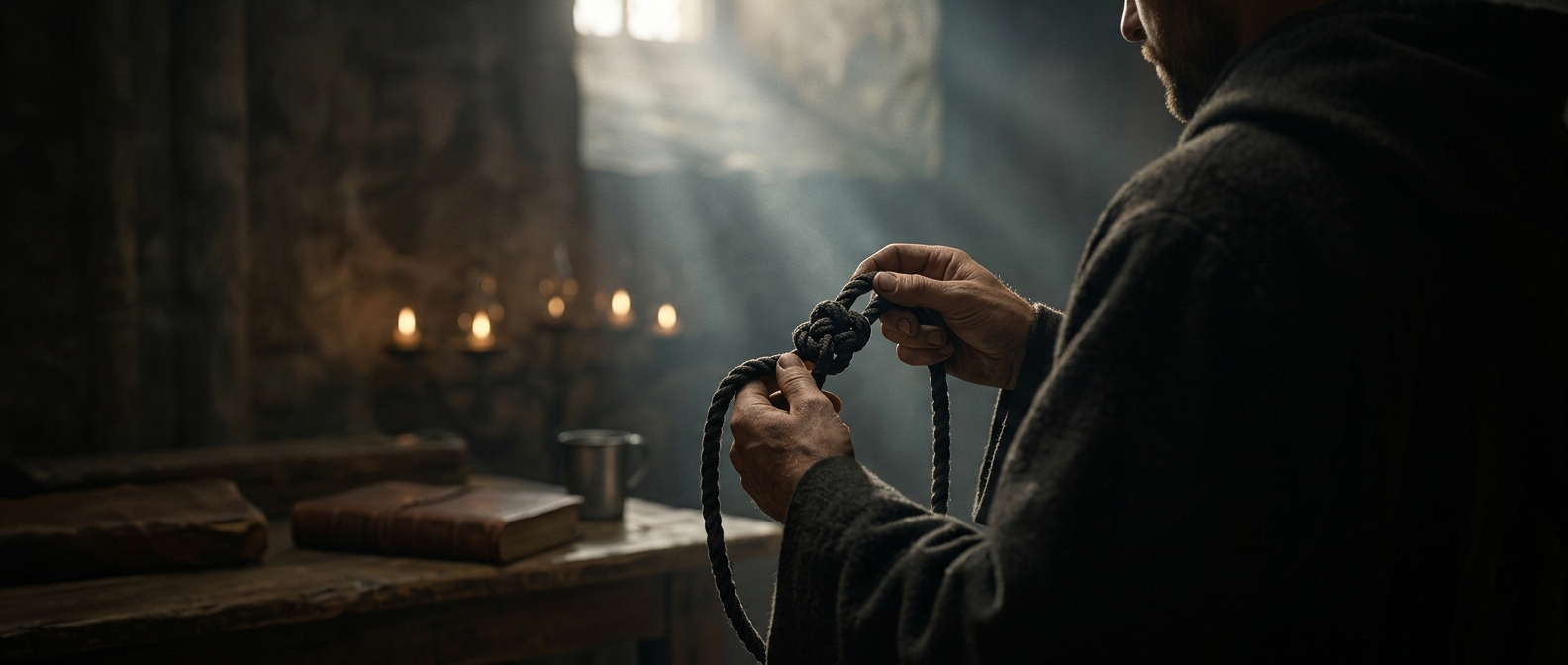
A devotional prayer rope turns repetition into a physical sequence. As a monk recites a brief prayer, the fingers move from knot to knot. That small, steady action offers a point of attention: when the mind wanders, the next knot is still there to find. The rope can also help keep count without requiring the person to watch a clock or repeatedly calculate how many prayers have been said.
The knots are often made from tightly interlaced cord rather than simple loops. Their dense texture makes each one distinct to the touch, so the rope can be used with the eyes lowered or closed. In this way, the object supports a practice of returning attention to the prayer, one repetition at a time.
Repetition is the practice, not a shortcut
Prayer ropes are used in some Christian monastic traditions, where repeated prayers can occupy long stretches of the day. Moving along the rope does not make the prayer automatic; it gives the body a quiet rhythm while the person tries to remain attentive. The hands follow a familiar path, leaving less need to keep track of each repetition mentally.
That is the practical force of the intricate knots: they make an otherwise invisible routine tangible. A prayer that might blur into an uncounted stream becomes a sequence the fingers can follow, knot by knot.