The front wheel moves beneath the falling frame
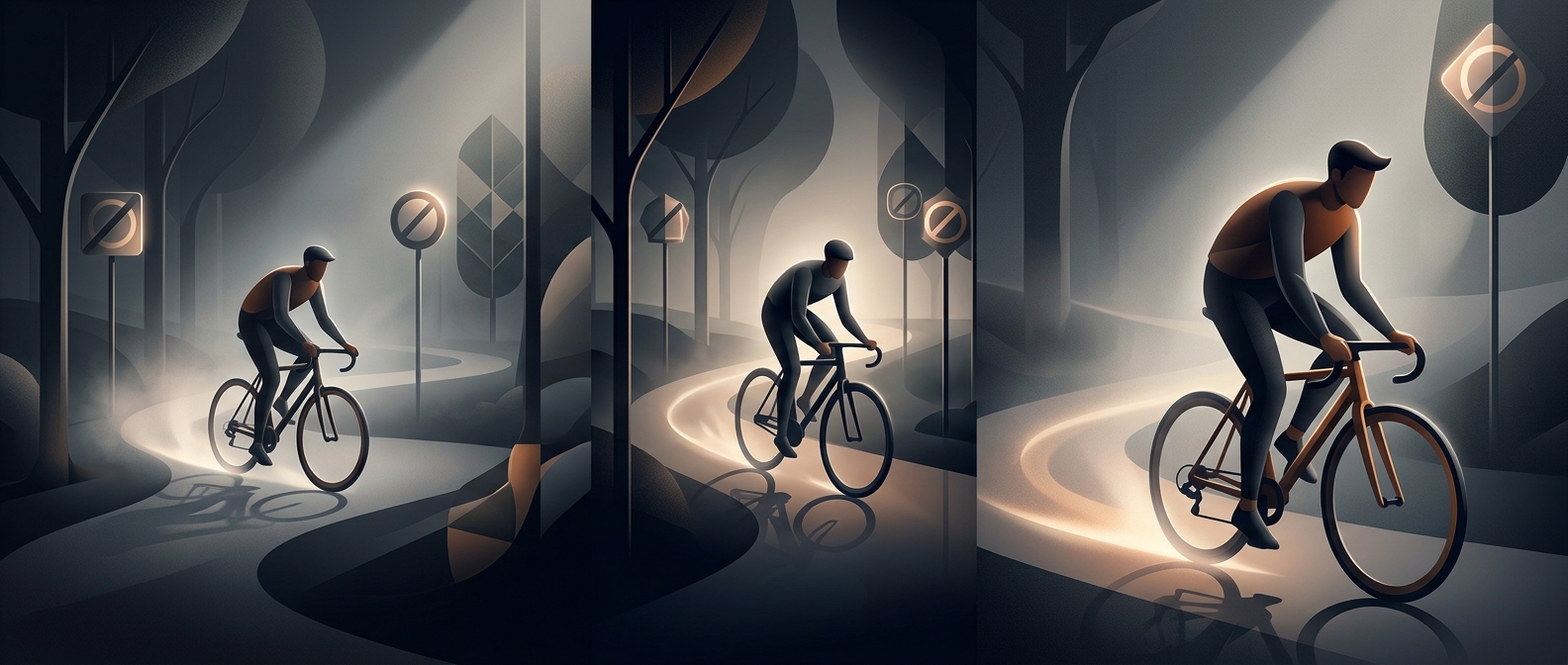
When a moving bicycle begins to lean, its front end can turn toward the side that is dropping. That steering bends the bicycle’s path into a curve, bringing the wheels back beneath the tilted frame instead of letting it topple straight over. The bicycle is, in effect, steering into its fall to recover its support.
A key part of that response comes from trail: the point where the front tire touches the ground sits behind the point where the steering axis meets the ground. As the bike rolls and moves forward, forces at the tire can create a steering torque—a twist that turns the handlebars. The exact response depends on the bike’s geometry, speed, and how its weight is distributed; it is not a single mechanism that works identically on every bicycle.
Motion gives the correction time to work
Steering changes the direction of travel, and that curved motion can help lift the bicycle back toward upright. The wheels’ spinning also contributes to the bike’s dynamics, but the familiar idea that gyroscopic force alone keeps a bicycle balanced is incomplete. Stability comes from interacting effects, including steering geometry, forward motion, and the placement of the bicycle’s mass.
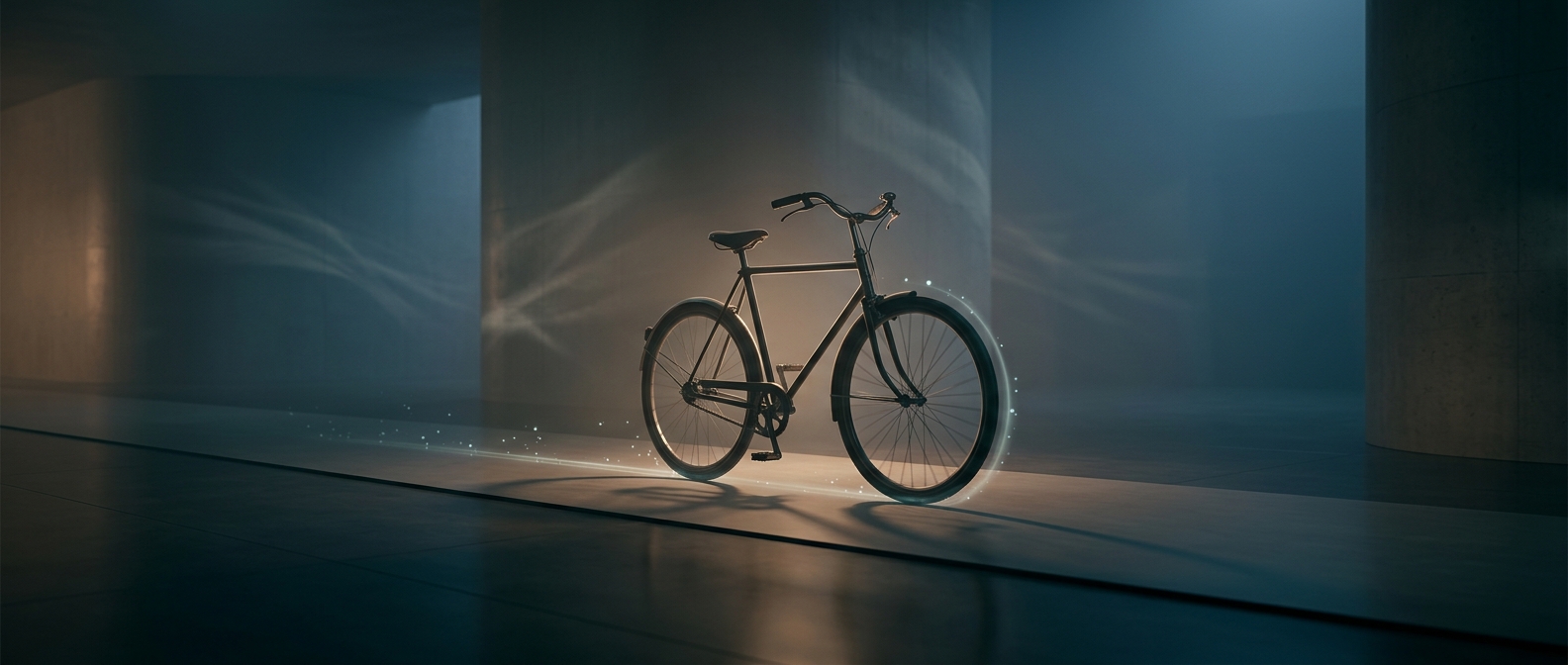
This is why a riderless bicycle can sometimes roll upright on its own—but not under every condition. It needs enough motion for steering to shape its path, and a particular combination of design and speed can make the self-correction effective. At very low speed, or after a large disturbance, the front wheel may not turn in time. A rider adds continual adjustments that can stabilize the bike across a wider range of situations.
The striking point is not that a bicycle never needs help, but that its moving parts can provide a useful correction before a rider touches the handlebars.