How a delay turns a moment into an echo
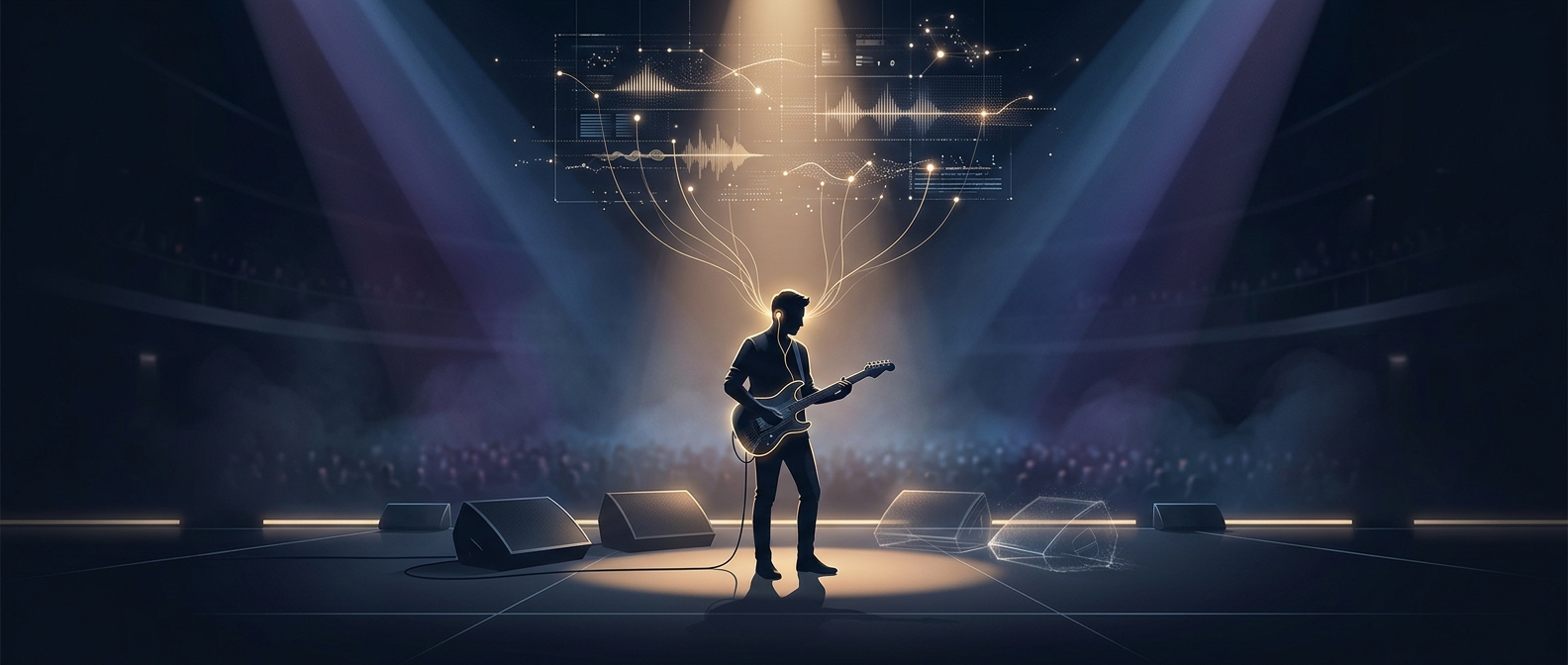
An audio delay works by briefly holding incoming sound instead of sending it straight to the output. In a digital device, that waiting room is a buffer: a small area of memory that stores samples—the tiny measurements used to represent a sound wave. Once the chosen time has passed, the device sends those samples out, so the listener hears the same performance again, shifted later.
The delay time determines the gap between the original and its repeat. A short gap can thicken a voice or instrument, while a longer one makes the repeat distinct enough to answer the original phrase. Set to match a song’s beat, repeats can become part of its rhythm rather than simply an after-effect.
Why the echoes fade
For a single repeat, the delayed signal is played once. To create a trail of echoes, a feedback control routes some of the delayed sound back into the buffer. Each pass produces another repeat. If only part of the sound is fed back, each echo is quieter than the last; more feedback keeps the trail going longer. At extreme settings, repeats can build up instead of fading, so the control also determines how much sound accumulates.
The repeats do not have to remain exact copies. Effects can alter the delayed signal’s tone or pitch, and the changing sound is then fed into later repeats. That lets an echo grow darker, wobblier, or more spacious over time.
A performance tool, not just an echo
Because the delayed sound is a separate copy, it can be mixed quietly beneath the original or brought forward as a clear rhythmic pattern. A musician can also change the delay time while the device is running, shifting the stored sound’s timing—and, on some designs, its pitch. The result can move from a neatly spaced echo to a sliding, unstable sound. The same basic act of holding and replaying audio therefore serves both as a way to add space and as an instrument for reshaping a performance.