The listener sets the schedule
Radio traditionally arrives on a station’s timetable: tune in while a show is airing, or miss it. A podcast turns that broadcast-style conversation into an episode a listener can choose and play later. Podcast apps may download episodes to a device or stream them, but either way the program is no longer tied to a live slot.
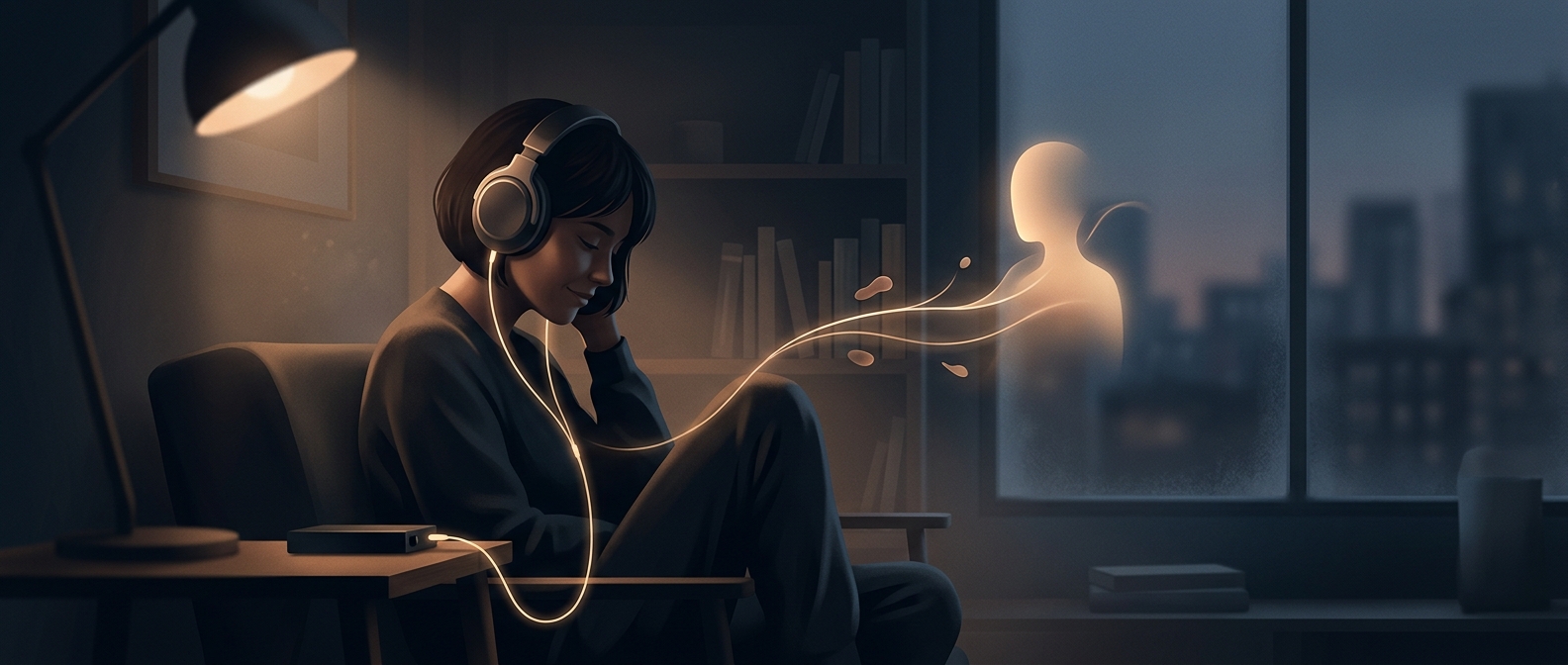
That small change reshapes the listening experience. A conversation can stretch past the length of a tightly scheduled radio segment, and listeners can pause, rewind, or stop without losing the program. The microphone still carries voices into someone’s ears; the listener simply controls when and how long to stay.
A more personal kind of talk
Without a live audience or a station-wide schedule to serve, many podcasts can build around a particular host, subject, or sense of humor. The result can feel less like a broadcast aimed at everyone and more like an ongoing conversation that a listener has chosen to join. Comedians are one familiar example, but the format also suits interviews, storytelling, and specialized discussions.
That intimacy is part of the “talk radio for introverts” joke: the listener gets the company of a voice without needing to participate or even be in a room with anyone. The exchange is conversational; the control belongs to the person listening.