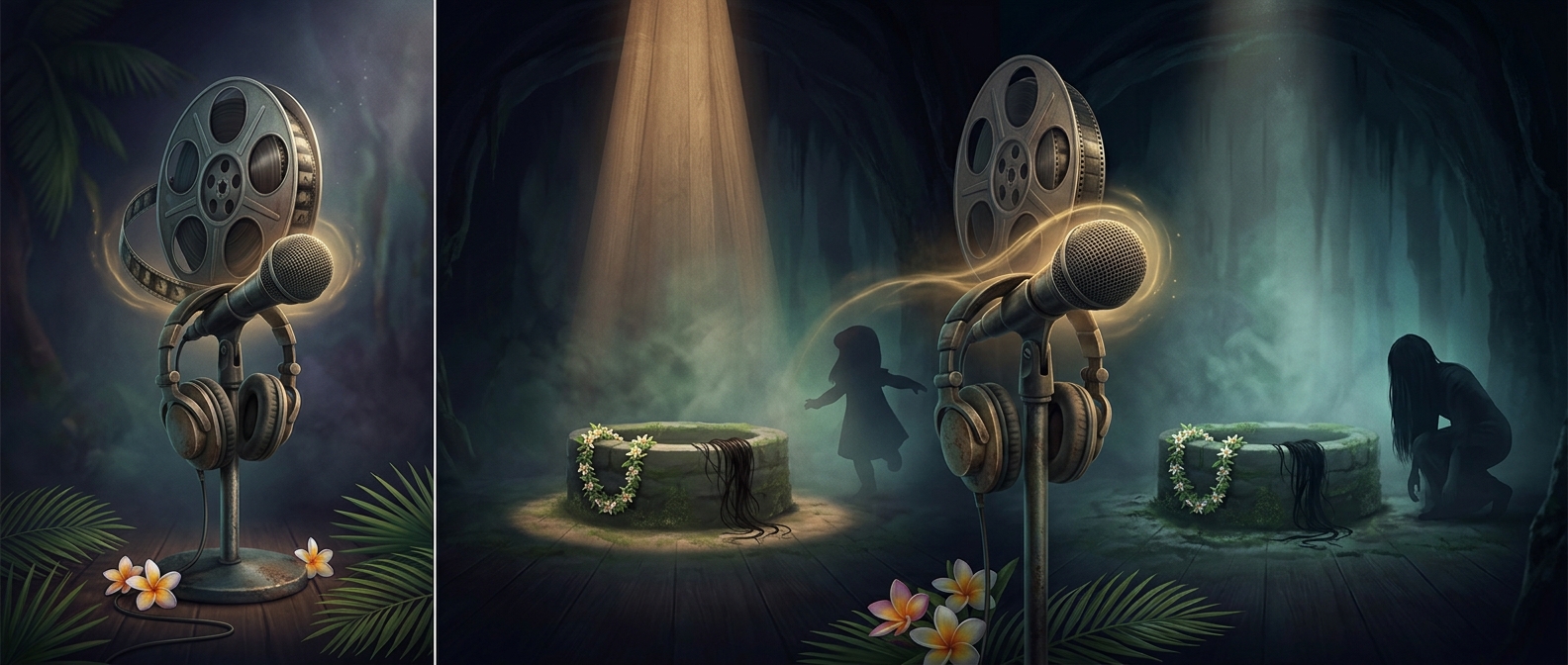
Two performances built from different tools
Daveigh Chase’s double appearance in 2002 depended on two very different kinds of acting. As Lilo in Disney’s Lilo & Stitch, she supplied a voice that had to make an animated character feel spontaneous and emotionally readable. In The Ring, she played Samara Morgan on camera, where stillness, posture, and movement could make the character disturbing before she spoke.
Voice acting is not simply dialogue laid over finished drawings. A performer’s rhythm, emphasis, and emotional shifts give animators material to shape into expressions and gestures. Chase’s lively delivery helped make Lilo sound like a specific child rather than a generic cartoon heroine. The audience hears the performance, while the animation makes its emotion visible.
From audible warmth to unsettling presence
Samara required a different kind of screen presence. The character’s long hair and controlled, unnatural movements make her seem less like an ordinary child; the film’s most memorable image turns that physical strangeness into a shock. Chase had to communicate unease through what viewers could see, not just through a line reading.
That contrast explains why the same performer can be so closely associated with two opposite impressions. In one film, her voice helps bring an animated child’s personality forward. In the other, her physical performance helps make a child seem frighteningly unknowable. The striking part is not that Chase played two girls in the same year, but that each role relied on a different channel—sound in one, visible movement in the other—to shape how audiences felt.