The Terminator had to feel dangerous before he spoke
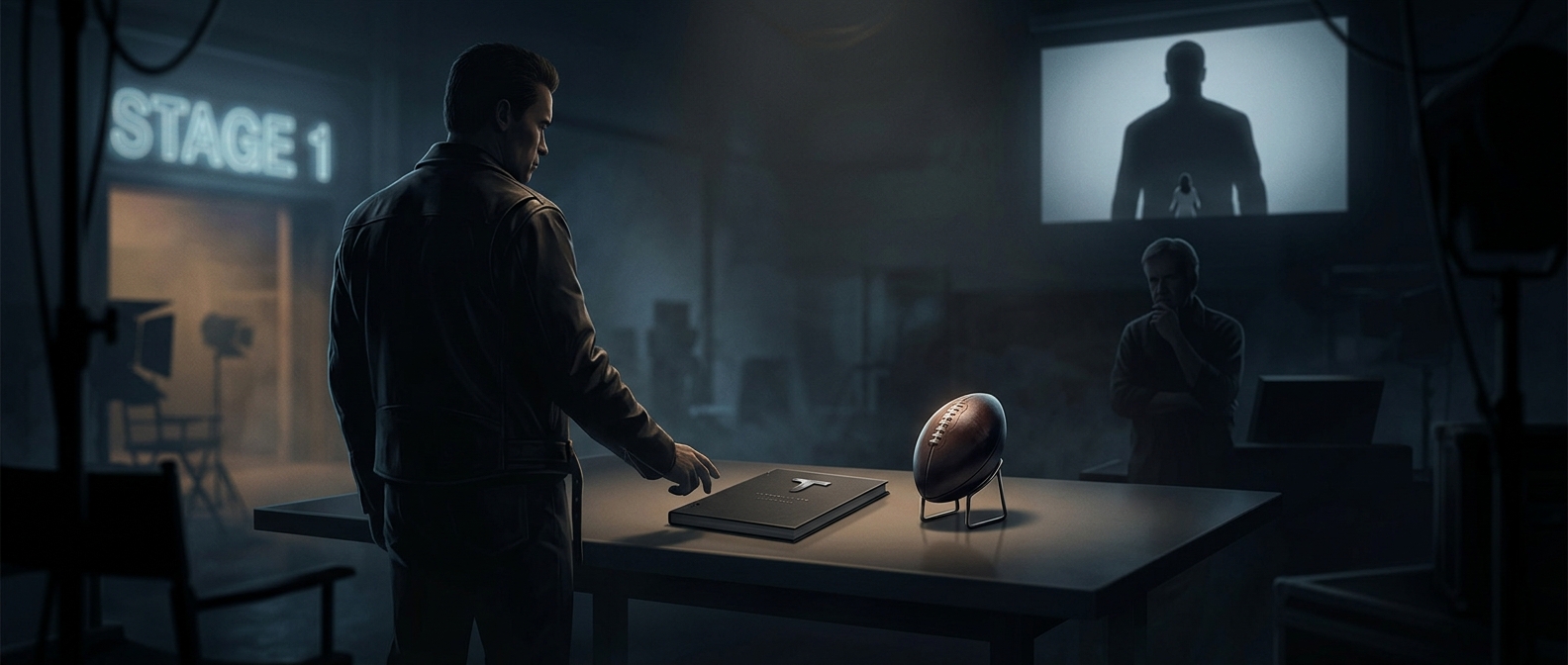
James Cameron reportedly ruled out O.J. Simpson for the title role because the football star seemed too nice to sell the part of a cold-blooded killer. That judgment was about the impression Simpson might make on screen, not whether he could perform the role. The Terminator is frightening partly because he shows no warmth or hesitation: he pursues his target with the blank persistence of a machine.
Casting is part of the audience’s first read
A familiar celebrity brings an existing image into a film. If viewers associate an actor with charm or likability, that can soften a threatening character before the story has a chance to establish him. Cameron was weighing that audience response against what the role needed. The casting choice had to make the Terminator’s violence feel plausible at a glance, not merely provide someone who looked physically capable.
That is one reason the role’s menace depends on more than the character’s actions. The actor’s presence shapes how viewers interpret each stare, pause, and advance. In this case, Cameron’s rejection shows how a casting decision can protect a film’s central effect: the sense that its pursuer is not a villain who might be talked around, but an implacable threat.