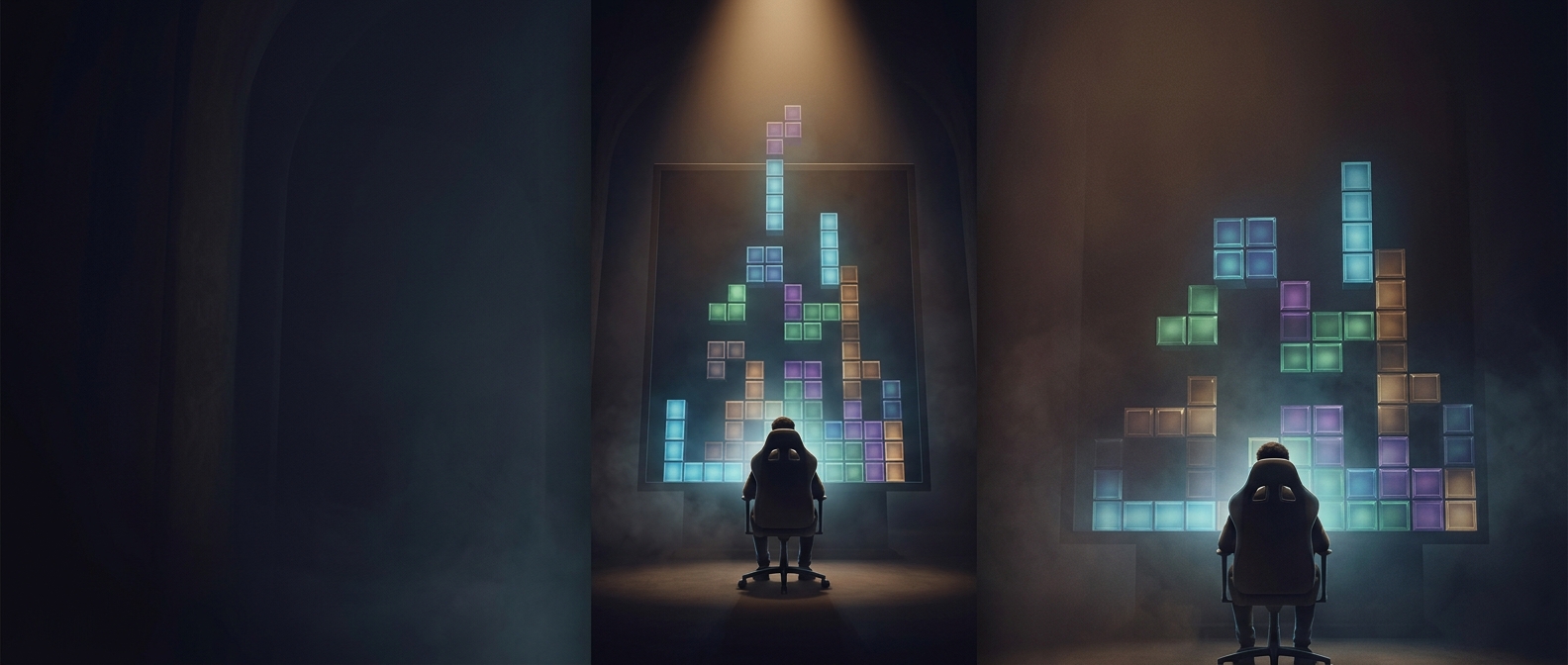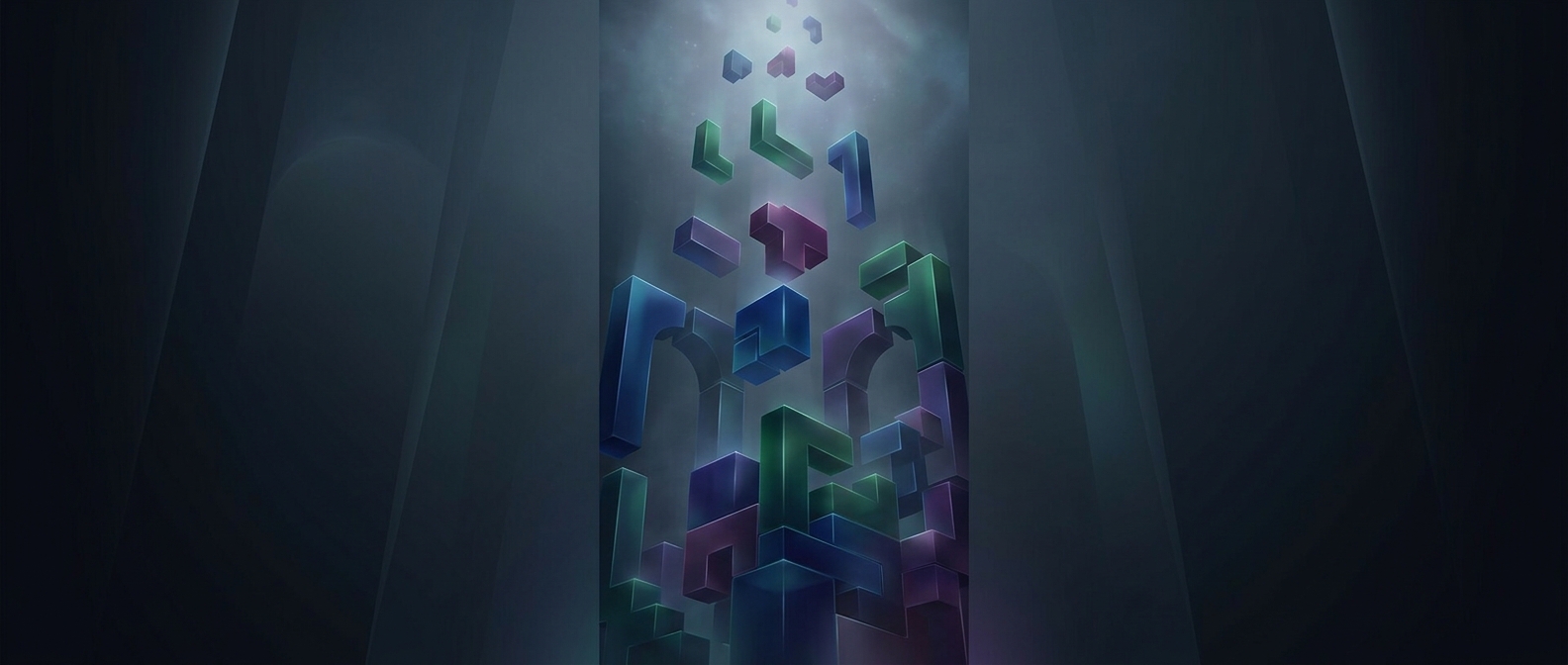
Four squares make a tetromino
The name describes a piece by its structure. A tetromino is a shape formed by joining four equal squares edge to edge. The prefix tetra- comes from Greek and means “four”; the ending belongs to the broader naming family of polyominoes, shapes made by connecting squares.
That edge-to-edge rule matters: squares that touch only at a corner do not count as connected. Rearranging four squares while keeping them connected produces the different tetromino shapes used in Tetris.
A mathematical name for a game piece
The name is not unique to Tetris. It identifies a whole class of shapes, just as a triangle is defined by having three sides. Tetris uses a selected set of tetrominoes, each recognizable by its outline, rather than every possible arrangement of four squares.
Thinking in squares explains the game’s central challenge. A falling piece can be turned, but its four-square footprint stays the same; the player must find where that footprint will fit among the blocks already on the board. The technical name quietly states the rule behind every move: however the shape rotates, it is still built from four connected squares.