The host became part of the horror
Before Vampira, a late-night movie could be little more than a film filling airtime. Maila Nurmi changed the bargain: viewers were invited to watch not just the movie, but a sinister, funny character who made the whole broadcast feel like one strange event.
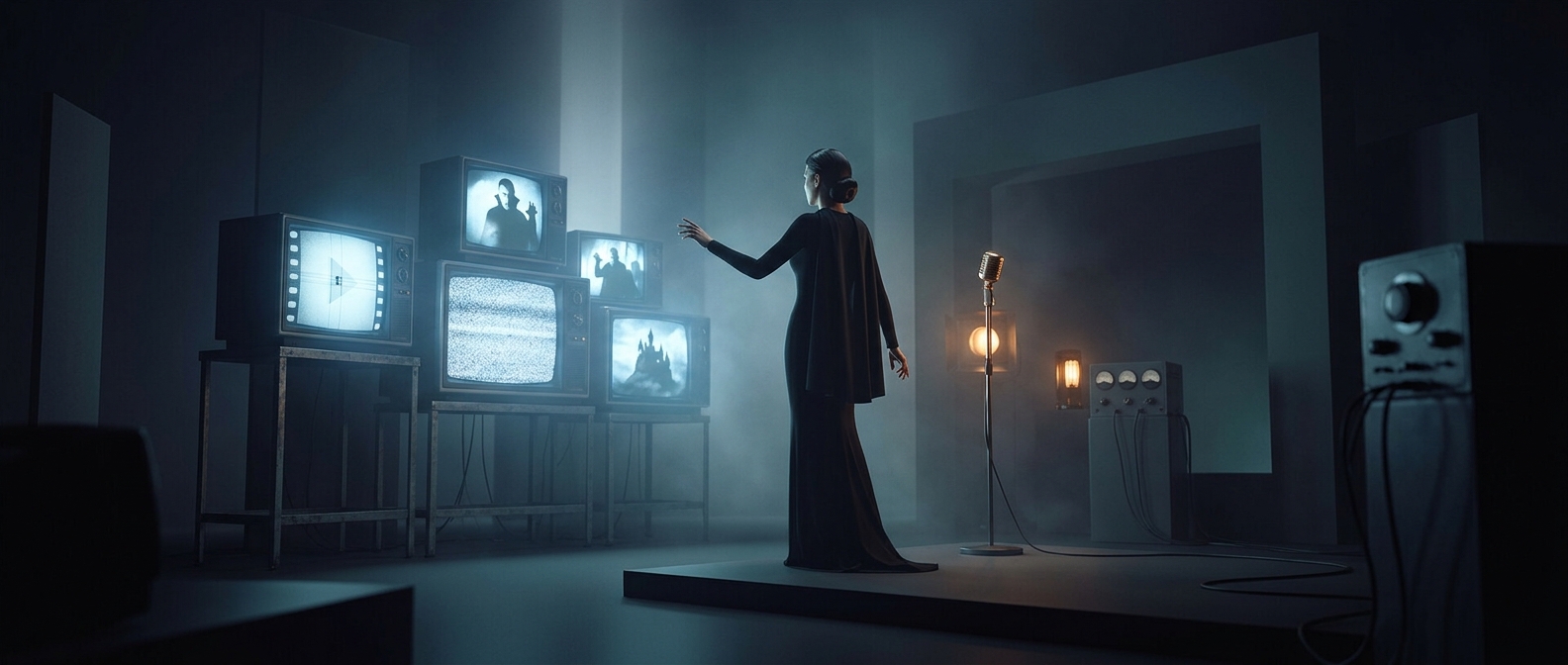
Nurmi’s Vampira was a carefully built screen persona—gaunt, glamorous, and cheerfully morbid. Her jokes and eerie presence gave the inexpensive films a frame. A creaky or dated movie could feel newly entertaining when a host treated it as an occasion for macabre play rather than a disposable rerun.
A format made for local television
The structure also suited the economics of local broadcasting. Stations could acquire older films for comparatively little; a host, a set, and a distinctive character gave those films a recognizable identity without requiring new productions. The host could bridge the gaps around the movie, turning a collection of titles into a recurring program viewers could seek out by name.
That distinction helped establish the horror host: a presenter who introduces or surrounds genre films with a character and a tone of their own. The movies supplied the scares, but the host supplied the continuity—and a reason to return even when the next film was unfamiliar.
From cheap movies to appointment viewing
Vampira’s importance was therefore not that she made low-budget films expensive or polished. She made their roughness part of a late-night performance, where fright and comedy could share the same screen. The lasting invention was the package around the movie: a host could turn spare programming into a local ritual, and a studio hallway into a world viewers wanted to revisit.