Geometry turns the Alhambra into a connected visual system
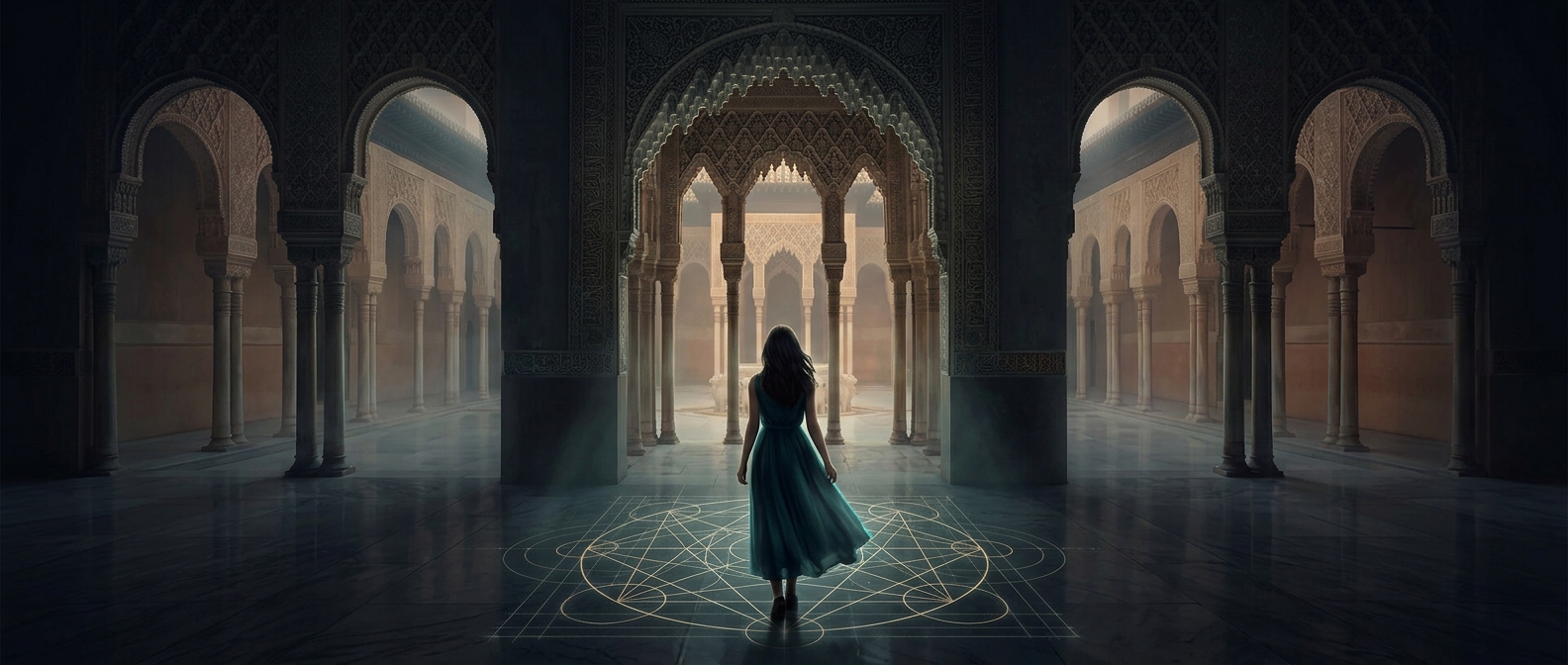
At the Alhambra, geometry does more than decorate a wall. Repeated proportions link courtyards, doorways and tiled surfaces, so a visitor encounters variations on a shared visual order rather than isolated ornaments. The effect is especially clear in the palace’s arcades: repeated arches frame views and give long passages a steady rhythm, while openings of different shapes mark transitions between rooms and courtyards.
How a pattern fills a surface
A geometric tile design begins with a small set of shapes arranged around a grid. Repeat those shapes, rotate them or reflect them, and they can spread across a wall without leaving gaps. Craftspeople had to translate the design into pieces that could be cut and fitted, making the pattern both a mathematical plan and a practical building task. Changes in color and scale give the repeated forms depth and variety without breaking their underlying order.
That order does not mean the palaces are bare of other kinds of ornament. Carved plant forms and Arabic inscriptions also appear throughout the complex. Geometry’s distinctive role is that it can connect a tiny tile arrangement to the larger proportions of a room. A visitor may follow its repeated lines across a surface, then notice the same sense of balance in the surrounding arches and courtyard. The pattern makes the building’s separate spaces feel composed as parts of one whole.