A religion built around discovering one’s “True Will”
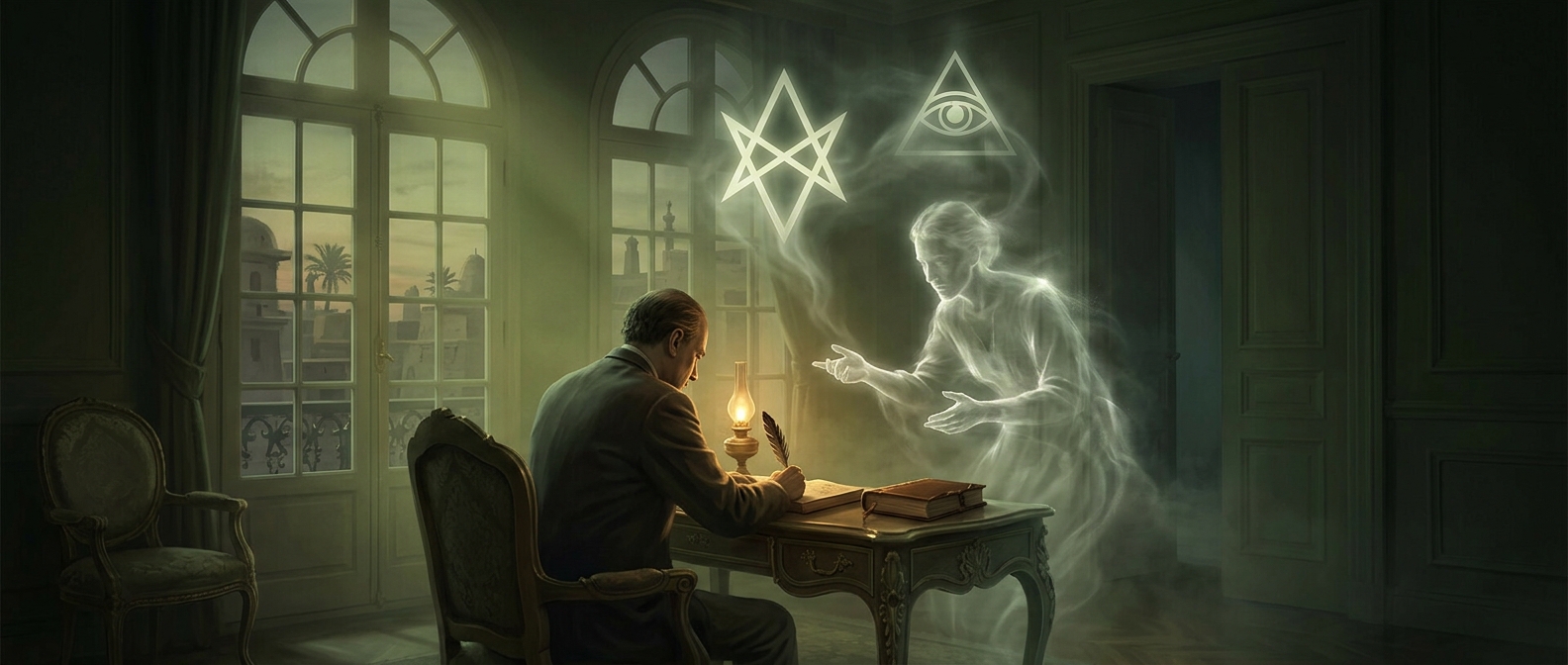
Thelema took shape after Aleister Crowley said he received a sacred text, The Book of the Law, in Cairo in 1904. Crowley treated the book not as ordinary writing but as a revelation, and he spent much of his life developing a spiritual system around it. The name comes from the Greek word for “will.”
Its best-known principle, “Do what thou wilt,” can sound like permission to follow every impulse. In Thelemic thought, however, “will” means a person’s True Will: the deeper purpose or course of life they are meant to discover and carry out. That makes the command less a celebration of whim than a demand for self-knowledge and disciplined action.
Freedom comes with a demanding condition
Thelema also pairs its central rule with the idea that love should operate in service of will. In practice, adherents have interpreted these ideas in different ways, but the framework asks people to distinguish their enduring purpose from desires imposed by fear, habit, or other people’s expectations.
That emphasis helped make Thelema more than a set of occult rituals. Crowley developed ceremonies, writings, and organizations intended to guide practitioners in studying themselves and pursuing their chosen spiritual path. The result was a religion with a highly individual center—and a built-in tension: people are urged to be free, but first they must work out what their freedom is for.