How a working fleet became a barrier
A breakwater does not have to be a solid wall. Its job is to interrupt incoming waves, reducing the force that reaches a sheltered shore or anchorage. Off Queensland, fifteen steam-driven dredges—vessels built to scoop up and move sediment—were deliberately sunk in the 1960s to do that work.
Their heavy hulls provided a fixed obstruction where a more conventional breakwater might have been built. Instead of being dismantled or left to deteriorate somewhere else, the dredges became part of the coastal infrastructure. Their original purpose was practical: to make the water behind them calmer.
Why the wrecks became a snorkeler's maze
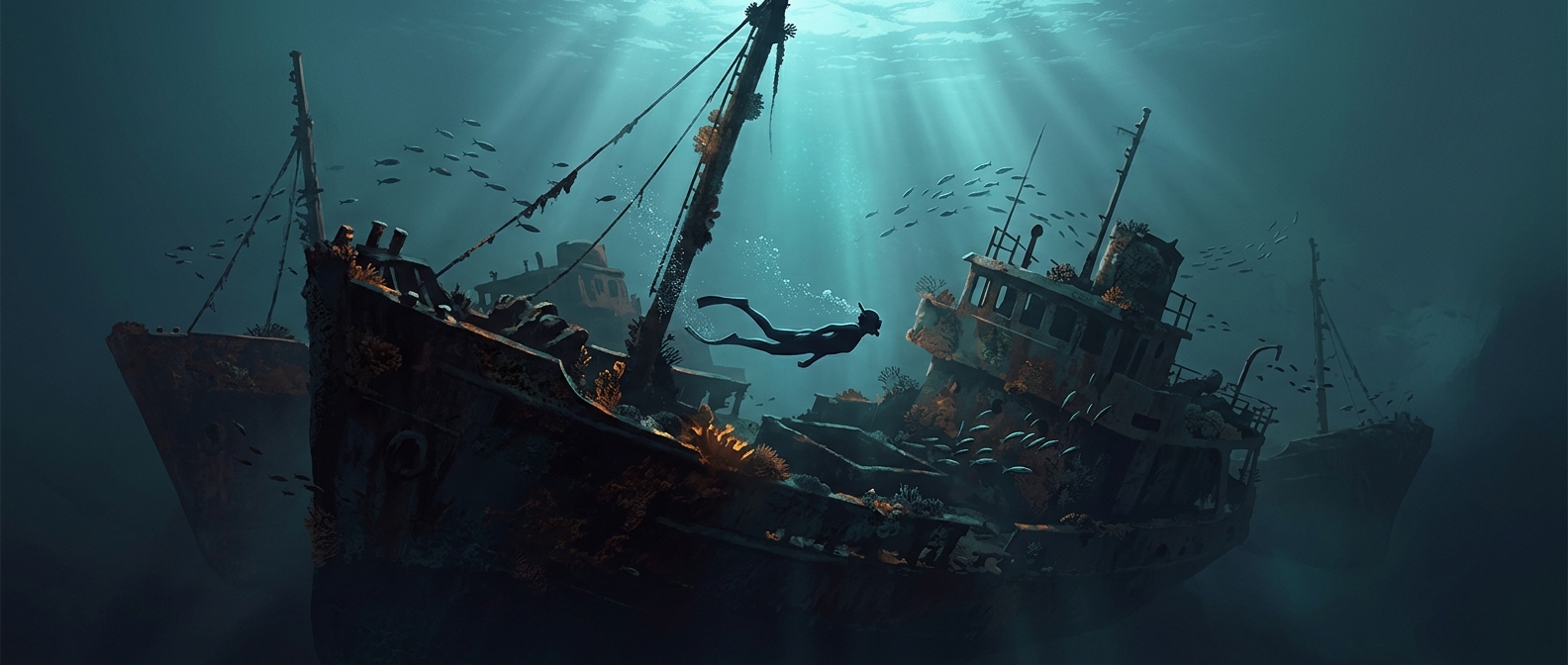
Once underwater, the vessels offered hard surfaces in a setting where coral could grow. Over time, coral transformed the wrecks from bare metal into a complex underwater landscape. The hulls and their gaps create an irregular route through the water, so a snorkeler encounters changing shapes and passages rather than one open, uninterrupted view.
That double role is what makes the site unusual. The wrecks still function as a wave barrier, while marine growth has made them a destination in their own right. A piece of coastal engineering became a place to explore—not because it was designed as an attraction, but because its structure gave coral a foothold and created a maze-like setting beneath the surface.