Why Patagonia’s wind hits so hard
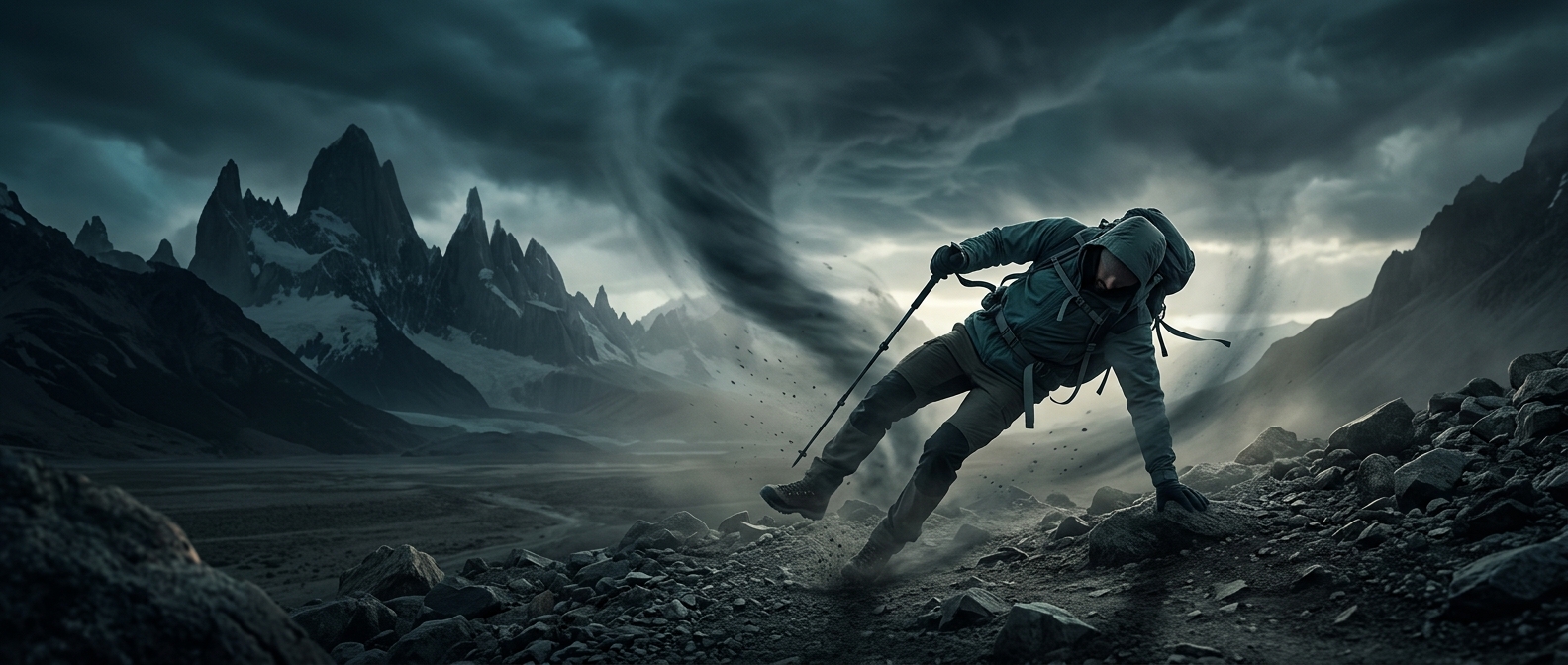
Southern Patagonia sits in the path of powerful westerly winds that sweep east from the Pacific. The Andes interrupt that flow, but they do not simply stop it: air is steered through mountain passes and gaps, where it can accelerate, then rush across exposed plateaus and open ground. The result is not a steady breeze so much as forceful, shifting gusts, especially in places with little shelter.
That terrain can make conditions change over a short distance. A hollow or stand of trees may offer a lull; an open stretch nearby can leave a person facing the full force of the wind. Gusts arrive unevenly, which is why even someone who can brace against the wind may be caught off balance when a stronger burst hits.
Why camping becomes a test of setup
A tent presents a broad surface for the wind to push against. If its stakes pull loose or its frame twists, the fabric can flap violently and the shelter may collapse. Campers therefore look for natural protection, orient a tent to reduce the area facing the wind, and secure every guyline—the cords that hold the tent steady. A low, taut setup gives gusts less to grab.
The same pressure explains why a door can be difficult to control: wind pushing against it can overwhelm a person’s grip or slam it open. In exposed parts of Patagonia, choosing where to stop is part of the engineering. A few meters behind a ridge or other barrier can matter more than a sturdier tent.