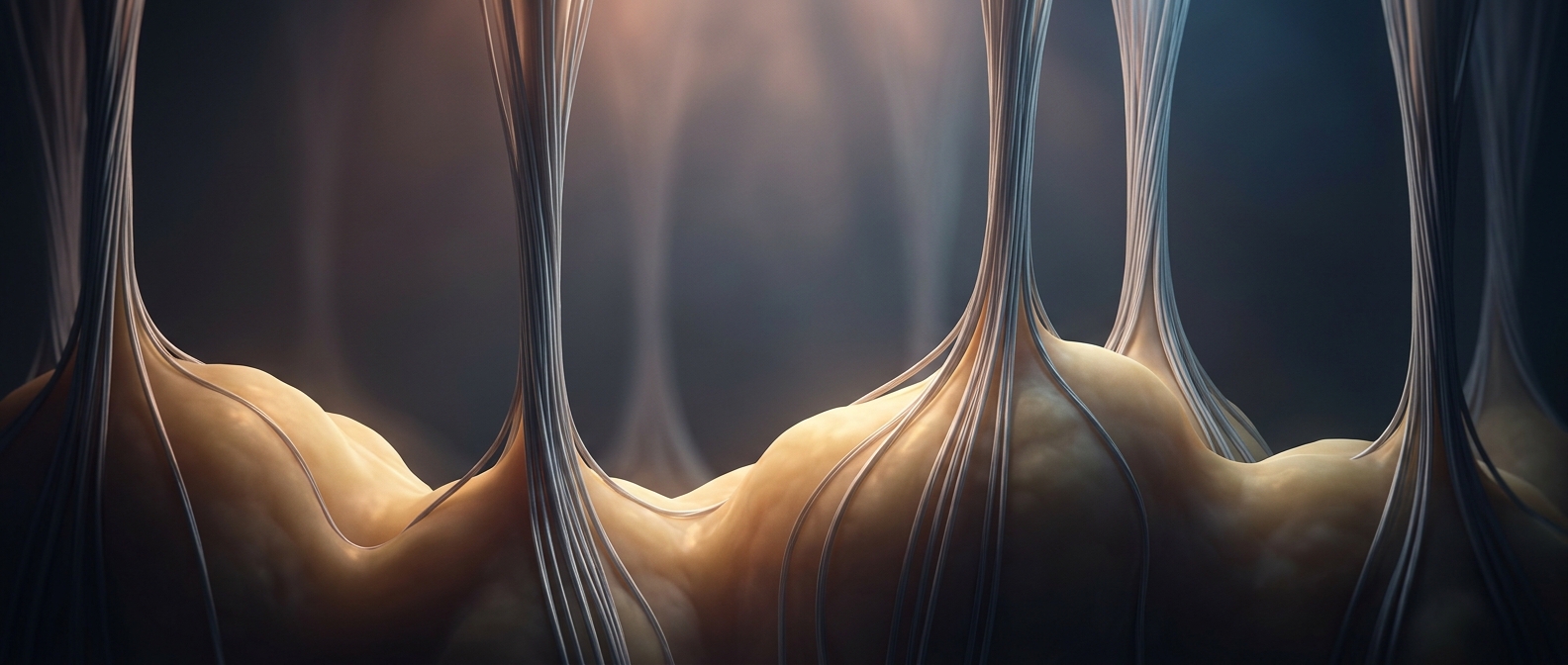
The tear happens below the surface
The outer layer of skin is relatively thin; much of its strength comes from the dermis beneath it. This layer is a flexible mesh of collagen, which helps skin resist pulling, and elastin, which lets it stretch and spring back. During a growth spurt or another period of rapid body change, the skin may expand faster than this supporting network can adapt. Some fibers then break, leaving narrow streaks called stretch marks, or striae.
The marks often appear where the skin is under repeated tension, such as the abdomen, hips, breasts, thighs, or upper arms. Growth rate is only part of the story: inherited differences in skin and hormones can affect how readily the fibers are disrupted. Long-term use of potent corticosteroid medicines can also make skin more vulnerable by weakening its supporting structure.
Why the marks change color
New stretch marks may look red, pink, purple, or darker than the surrounding skin. The color reflects changes in the tissue around the damaged fibers, including small blood vessels; the exact appearance varies with skin tone. As the area remodels over time, the marks commonly become lighter or more silvery and less noticeable.
That fading is the skin’s repair process, not a perfect return to its original arrangement. The collagen network is rebuilt, but the streak can remain visible because the repaired tissue differs from the surrounding dermis. Stretch marks are therefore a record of how quickly the skin had to adapt—not evidence that the skin simply failed to stretch.