Why Reverse acts like Skip in two-player Uno
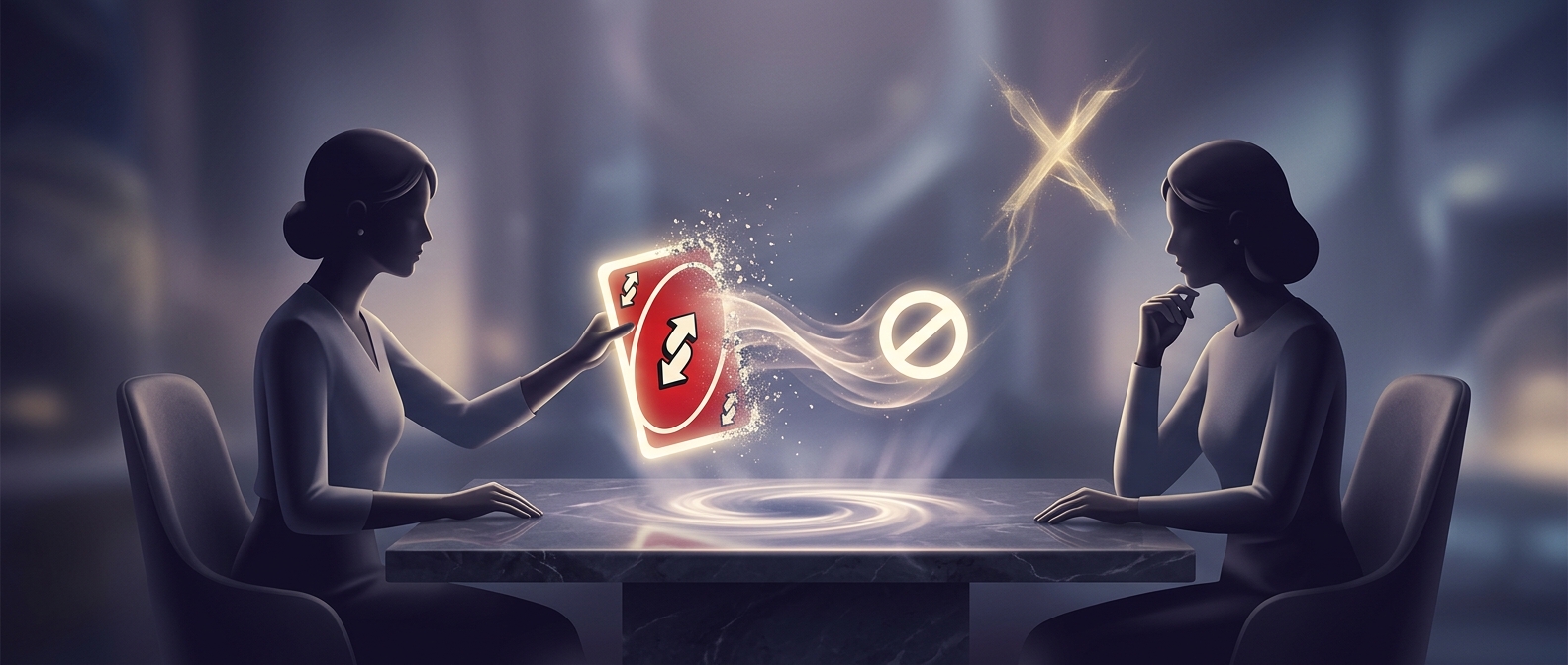
In a larger game, Reverse changes the direction of play. If turns were moving clockwise, they now move counterclockwise, so a different player is next. With only two people, there is no third player for the turn to reach: changing direction points play straight back to the person who just played.
That player’s turn is skipped, and the person who put down Reverse plays again. In effect, Reverse has the same immediate result as Skip in a two-player game, even though the cards work differently when more people are playing.
The practical consequence
A Reverse can therefore do more than match a color or number: it can keep the lead with you and deny your opponent a turn. For example, if your opponent plays a card that leaves you next, your Reverse sends play back to them—and their turn is passed over.
The rule comes from the turn order, not from a special two-player power printed on the card. With three or more players, reversing direction changes who follows; with two, it brings the turn back around to the player who played it.