A cushioning layer hidden between tissues
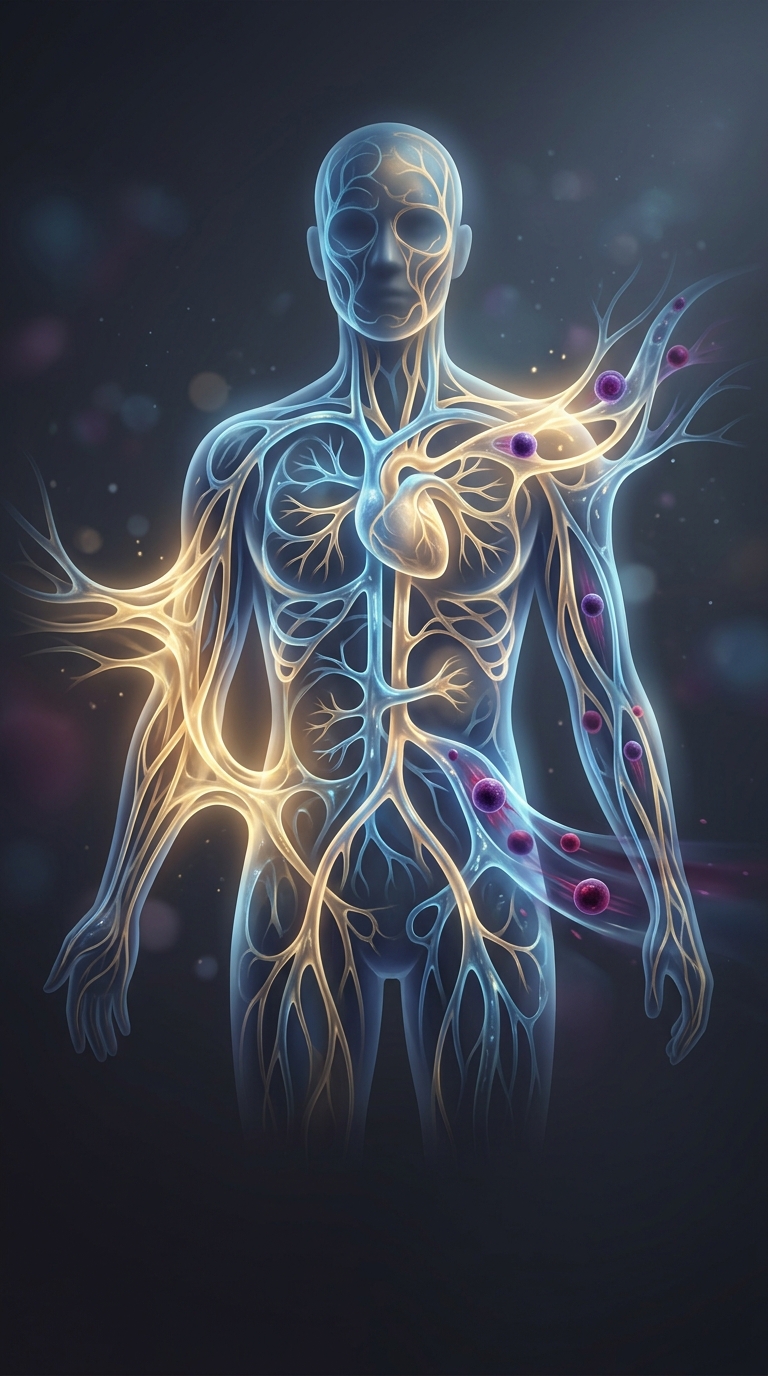
The interstitium is the fluid-filled space within and around connective tissues—the materials that support, bind, and separate parts of the body. It is not a single sheet or organ. Rather, it forms a connected arrangement of spaces in places such as the tissue beneath the skin and the linings around organs and blood vessels.
For a long time, these regions were commonly viewed in preserved tissue as tightly packed connective material. That can obscure the spaces: routine processing removes fluid and changes the tissue’s shape. Images made in living tissue revealed that some collagen bundles are arranged around fluid-filled compartments, giving a different view of how these regions are structured.
How it cushions and carries fluid
When a person bends, stretches, or an organ shifts, surrounding tissues tug on one another. The interstitium can deform along with them; its fluid-filled spaces provide room for that movement and help soften the force transferred between neighboring structures. The cushioning is not like a sealed bag of water. It is part of a flexible tissue network, supported by collagen and connected to the body’s fluid-drainage pathways.
Fluid in these spaces, called interstitial fluid, also serves as a route for material moving between blood and tissues. Excess fluid can enter lymphatic vessels, which carry it back toward the bloodstream. So the same connective-tissue surroundings that accommodate motion also help manage the fluid bathing cells.
Why the structure matters
Seeing these spaces as connected rather than as isolated gaps changes the picture of connective tissue: it is not merely packing material between organs and muscles. Its shape and fluid can influence how tissues move against one another and how fluid travels through the body. A simple consequence is that the body’s cushioning and its plumbing are intertwined—when tissue shifts, the spaces carrying fluid shift with it.