From a peephole to a room full of viewers
The Kinetoscope was built for one person at a time. A viewer leaned over a cabinet and watched a strip of film move rapidly past a light source, creating the impression of motion through a small viewing window. It made moving pictures a private, almost coin-operated attraction: the machine itself contained the show.
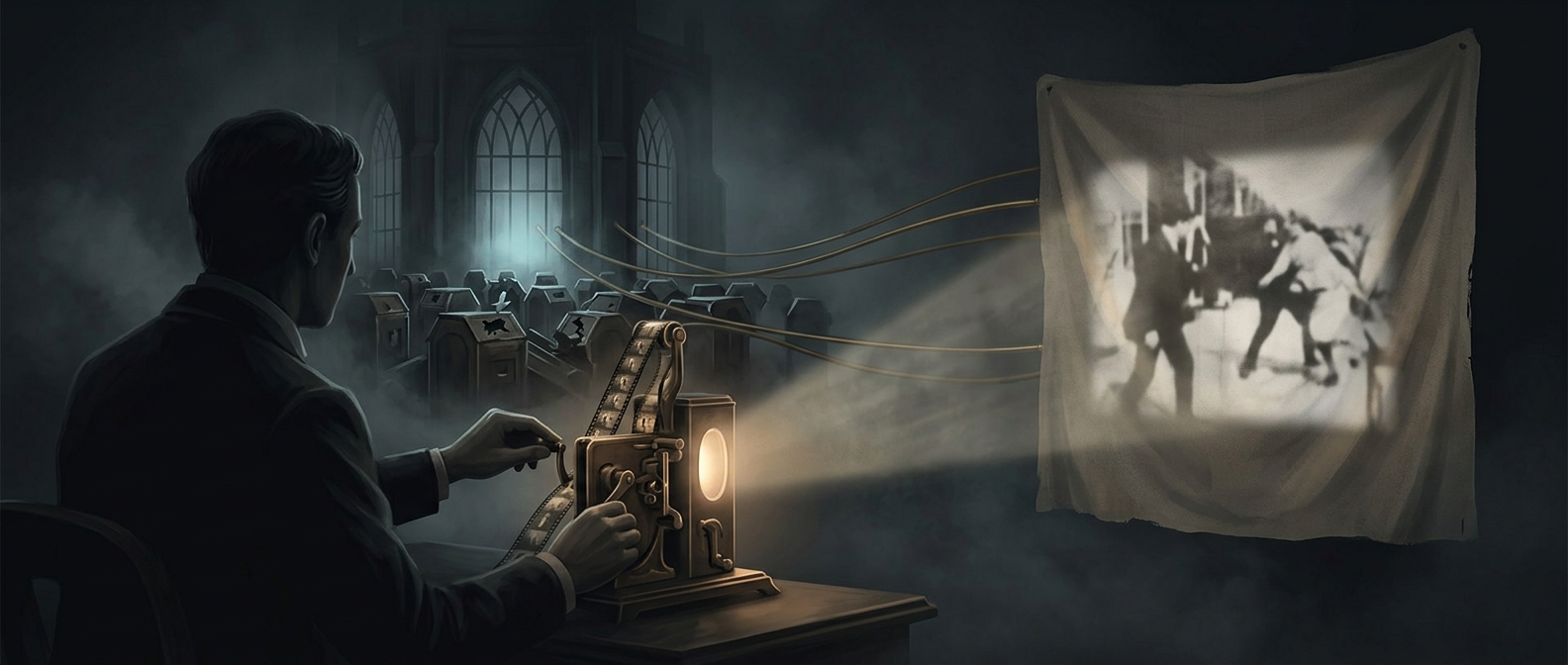
Projection changed the arrangement. Instead of looking into a box, an audience could watch an enlarged image on a screen. That meant one film performance could entertain many people at once—and made moving pictures better suited to theaters and public gatherings.
A patent gap opened a different path
British instrument maker Robert W. Paul was able to study and reproduce the Kinetoscope because Edison had not secured the relevant patent protection in Europe. Paul adapted the underlying moving-film mechanism into the Animatograph, adding projection so the images could be shown to a room rather than viewed through a peephole.
The distinction mattered beyond the hardware. A cabinet sold access to individual viewers; a projector made the audience, the screen, and the shared event part of the business. Edison’s decision not to pay the reported $150 for a European patent did not itself create projection, but it left Paul room to develop and use his own version there. A missed filing thus helped open a route from solitary novelty machines toward cinema as a public spectacle.