A royal secret changes the play’s central problem
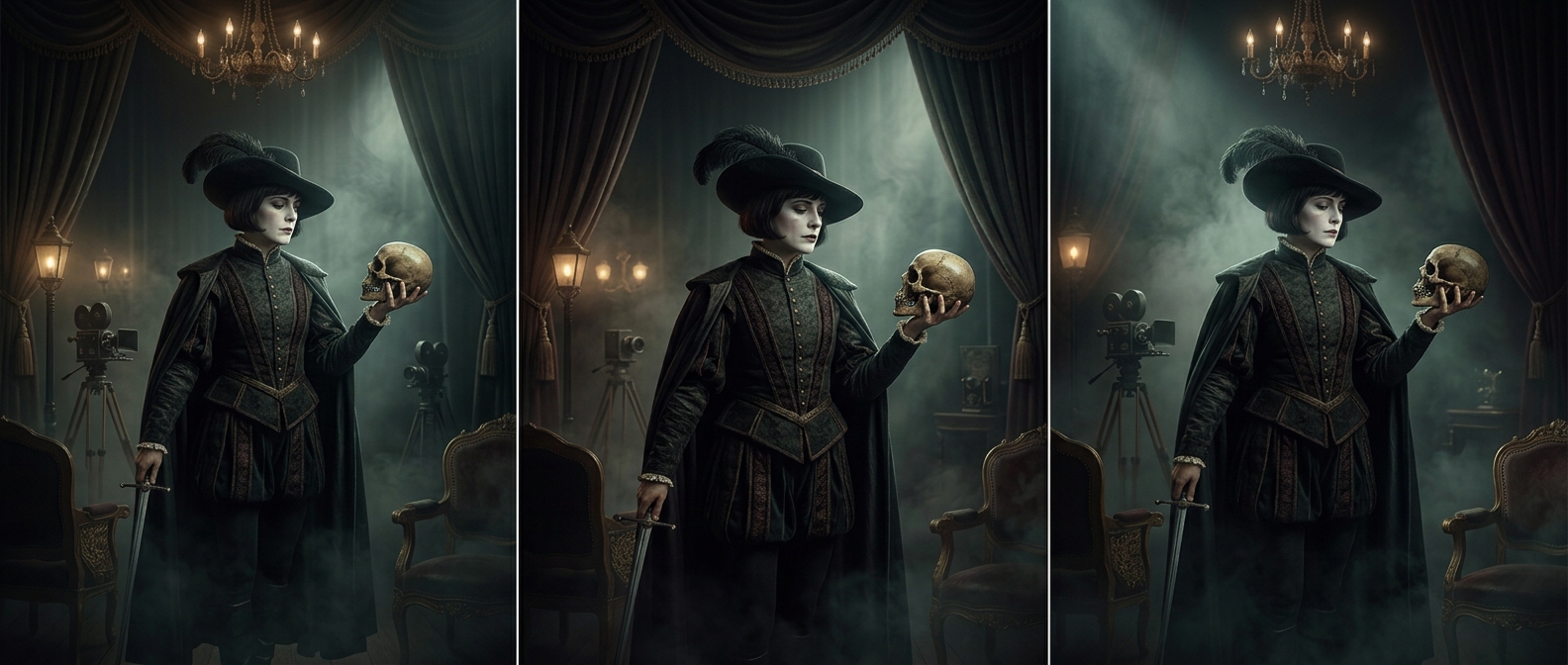
In Asta Nielsen’s silent-film version, Hamlet’s disguise is not a choice made in adulthood. The character is born a princess, but is raised as a prince so the royal succession can continue through a male heir. That invented backstory turns the familiar question of whether Hamlet can act into a more intimate conflict: the prince’s public identity is also a role imposed from childhood.
The secret changes how the court’s expectations land. Hamlet must perform the kind of masculinity that gives the succession its legitimacy, while concealing a private truth that could overturn it. The character’s isolation is therefore political as well as personal: revealing the truth would threaten both the identity Hamlet has been made to inhabit and the arrangement holding the crown in place.
A screen persona becomes part of the interpretation
Nielsen was known for a screen presence that could move between feminine and masculine styles. Here, that quality was not merely a casting curiosity; it gave the reinterpretation a visible form. In silent cinema, where dialogue cannot explain a character’s inner life, posture, movement, costume, and expression carry much of the storytelling. A performer whose appearance could resist easy gender categorization could make Hamlet’s divided public and private selves legible on screen.
The result does not simply place a woman in Shakespeare’s male role. It makes the role itself—prince, heir, and expected manhood—part of the story’s machinery. Hamlet’s struggle is sharpened by the fact that the court’s political order depends on a performance the character has never been free to refuse.