Why a hand can be riskier than a glance
A visitor can damage an object without meaning to. Reaching in to point, steadying yourself near a display, or leaning closer for a better look can bring a hand into contact with a sculpture, frame, or case. Even a brief touch may transfer skin oils and dirt; on delicate surfaces, repeated contact can leave marks or contribute to wear.
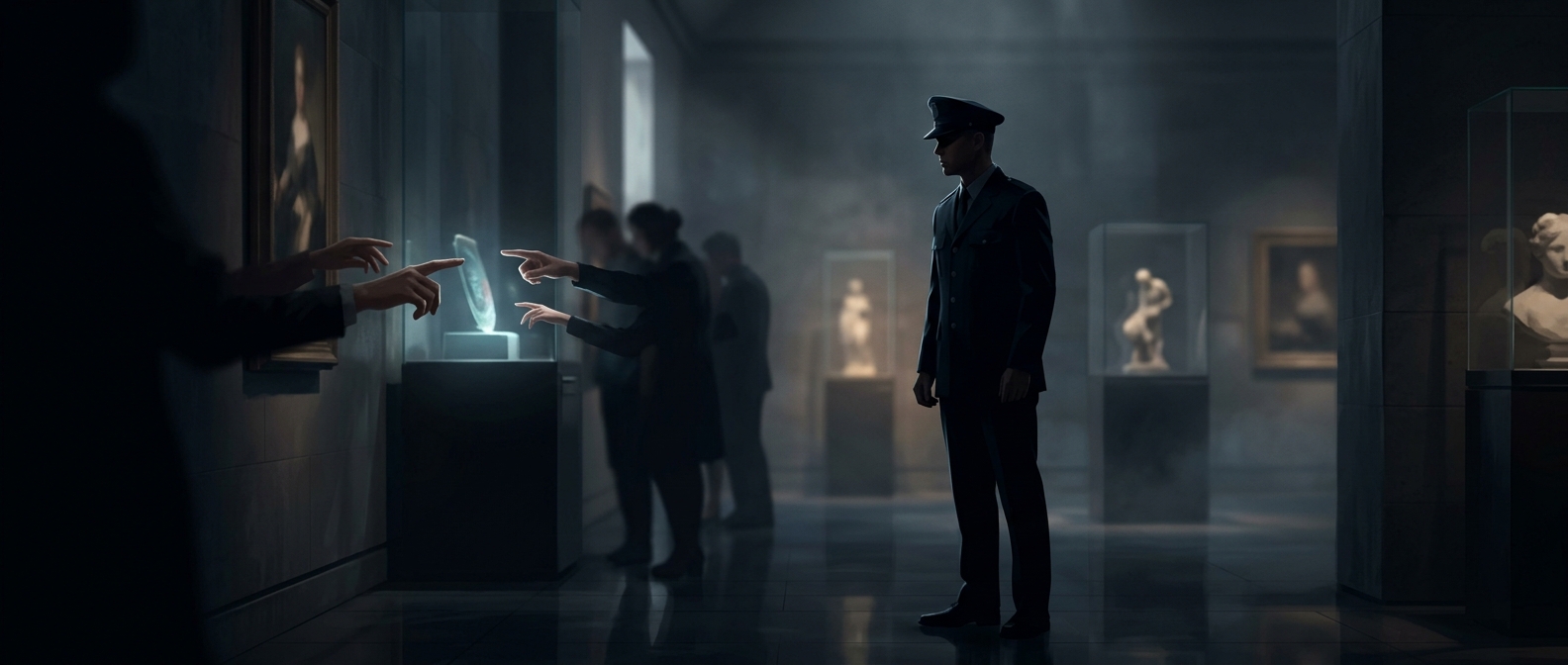
Hands also reveal the next move. A guard who sees someone reaching toward an object has a moment to step closer or offer a reminder before contact happens. Watching expressions is less useful: curiosity, concentration, and uncertainty do not tell a guard whether someone is about to cross a barrier.
Prevention works best before contact
Museum rules and display design do much of the work. Cases, railings, floor markings, and distance between objects and visitors create physical or visual boundaries. Guards help those boundaries work in the real room, where a crowd may press forward or someone may not notice how close they have come.
The aim is usually to prevent an accident without interrupting the visit. A small gesture or quiet prompt can redirect a visitor before a valuable or fragile object is touched. That makes the guard’s attention practical rather than personal: the hands matter because they can turn looking into contact.