A small design change with a big page-by-page payoff
A manga character is not drawn once; the design has to work again and again across panels, pages, and scenes. Goggles add several fiddly shapes—lenses, rims, and straps—that must stay recognizable from different angles. When a character appears frequently, even a few extra marks can slow the work of drawing each page.
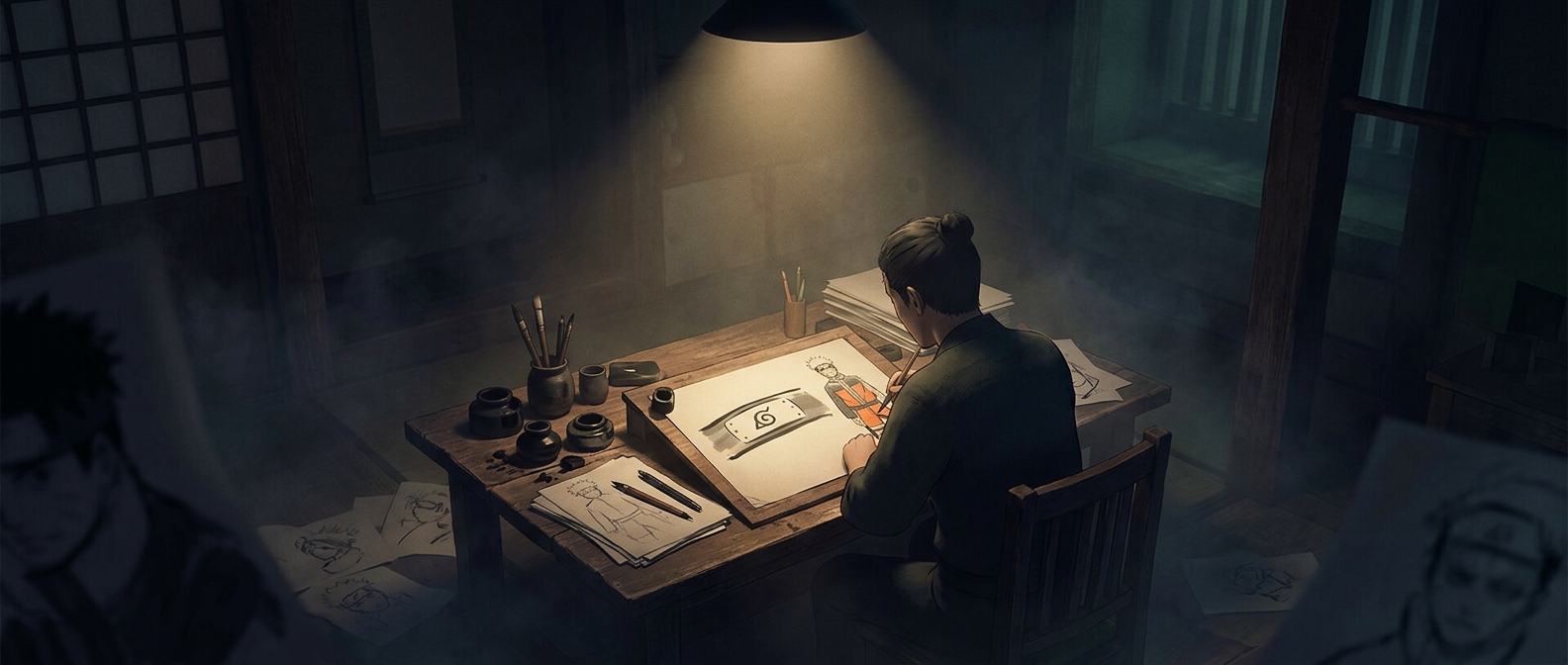
Masashi Kishimoto chose a simpler piece of costume for Naruto: a cloth forehead protector, often called a headband. Its broad shape and central metal plate are quick to sketch, yet still give the character a clear, repeatable feature. The change was practical, but it also shows how a production constraint can become part of a character’s identity.
From accessory to visual shorthand
The headband does more than frame Naruto’s face. In the story’s world, forehead protectors identify a ninja’s village, so the plate gives the design a connection to the setting as well as a distinctive silhouette. Readers can recognize it at a glance, even in a small panel or a fast-moving scene.
That balance matters in comics: a useful design must be expressive for the reader and manageable for the artist. Replacing the goggles reduced repetitive drawing work while giving Naruto an accessory that could carry meaning every time it appeared.