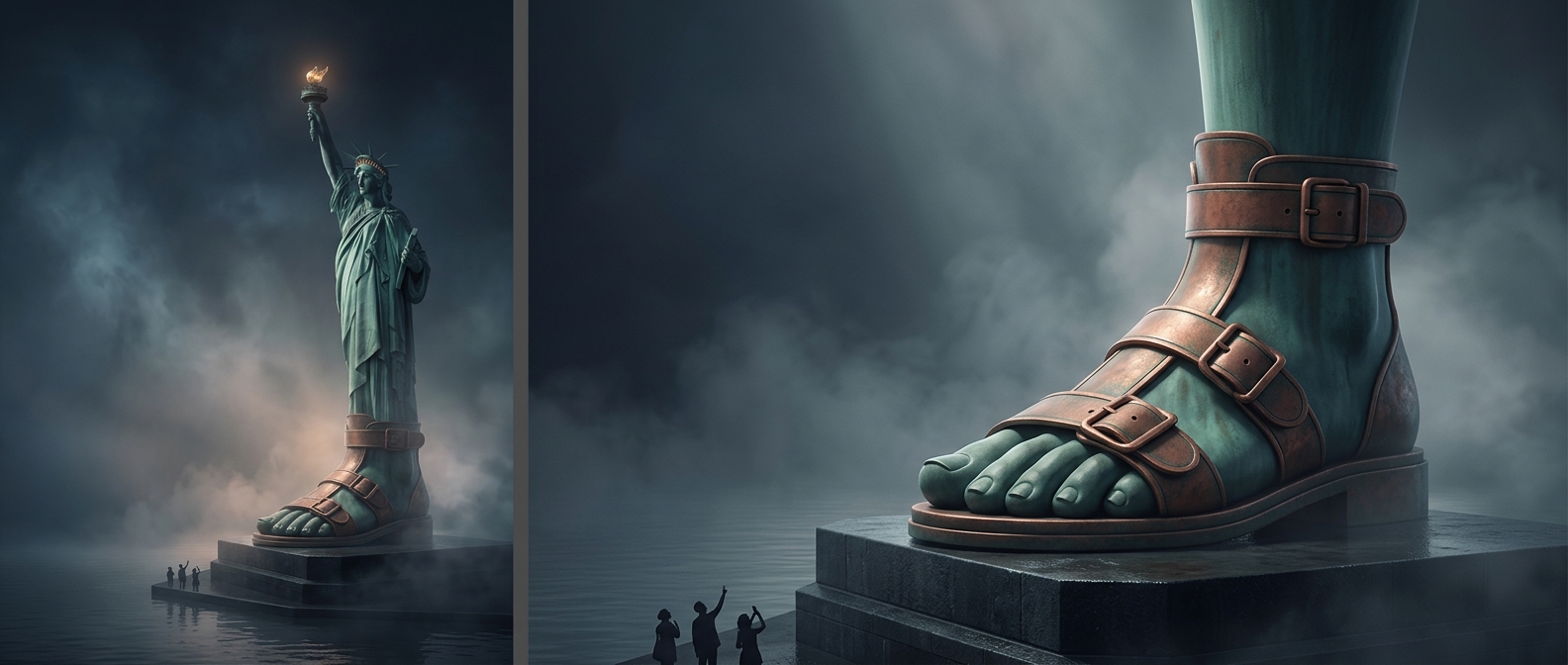
A human stride scaled up to monument size
The Statue of Liberty’s foot is roughly 25 feet long—about the length of a large vehicle. That scale follows from the figure itself: the statue, from heel to torch-bearing arm, stands about 151 feet tall. Its sculpted body keeps human proportions, so enlarging a person to monumental size enlarges every detail, including the feet.
The figure is not solid stone. Its copper exterior is supported by an internal framework, allowing the colossal form to stand while remaining much lighter than a solid statue would be. Up close, that construction and scale are hard to grasp; from the ground, the foot is far above a visitor’s normal field of view.
The oversized foot marks a step
Liberty is shown moving forward, with one foot advanced over broken shackles. The pose turns an ordinary walking gesture into part of the statue’s message about freedom from oppression. The enormous foot is therefore more than a comic measurement: it is the point where the monument’s human scale and its symbolic stride meet.
Visitors can climb inside the monument to its upper levels, but they do not stroll alongside those giant feet. The car-length comparison offers a way to picture a detail that the statue’s height otherwise makes difficult to see.