How a Morpho’s wing makes blue without blue pigment
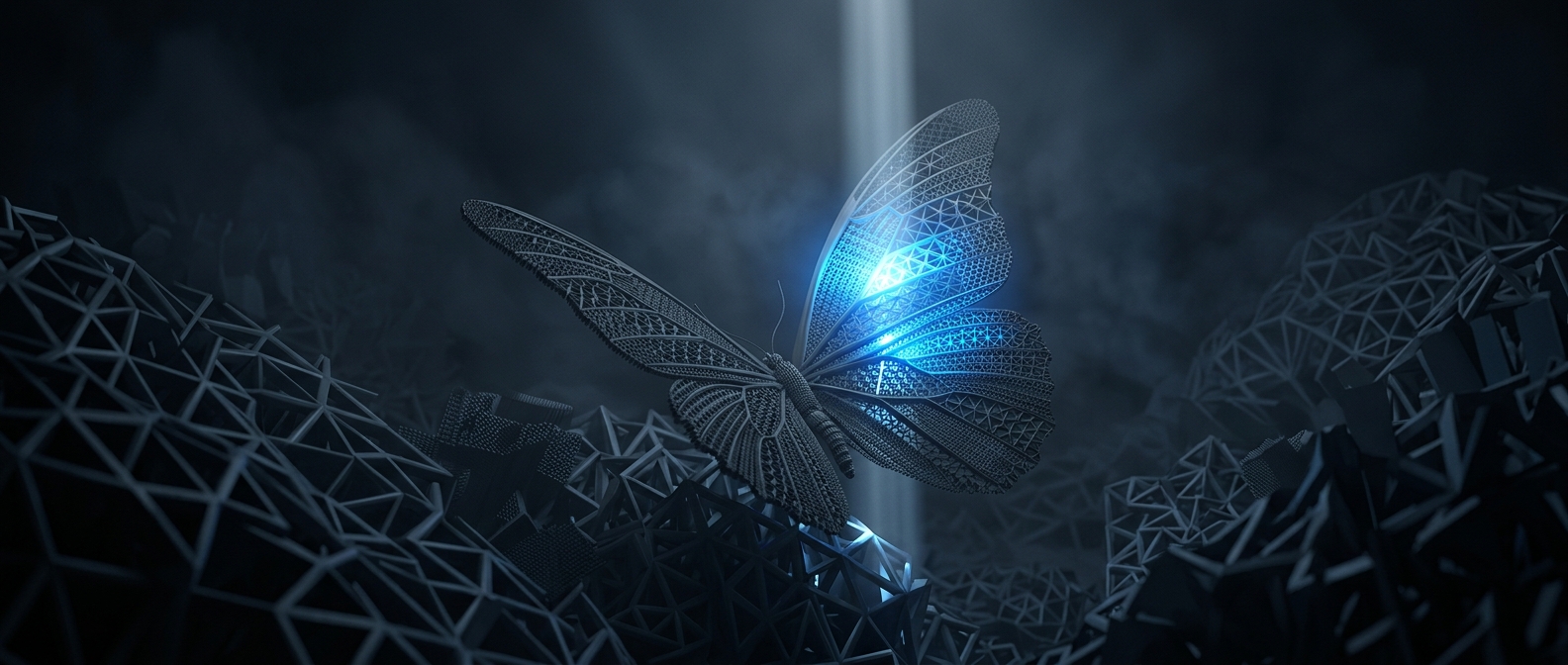
A Morpho butterfly’s vivid blue is produced by the shape of its wing scales, not by blue dye. The scales are covered with microscopic ridges and layered structures. When sunlight strikes them, light waves bounce off different surfaces and overlap. For certain wavelengths, the reflected waves reinforce one another; others are weakened. The result is a strong blue reflection.
This is called structural color: color created by a surface’s architecture rather than by a pigment that absorbs some colors and reflects others. Soap bubbles and the sheen on some beetle shells use related light-interference effects, though their structures differ.
Why the color shifts as the wing moves
The reflected light depends on the angle of the wing and the viewer. Tilt the wing, and the paths light takes through the ridges change. That changes which wavelengths reinforce one another and how much light reaches the eye. The blue can flash brightly, shift in appearance, or seem to fade at a different angle.
A blue pigment would tend to keep reflecting blue across a wider range of viewing angles. The Morpho’s structural blue is more directional, which is why a moving butterfly can look as if it is switching its brightness on and off.
A color built into the surface
Because the effect comes from microscopic form, the wing does not need a layer of blue pigment to produce its striking color. Its appearance depends on how light interacts with the scale’s ridges and layers—and on where the observer stands. A slight turn can transform a deep, brilliant flash into a much duller view.