A termite’s gut is a tiny wood-processing system
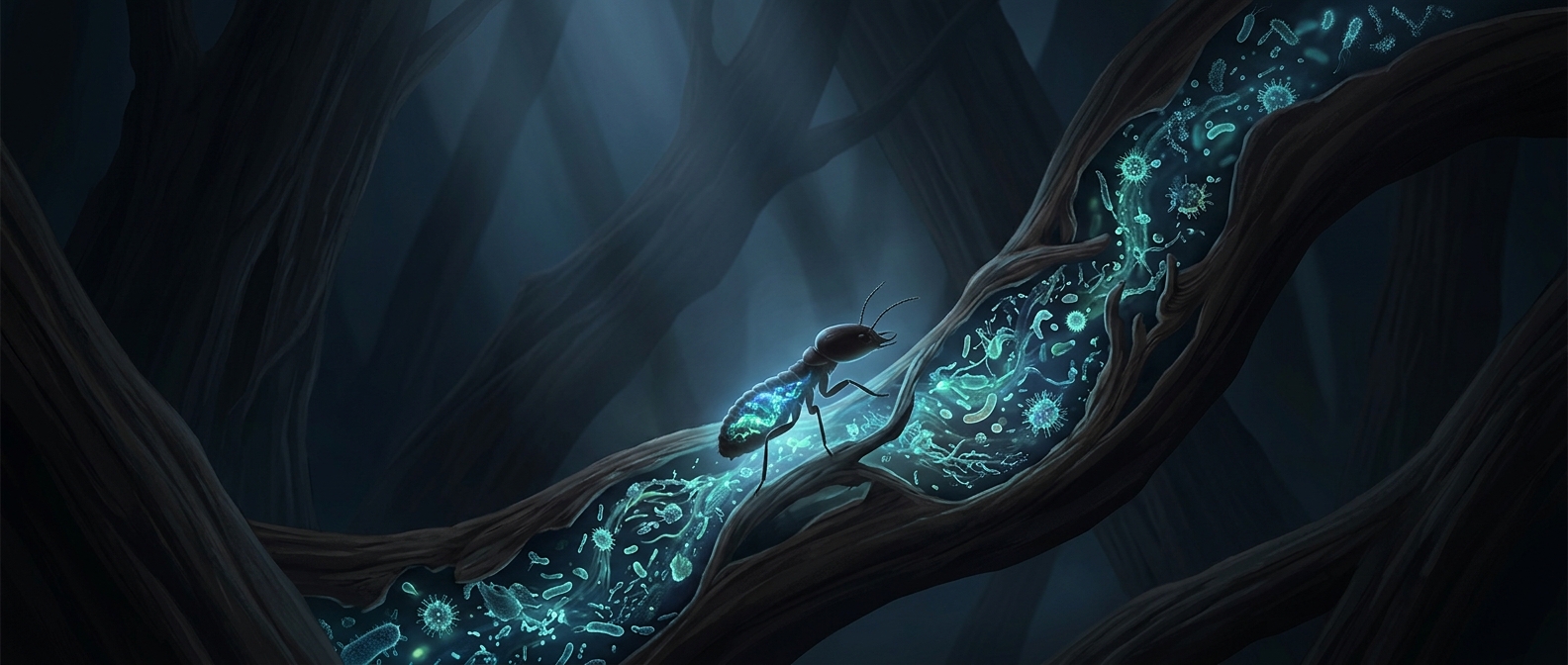
Wood is rich in cellulose, a chain-like carbohydrate that gives plant cell walls their strength. Most animals cannot get much energy from it because they lack the enzymes needed to cut those chains into usable pieces. Termites solve the problem with help from microbes living in their digestive tract.
After a termite chews wood, gut microbes break cellulose and other plant material into smaller compounds. In many termites, they ferment these compounds—much as microbes ferment food in other animals’ digestive systems—producing substances the termite can absorb and use for energy. The termite provides the microbes with a steady supply of wood and a sheltered place to live; the microbes make that difficult food source more useful.
The partnership differs among termites
There is no single termite gut blueprint. In many wood-eating termites, specialized microbes are especially important for cellulose digestion. Other termite groups, including some that consume soil or decaying plant matter, have different microbial communities and digestive strategies. Termites can also contribute digestive enzymes of their own, so the process is not always carried out by microbes alone.
This partnership helps explain why termites can live on material that would be poor food for most animals. A piece of wood is not simply swallowed and somehow turned into nourishment: it passes through a biological workshop, where the termite’s own digestion and its microbial partners’ chemistry work together. The termite supplies the wood; its gut community helps unlock the energy stored in it.