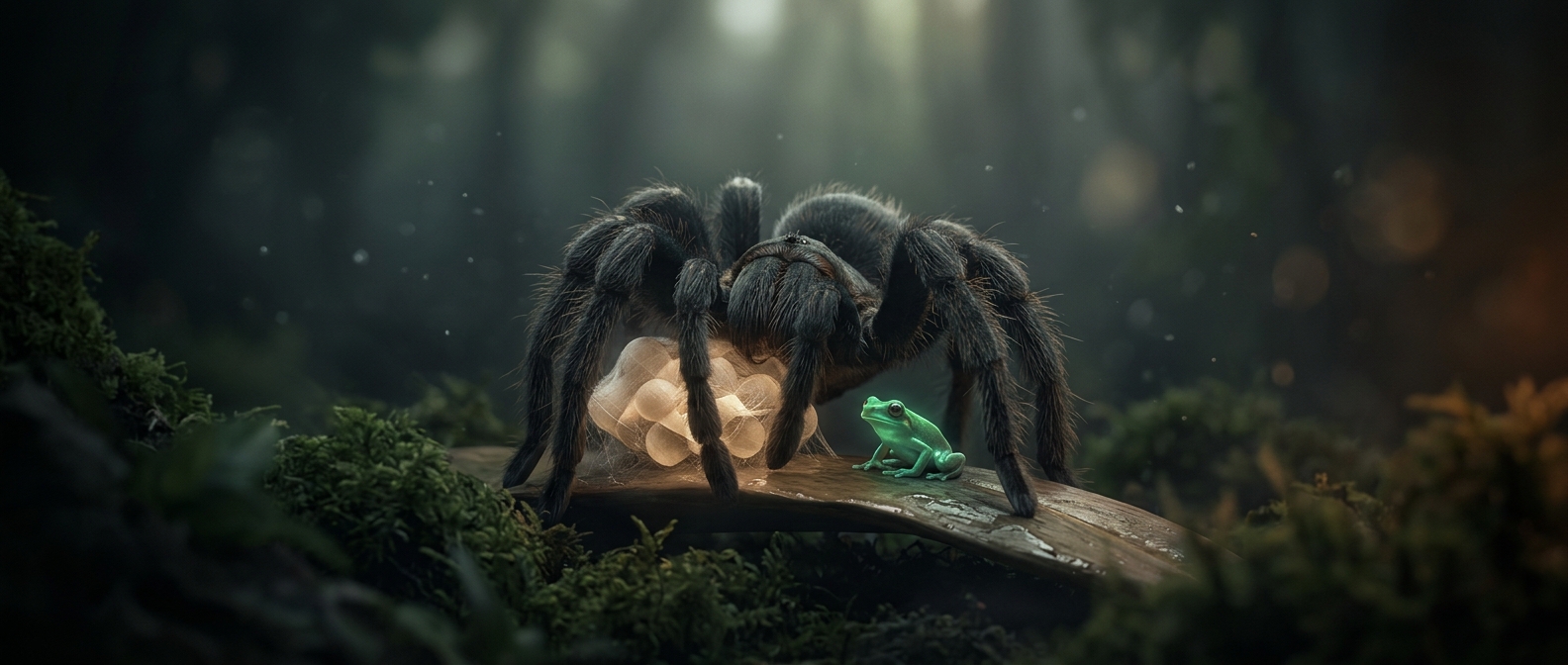
A Nursery Protected From Ants
For some tarantulas and small frogs, sharing a burrow is more than a matter of shelter. The frog’s appetite can benefit the spider at a vulnerable time: tarantula eggs and newly hatched young can be threatened by ants and other insects, and the frog eats some of those potential attackers.
This is a form of mutualism—a relationship in which both animals benefit. The spider’s underground retreat gives the frog a protected place to hide from larger predators; the frog, in turn, helps keep insect threats near the spider’s nursery in check.
Why the Arrangement Can Work
The animals occupy different niches in the same cramped space. The tarantula maintains the burrow and produces the eggs, while the frog forages on small prey that might otherwise reach them. Neither animal has to perform the other’s role: the spider supplies shelter, and the frog’s feeding helps reduce danger around the eggs.
That makes the burrow more than a hiding place. It becomes a shared refuge with a practical payoff for each resident: the frog gains protection, while the tarantula’s next generation faces fewer hungry insects.