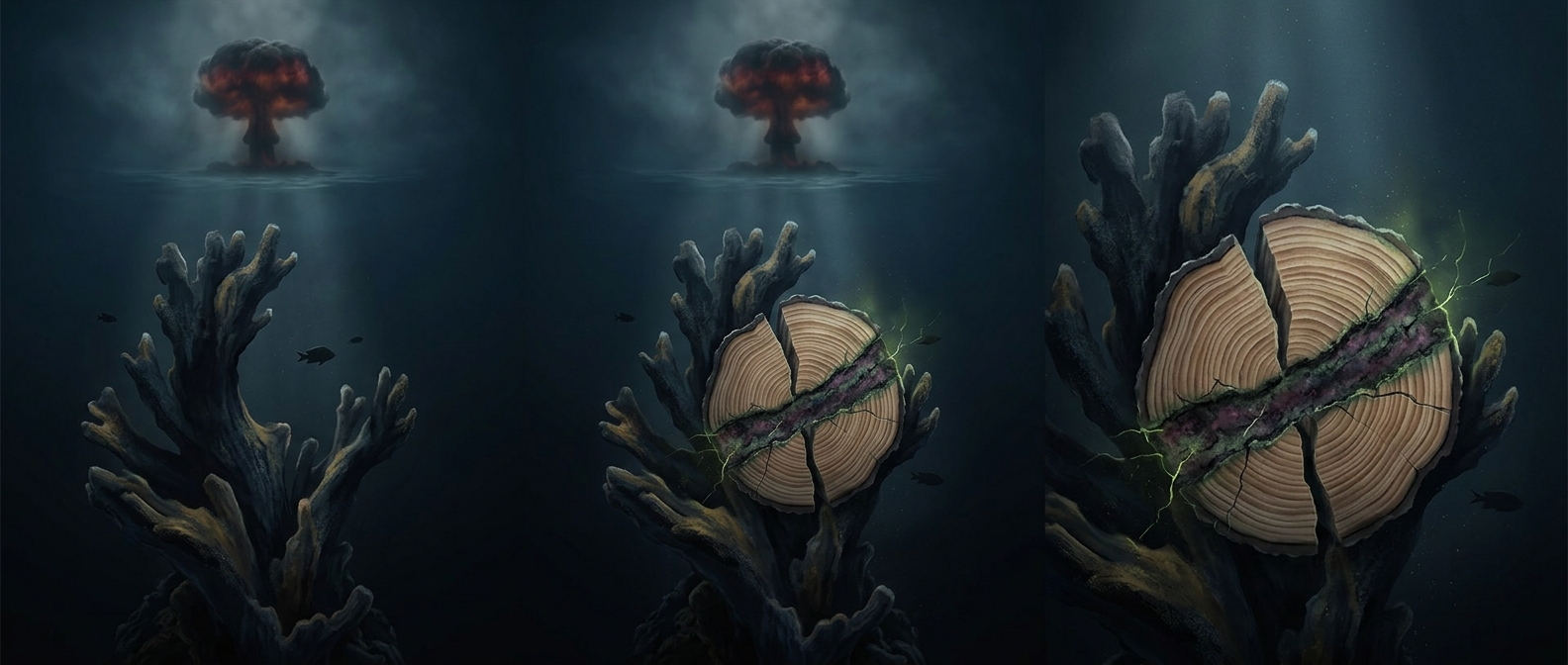
How fallout gets trapped in coral
Coral animals build hard skeletons from calcium carbonate, drawing dissolved calcium from seawater as they grow. Strontium is a close chemical stand-in for calcium, so some dissolved strontium can enter the skeleton too. That includes strontium-90, a radioactive product of nuclear fission that can reach the ocean after nuclear explosions or accidents.
Once incorporated, the strontium becomes part of the solid skeleton rather than simply washing away with the surrounding water. As the coral adds new material, older layers remain beneath newer ones, preserving a sequence of growth.
Reading the bands as a timeline
A coral skeleton often contains visible growth bands, much like rings in a tree. Scientists can analyze sections of the skeleton and measure how much strontium-90 is present at different points. Because each layer formed during a particular period of growth, changes in its radioactive content help reveal when fallout reached the reef.
The record is useful because it is built as the contamination arrives, not reconstructed only from later measurements of seawater. A coral can therefore preserve a dated trace of changing exposure in the surrounding ocean.
A natural archive with a chemical clock
The bands do not record every event with perfect precision: coral growth varies, and the signal depends on local conditions and how the skeleton is sampled. But the basic mechanism is striking. A living reef can turn a radioactive pollutant into a layered archive, allowing researchers to look back at the arrival of fallout long after the water itself has changed.