A Meal Has Nowhere to Wait
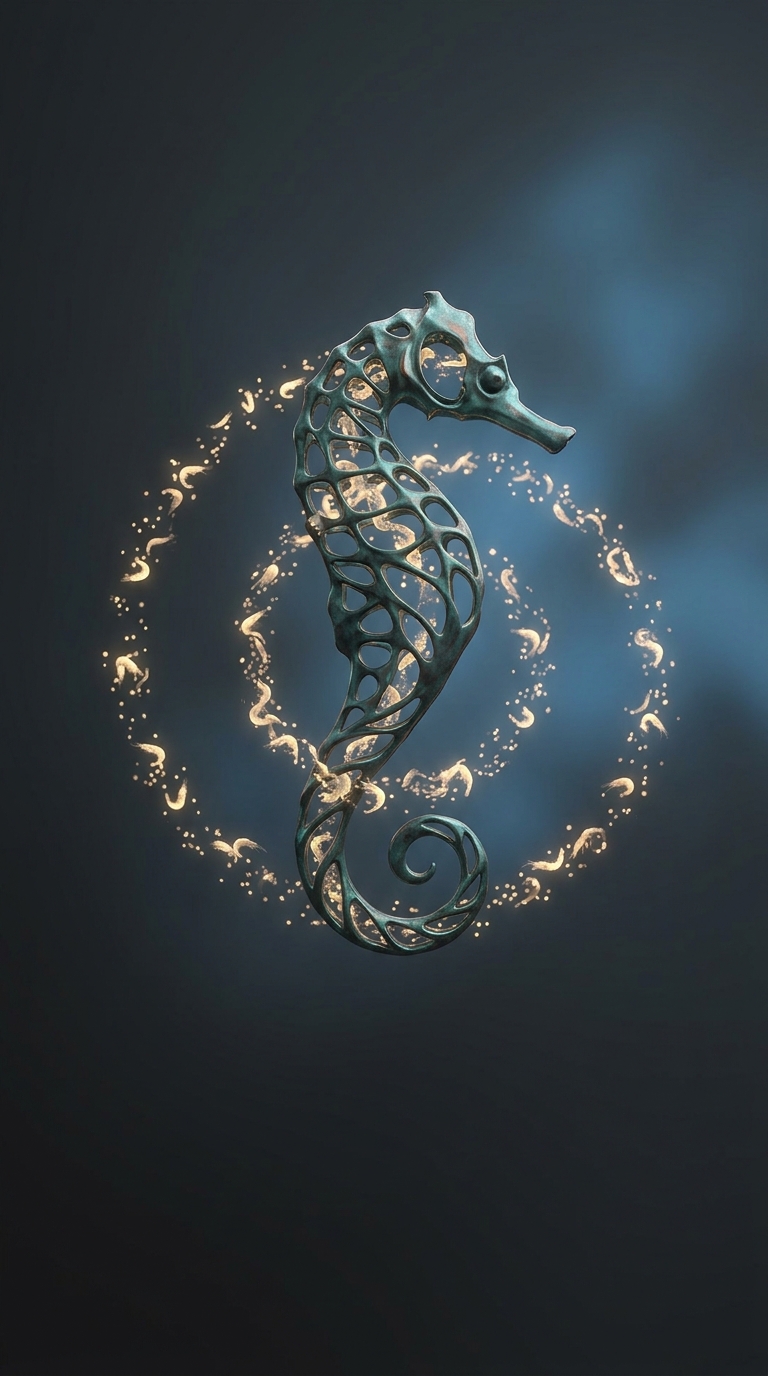
A seahorse does have a digestive tract; what it lacks is a stomach. In many animals, the stomach holds food and begins breaking it down before it moves into the intestine. A seahorse’s food instead passes from its mouth into the gut without that storage-and-processing stage. The intestine still digests food and absorbs nutrients, but the route is comparatively simple and food moves through it quickly.
That anatomy changes the rhythm of eating. A seahorse cannot bank a large meal for a long stretch without feeding, so it must take in small prey repeatedly to meet its energy needs. Tiny crustaceans such as shrimp become a series of quick meals rather than one substantial dinner.
A Hunter Built for Small Bites
Seahorses feed by drawing prey into their long snouts with a rapid suction action. Their narrow mouths suit small prey, not large meals that could be stored and digested slowly. When food is available, they may feed many times over the day; the often-cited figure of up to 3,000 tiny shrimp reflects just how frequent those bites can be.
The practical consequence is a close dependence on steady access to prey. A seahorse’s feeding strategy is not simply a preference for snacks: its body is organized around catching small animals often, then moving them through a gut without a stomach to hold them.