Why a whale can swell after death
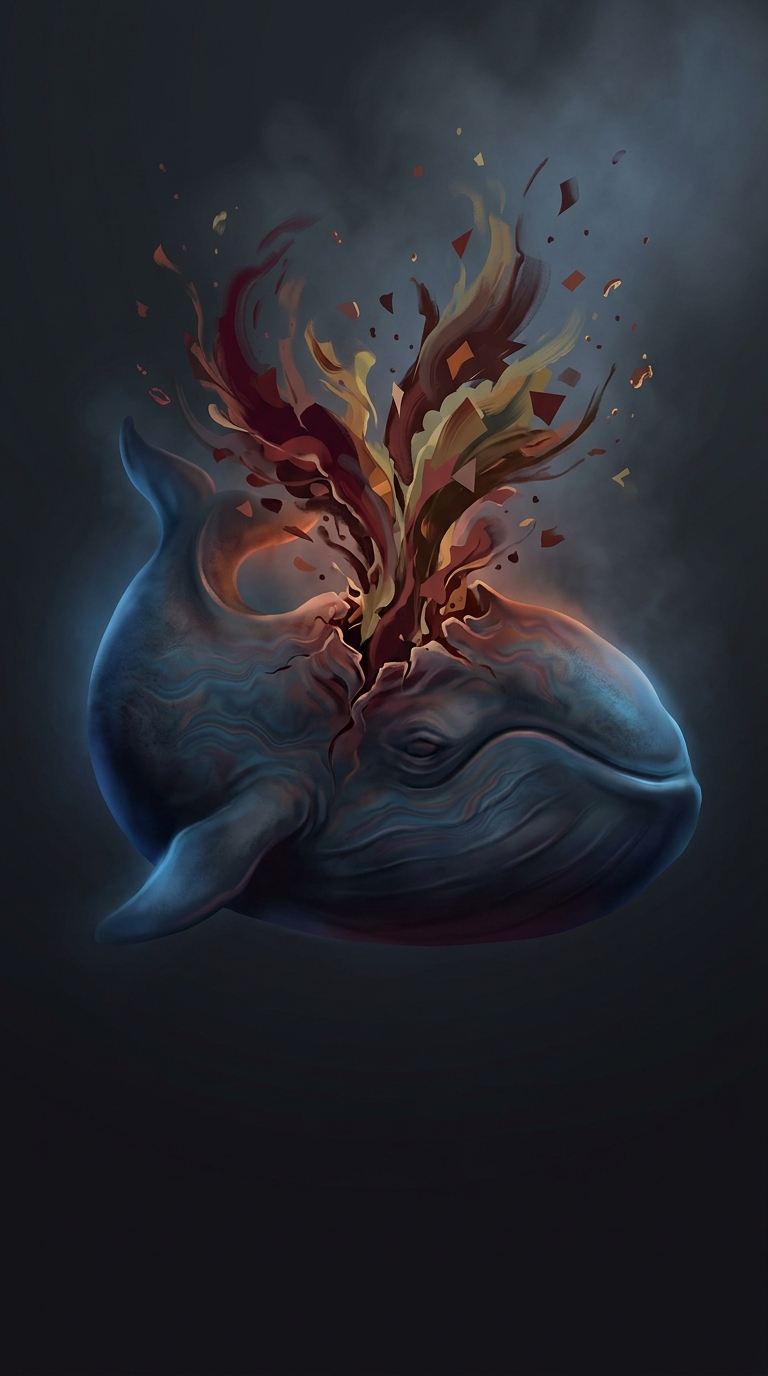
A stranded whale becomes a sealed-looking container, but not a perfectly sealed one. After death, bacteria break down tissues inside the body and release gases, including methane and hydrogen sulfide. The whale’s thick skin and blubber can slow those gases from escaping, so pressure builds within the body cavity and surrounding tissues.
The pressure is uneven. Gas may find a route out through the mouth, anus, a wound, or a weak point in the skin. If it cannot escape quickly enough, stretched tissue can tear. That rupture may happen suddenly and forcefully, but it is not the same as a bomb-like detonation: there is no explosive charge, just pressurized gas and weakened tissue giving way.
Why the outcome varies
A carcass does not follow a reliable countdown. Its condition, the extent of decomposition, existing openings, and the way it lies can all affect whether gas accumulates or leaks away. A whale that looks intact may already be venting through a small opening; another may be swollen without rupturing. The gases themselves can also be hazardous, particularly in enclosed or poorly ventilated spaces, but their presence does not mean a carcass is certain to burst.
This uncertainty is why a bloated carcass is not something to approach or handle casually. A sudden tear can spray biological material, and disturbing the body may release trapped gas. The practical lesson is less dramatic than the familiar beachside explosion story: swelling signals pressure and decay, not a guaranteed blast. In the famous Oregon cleanup, the bang came from dynamite used by the crew—not from the whale.