Why oil and vinegar separate
Oil and vinegar do not mix because their molecules interact differently with water. Vinegar is mostly water, whose molecules are electrically uneven and attract one another. Oil molecules are largely nonpolar, meaning their electrical charge is spread more evenly. Water molecules favor other water molecules, so oil gathers into droplets rather than dissolving throughout the vinegar.
What shaking changes
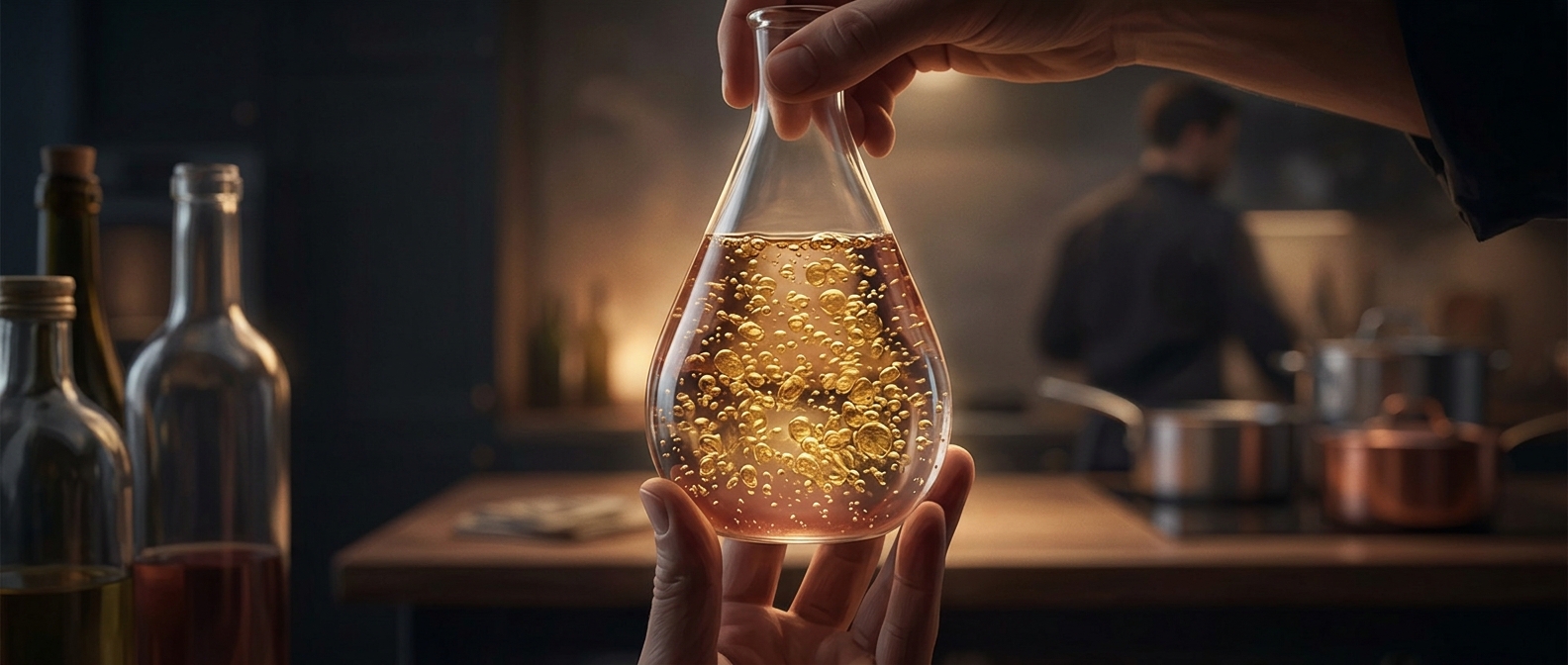
Shaking supplies energy that breaks the oil into many small droplets and scatters them through the vinegar. The result looks uniform, but it is a temporary suspension, not a new liquid in which oil and water have become one. Once the motion stops, droplets bump into one another and merge. Larger droplets rise, and the dressing separates again.
How an emulsifier buys time
Mustard and egg yolk contain emulsifying molecules: each has a water-friendly part and an oil-friendly part. These molecules gather at the boundary around oil droplets, with one end facing the oil and the other facing the surrounding vinegar. That coating makes droplets less likely to merge when they collide, keeping the dressing mixed longer.
An emulsifier does not make separation impossible; it slows the process. That is why a vinaigrette can stay creamy long enough to dress a salad, yet still need another shake after sitting. The visible split is the original liquids reasserting themselves as their tiny droplets gradually join back together.