Why Heavy-Water Ice Can Sink
Ordinary ice floats because freezing rearranges water molecules into an open crystal lattice. That structure takes up more space than the same mass of liquid water, making ice less dense. Heavy water follows the same basic pattern—but its molecules start out heavier.
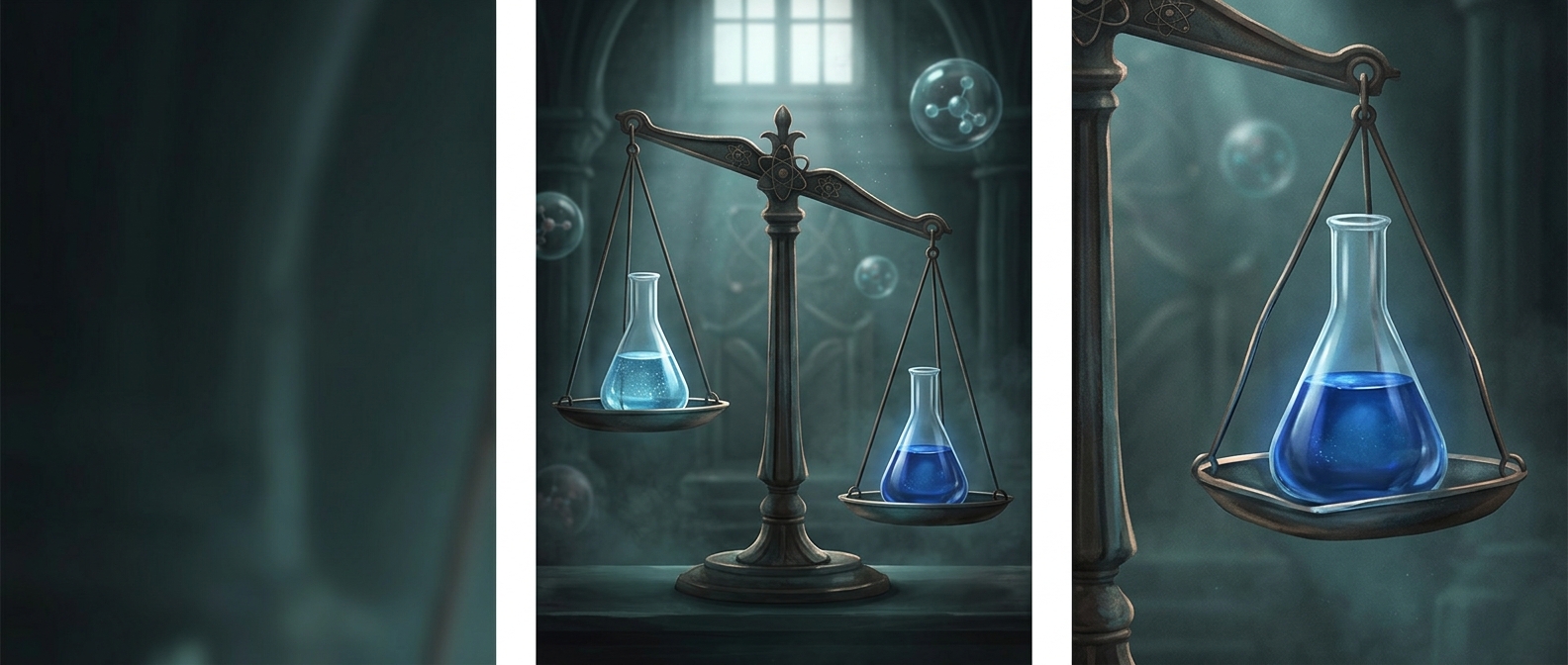
In heavy water, the hydrogen atoms are replaced by deuterium, a form of hydrogen with an extra neutron in its nucleus. The added mass makes heavy water denser than ordinary water. Although heavy-water ice also has an expanded crystal structure, its molecules are still heavy enough that the ice can be denser than ordinary liquid water. Put a piece in an ordinary-water bath, and it can sink.
Density, Not a Reversal of Freezing
The result depends on comparing two different substances: heavy-water ice and ordinary liquid water. Ice does not automatically float just because it is solid; it floats only when it is less dense than the liquid around it. Heavy-water ice is denser than ordinary water, so the usual buoyant push is not enough to keep it at the surface.
Heavy water also freezes at a higher temperature than ordinary water. That difference reflects how replacing hydrogen with deuterium changes molecular behavior, but it does not explain the sinking by itself. The decisive factor is the density comparison: the same crystal structure that makes ordinary ice buoyant cannot offset the extra mass in heavy-water molecules when they are placed in ordinary water.
The familiar image of ice bobbing on a drink is therefore not a universal property of frozen water. Change the water’s isotopes, and a piece of ice can settle to the bottom instead.