How a Gas Turns Electricity Into Light
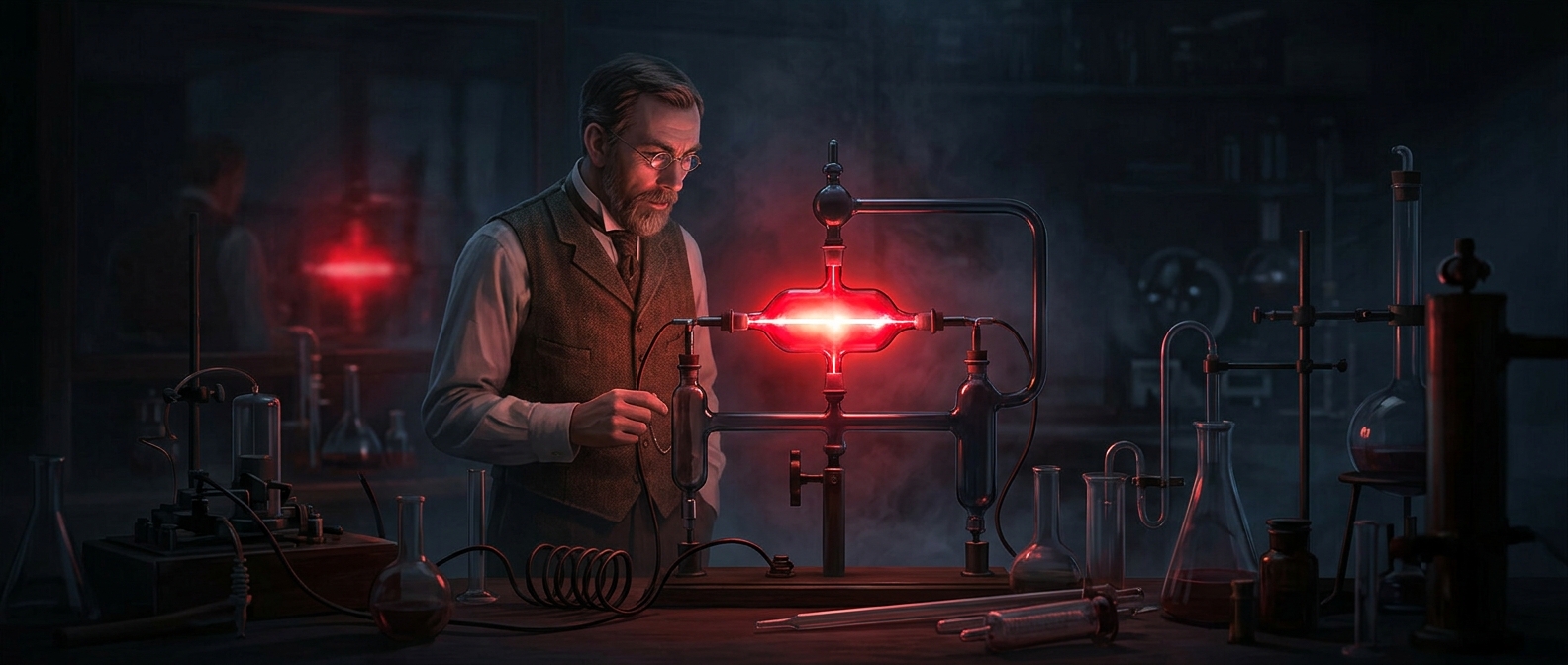
Inside a discharge tube, an electric current sends fast-moving electrons through the gas. When one collides with a neon atom, it can transfer energy to the atom’s electrons, pushing them into a higher-energy state. That state is temporary: as the atom settles back down, it releases the extra energy as light.
The light’s color depends on the energy changes available inside that particular kind of atom. Neon releases much of its visible light in red-orange wavelengths, producing the familiar crimson glow. Other gases have different sets of energy changes and therefore emit different colors.
Reading an Element’s Light
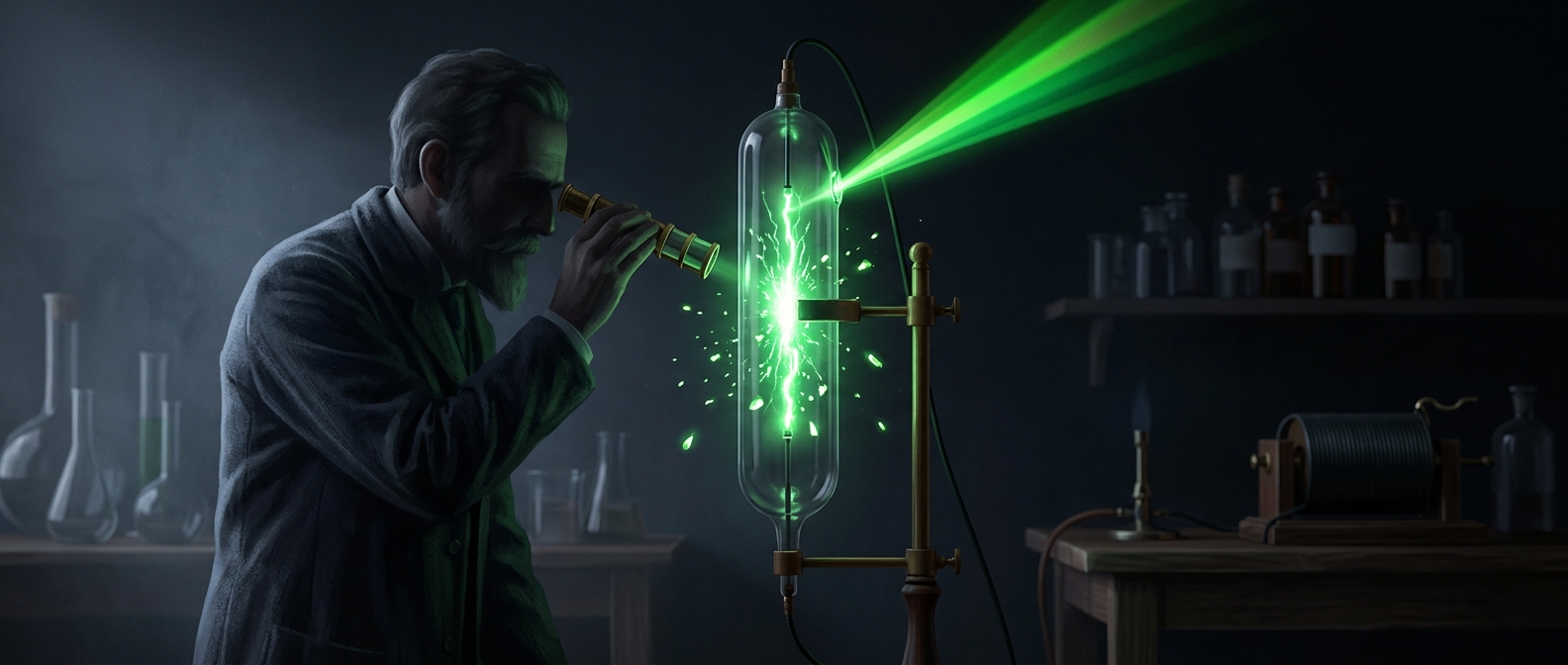
A prism or spectroscope can spread a gas’s light into its component wavelengths. Instead of an unbroken rainbow, the observer sees a pattern of bright lines. Because each element has its own pattern, the lines can identify a gas even when it is sealed in a tube or mixed with other substances.
That made the glow more than a striking visual effect: it was evidence. A gas that had been difficult to recognize by sight could announce its identity through the light emitted by its atoms. Neon’s red glow was a visible signature of the element’s internal structure.