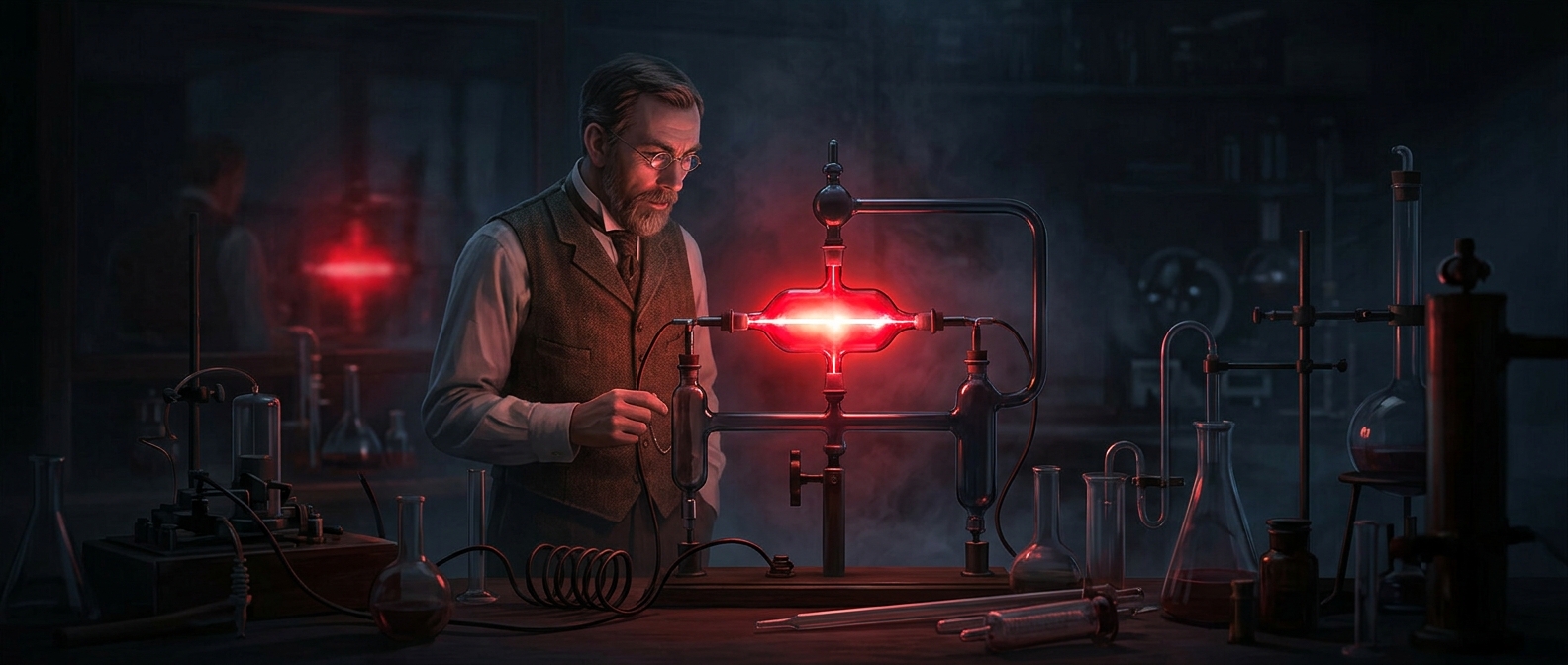
Why neon has a signature glow
Inside a glass sign tube, electrodes send an electric current through gas at low pressure. The current’s electrons strike gas atoms and transfer energy to them. When the atoms release that energy, they emit light at particular wavelengths—the wavelengths our eyes perceive as color.
Neon’s emitted light falls mainly in the red-orange part of the visible spectrum. Changing the tube’s shape or the current can alter the sign’s appearance, but it does not give neon atoms a wholly different set of colors to emit. The gas itself sets the basic palette.
How sign makers get other colors
For other hues, makers can use different gases or add a coating called a phosphor to the inside of the glass. Some gases emit ultraviolet light, which people cannot see; phosphors absorb that energy and release visible light instead. The coating’s composition determines the resulting color.
That makes the familiar phrase “neon sign” broader than its literal meaning. A sign may use neon for its warm glow, another gas for a different color, or a phosphor to transform the light. The bright tube can look like one simple object, but its color is a clue to what is happening inside it.