How a lichen survives a dry spell
A lichen’s fungal body does more than hold its partners together. It forms a layered structure that can shade the photosynthetic cells, slow water loss, and catch moisture and minerals from rain, mist, and dust. Unlike a plant, a lichen has no roots drawing water from soil, so it depends on what reaches its surface.
When conditions dry out, the lichen can lose much of its water and its activity slows dramatically. Once moisture returns, the photosynthetic partner can resume making sugars. This ability to endure repeated drying helps lichens occupy bare rock, tree bark, and other places where plants may have difficulty gaining a foothold.
A partnership with different roles
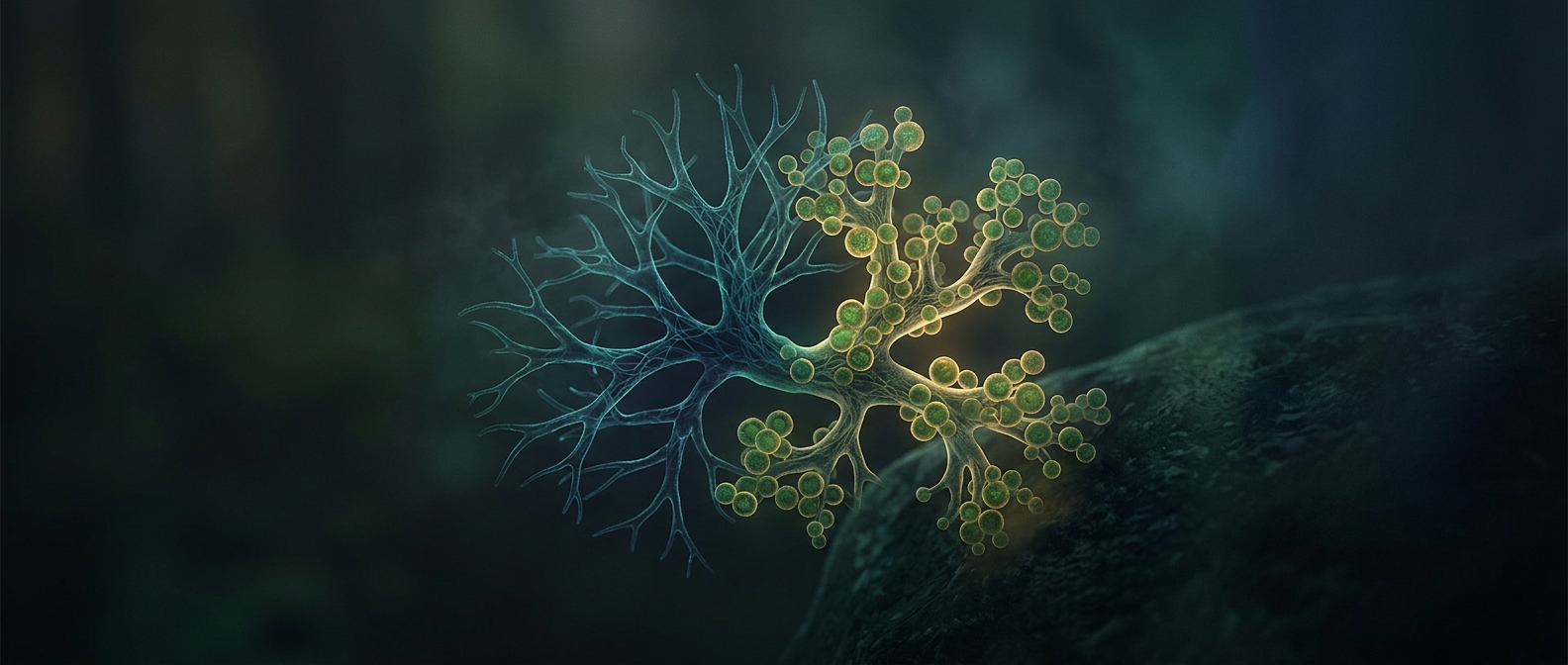
The fungus supplies the lichen’s shape and much of its protection; the algae or cyanobacteria capture energy from sunlight. In some lichens, cyanobacteria also fix nitrogen, converting it into forms that can contribute to the ecosystem’s nutrient supply. The exact arrangement varies: a lichen is not always just one fungus paired with one photosynthetic partner.
The partners’ dependence is also not perfectly equal. The fungus gains food, while the photosynthetic cells live within a structure that can protect them from harsh exposure. Researchers therefore describe lichens as stable partnerships, while recognizing that the balance of benefits can differ among species.
Why the partnership matters on bare surfaces
Lichens grow slowly, but over time they can help weather rock and add organic material as parts of the lichen break down. That can contribute to the gradual formation of conditions in which other life can take hold. A patch on stone is thus not simply surviving an empty landscape: it can help begin changing that landscape.