How a Mosquito Becomes a Bot Fly’s Delivery Route
The human bot fly’s larva needs a living host, but the adult fly does not have to land on that host itself. Instead, it can attach its eggs to a mosquito or another blood-feeding insect. When the carrier lands on warm skin to feed, the warmth helps trigger the eggs to hatch. The tiny larvae then transfer to the skin and enter, often through the small opening made by the bite.
This is a form of phoresy: one animal uses another as transportation. The mosquito is not infected with bot-fly larvae in the way a mosquito can carry a disease-causing parasite. It is a temporary courier, carrying eggs until a suitable host is close enough.
A Larva That Must Keep Breathing
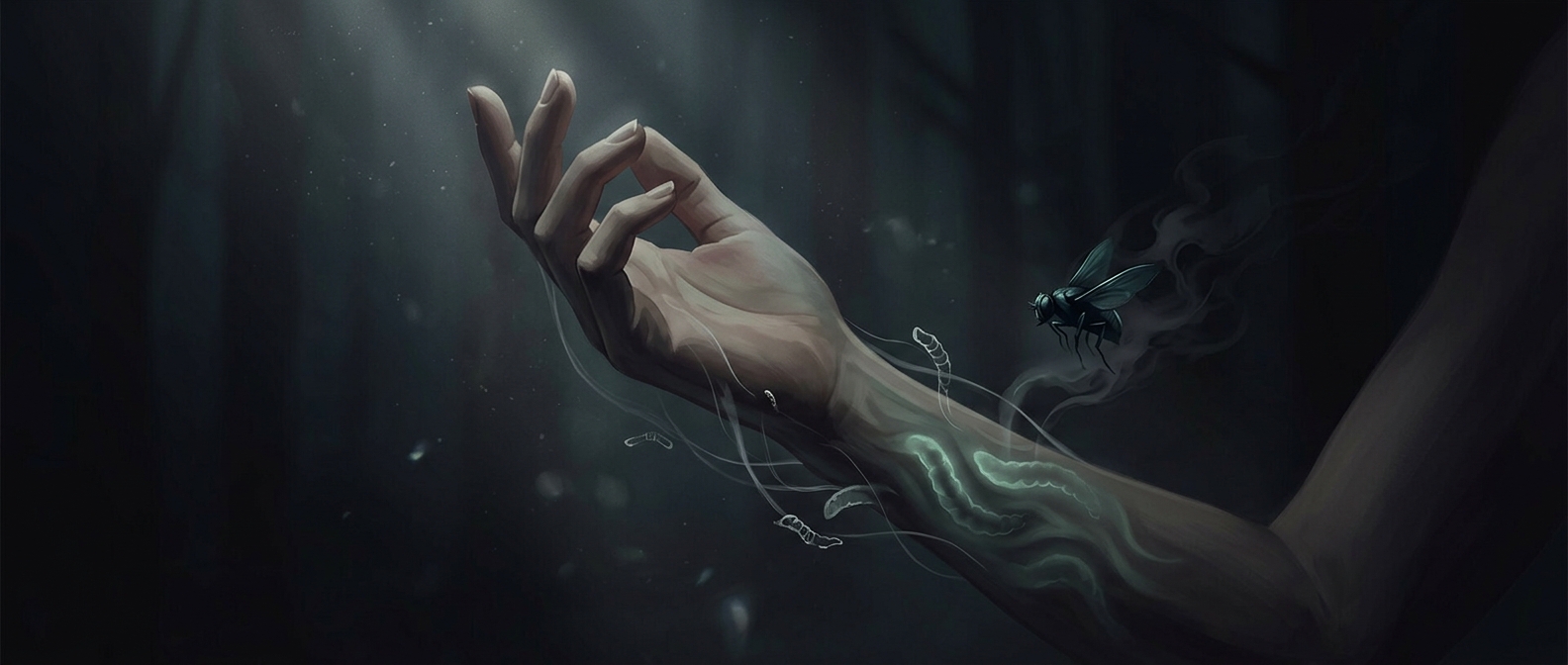
Once beneath the skin, a bot-fly larva grows in a small pocket of tissue. It leaves a tiny opening at the surface, which serves as a breathing hole. The lump around it can become sore or itchy, and fluid may seep from the opening. That visible pore is not an accident: the larva needs access to air while it develops.
After completing its growth, the larva leaves the skin and drops to the ground, where it continues its life cycle as a pupa before emerging as an adult fly. The host is therefore a temporary nursery, not the parasite’s permanent home.
The unsettling part is how little the mosquito has to do: one brief visit can bring an egg close enough to warm skin for the next stage of the bot fly’s life to begin.