How a sperm cell’s small design supports fertilization
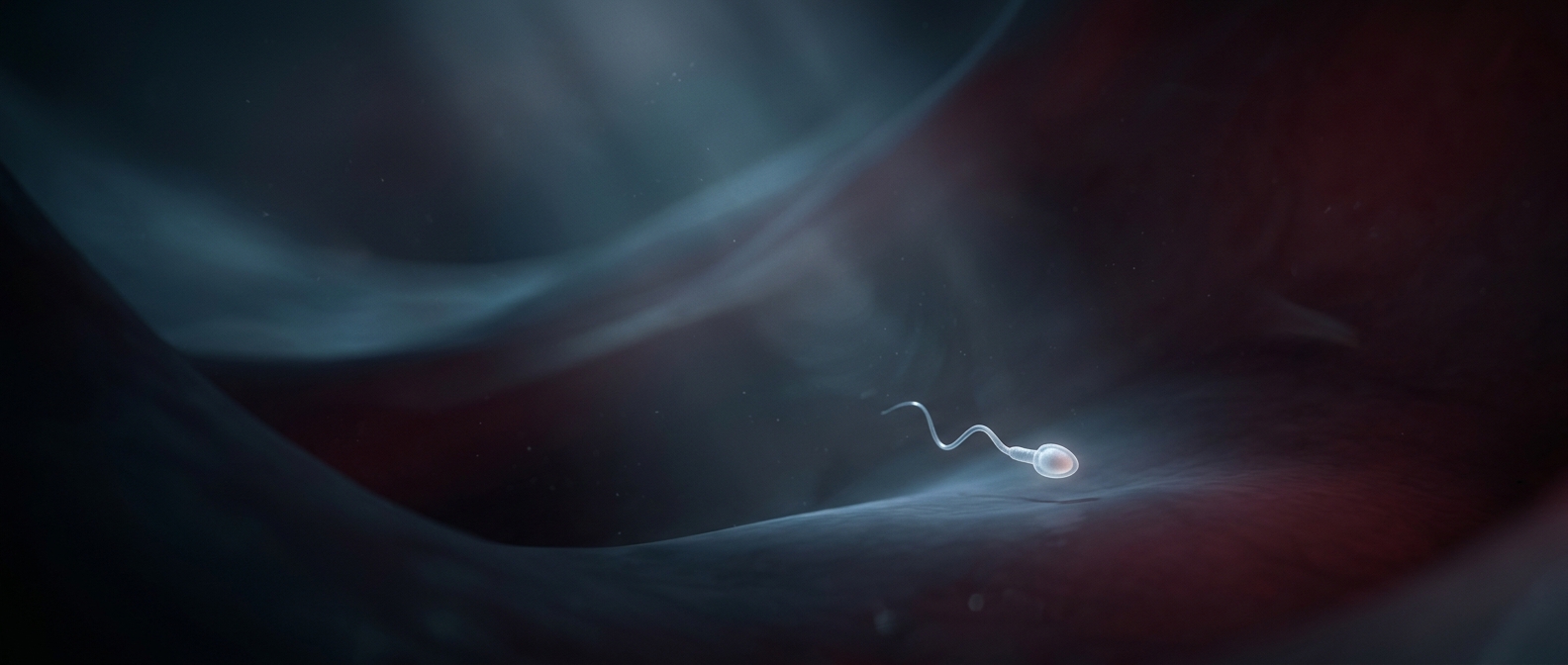
A sperm cell is not simply a tiny version of a typical body cell. Its head contains a tightly packaged set of chromosomes—one half of the genetic material needed to form an embryo. At the tip is the acrosome, a cap filled with molecules that help the sperm interact with and pass through the egg’s outer coverings.
Behind the head, a short midpiece contains mitochondria, which help supply energy. The long tail, or flagellum, bends in waves to move the cell through fluid. Energy also comes from chemical processes elsewhere in the sperm, so the tail is not powered by mitochondria alone.
Reaching the egg is only part of the task
Movement gets sperm through the reproductive tract, but successful fertilization also depends on changes in the sperm’s surface and motion. In the female reproductive tract, sperm undergo capacitation: a set of changes that makes them better able to move vigorously and interact with an egg. Near the egg, stronger, wider tail beats can help a sperm work through the surrounding layers.
When a sperm fuses with the egg, the egg’s outer membrane changes in ways that help prevent additional sperm from entering. The sperm’s compact genetic package can then join the egg’s genetic material. Its streamlined layout therefore serves a specific sequence: move, reach the egg, and deliver one set of chromosomes—not do every job a larger cell must perform.