How a full bladder can lose its force
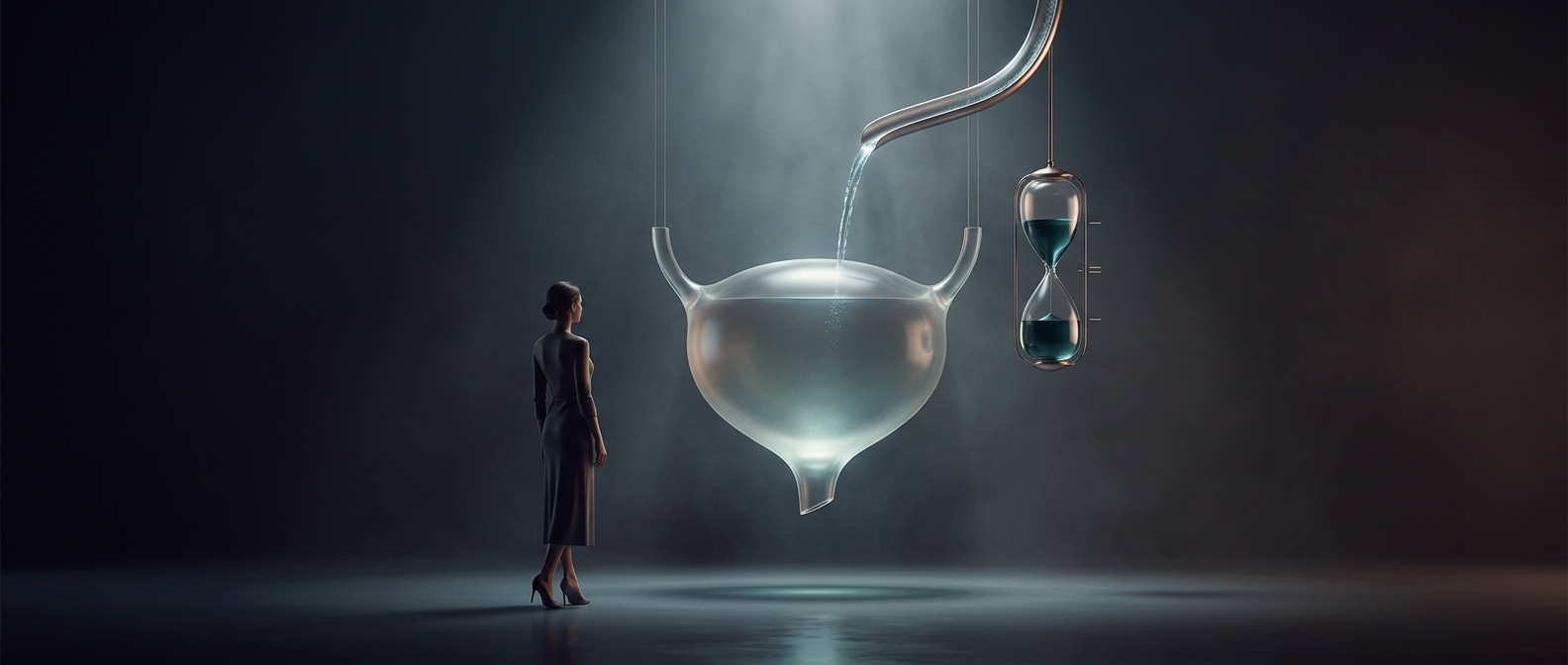
The bladder is a stretchy storage pouch, but it is not meant to remain overfilled. As urine accumulates, the bladder wall expands and nerves send signals that create the urge to urinate. When it is time to empty, the bladder’s muscle—called the detrusor—contracts while the outlet relaxes, pushing urine out.
If the bladder is repeatedly kept very full for prolonged periods, its muscle fibers can be stretched beyond their usual working range. A weakened or poorly coordinated contraction may leave urine behind. This is different from occasionally postponing a bathroom trip: the concern is a repeated pattern of prolonged overfilling, not a single delay.
Why incomplete emptying matters
Urine left in the bladder can contribute to urinary retention, meaning the bladder does not empty adequately. Retention may cause a lingering sense of fullness, weak flow, frequent small trips to the bathroom, or leakage. Because urine is not being cleared normally, it can also raise the risk of urinary tract problems, including infection. The underlying cause is not always holding urine; other bladder, nerve, medication, or outlet problems can also interfere with emptying.
Regularly ignoring the urge is therefore not a useful way to “train” the bladder. If difficulty starting, weak flow, or a persistent feeling of not emptying develops, medical advice can help identify the cause before the problem becomes more disruptive.