The airway has a conveyor belt
Mucus does more than coat the throat. In the nose and larger airways, sticky mucus catches dust, microbes and other particles. Tiny hairlike structures called cilia beat in coordinated waves, moving the mucus upward toward the throat. This steady cleanup system is called mucociliary clearance; coughing and sneezing provide faster backup when irritation builds.
Once the mucus reaches the throat, swallowing is usually the quiet next step. It carries captured material out of the respiratory tract and into the digestive system, rather than leaving it to accumulate in the airways.
A second immune checkpoint
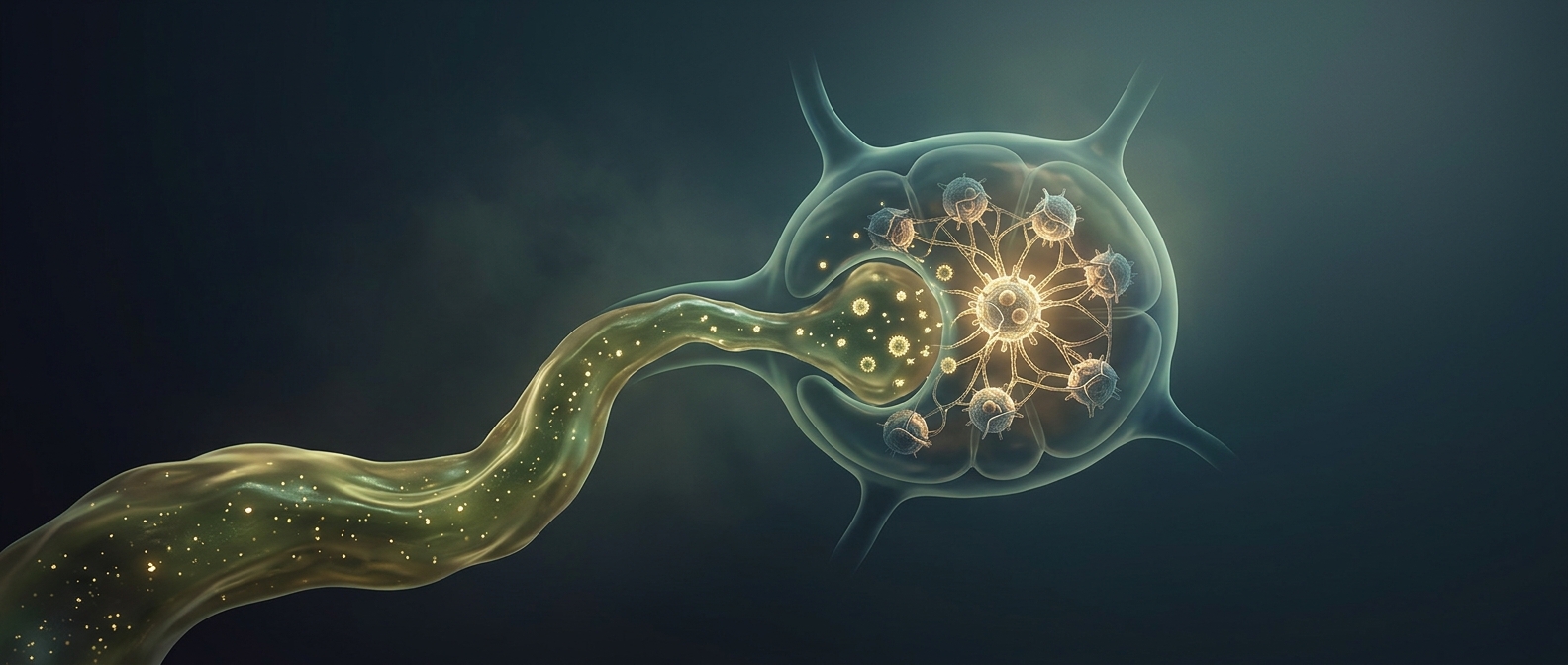
The stomach and intestines do not simply pass everything along unnoticed. Digestion breaks many microbes and particles into smaller pieces, while immune cells in the gut encounter material from food and the environment. Some immune cells can sample fragments and relay information to other cells, helping the body distinguish what it has encountered.
That does not mean swallowed mucus acts like a vaccine or reliably strengthens immunity. The gut’s response depends on what the material is and how the immune system interprets it. Often, the important effect is ordinary disposal; exposure to fragments is one more part of the immune system’s ongoing work of monitoring the body’s surroundings.
Cleanup, not a cure
Swallowing mucus is a normal consequence of airway clearance, and most of it goes down without notice. The useful twist is that the body’s route for removing trapped material also brings some of its breakdown products past immune tissue in the gut—linking two defenses without requiring a deliberate action.