The Bug Behind Deep Blue’s Unreadable Move
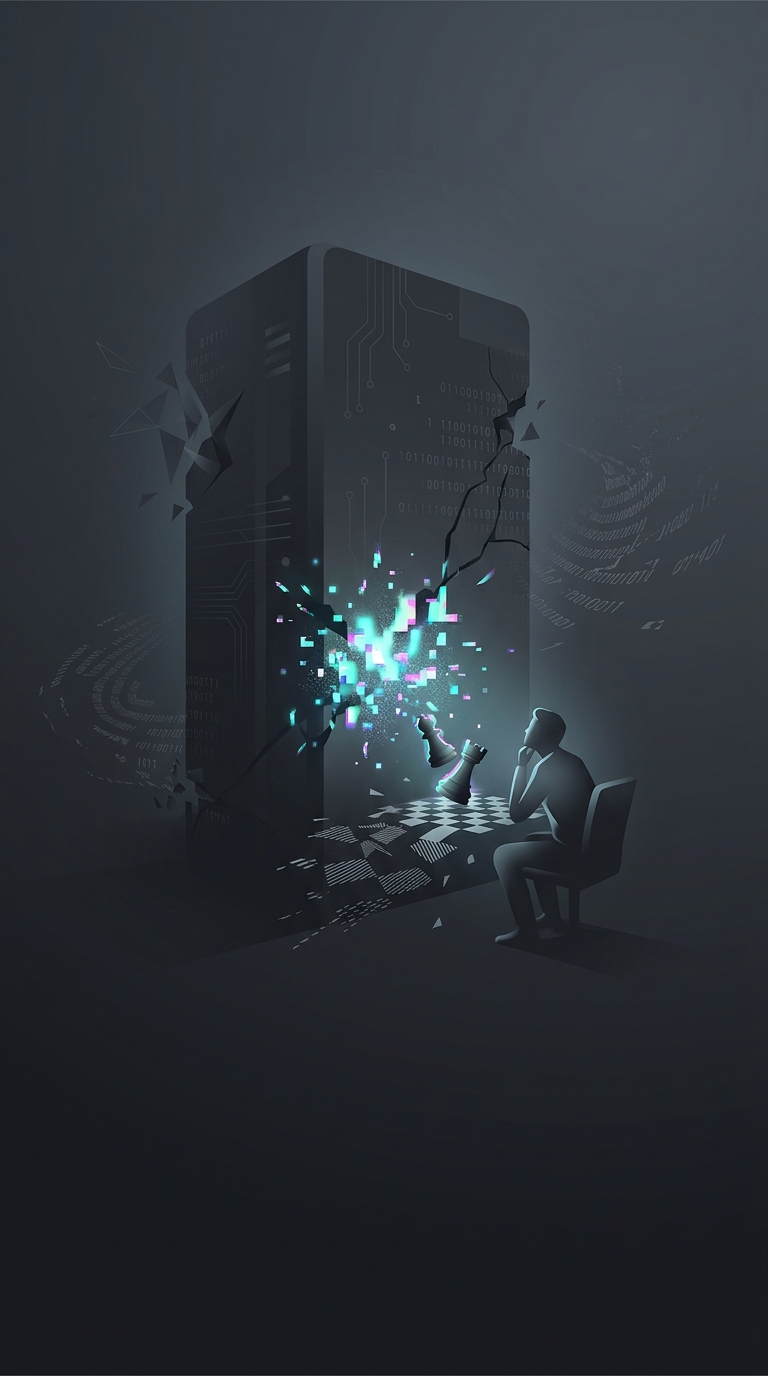
Deep Blue did not choose its unexpected move because it had devised a psychological trick. The move came from a software bug: when the chess program encountered a particular failure in its search process, it could fall back on a legal move chosen without its usual analysis. To Kasparov, the move looked deliberate—and that gap between what the machine did and what he thought it meant became part of the match.
Why a Random Move Could Look Profound
Deep Blue evaluated chess by searching ahead through possible sequences of moves, then judging the positions it found. But chess has too many possibilities to examine every continuation. The machine therefore had to search selectively and rely on rules and evaluations to decide which lines deserved attention.
A bug in that process could leave the system unable to produce its normal answer. Its fallback was not a hidden plan; it was a way to keep the match moving by returning a legal move. Because the choice was not guided by the engine’s ordinary calculation, it could be oddly hard for a human to interpret.
That mattered against Kasparov, who was trying to infer not just the board position but the machine’s reasoning. A move that seemed inexplicable could suggest that Deep Blue had seen something he had missed—or that its team had intervened. The same move could therefore unsettle him even though it did not reflect deeper chess understanding.
A Glitch With Human Consequences
The episode shows how people respond to a system whose decisions are difficult to explain. Kasparov had to consider the possibility that an apparently strange move concealed a powerful continuation, and that uncertainty could affect his judgment at the board.
The bug did not make Deep Blue a better strategist. It did, however, expose a distinctive weakness of playing against an opaque machine: when its reasoning is invisible, even an accidental output can acquire the appearance of intent.