Why a giant airplane was built from wood
The H-4 Hercules grew out of a wartime problem: the United States needed a way to move troops and bulky supplies across the Atlantic, while aluminum and other metals were in high demand for weapons and conventional aircraft. Industrialist Howard Hughes and shipbuilder Henry Kaiser proposed an enormous flying transport that would use less strategic metal. The project was authorized in 1942, but its scale and changing plans made it far slower to complete than the wartime emergency demanded.
Birch, shaped into an airframe
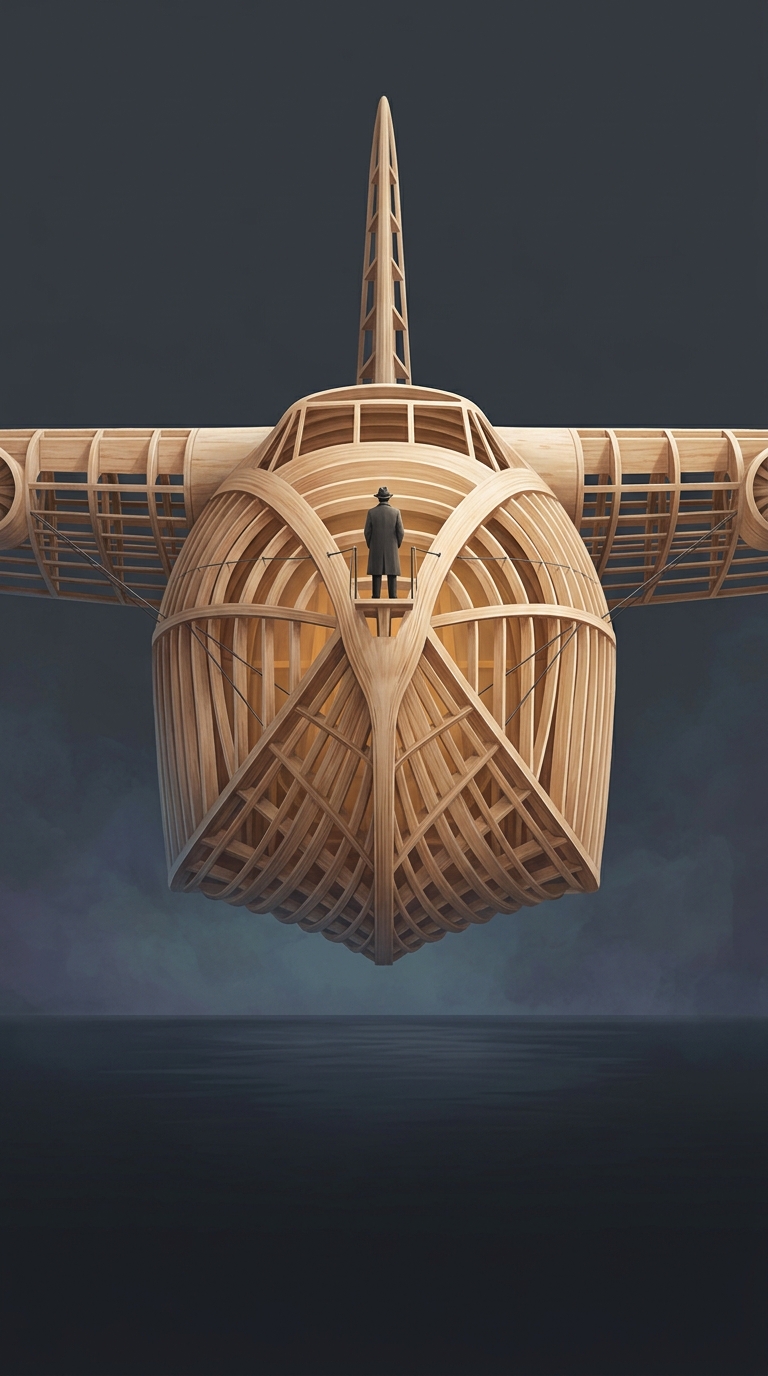
The Hercules was not made entirely of wood. Its huge airframe relied chiefly on laminated birch, while its engines and other components were metal. Birch veneers—thin layers of wood—were bonded with resin into strong, shaped parts. This approach, known as Duramold, let builders form large curved structures without relying on the conventional all-metal construction that wartime shortages made difficult.
Wood brought its own engineering demands. The structure had to be strong enough to carry enormous weight, yet light enough to fly; joints, adhesive, and moisture control mattered as much as the wood itself. The result was an aircraft with a wingspan of about 320 feet, built through a manufacturing process closer to assembling large molded components than simply carving a wooden plane.
A wartime solution that arrived afterward
The war ended in 1945, before the aircraft was finished. By the time the Hercules was ready, the urgent transport need that had justified it had passed. Hughes nevertheless took it on a short test flight in 1947, demonstrating that the immense wooden aircraft could leave the water and fly.
The press’s “Spruce Goose” nickname was misleading as well as derisive: the airframe was primarily birch, not spruce. The name stuck, but the more telling legacy is the engineering gamble behind it—an aircraft designed around a wartime material shortage that became flyable only after that shortage no longer defined the mission.