Why the Big Wheel’s pedals are up front
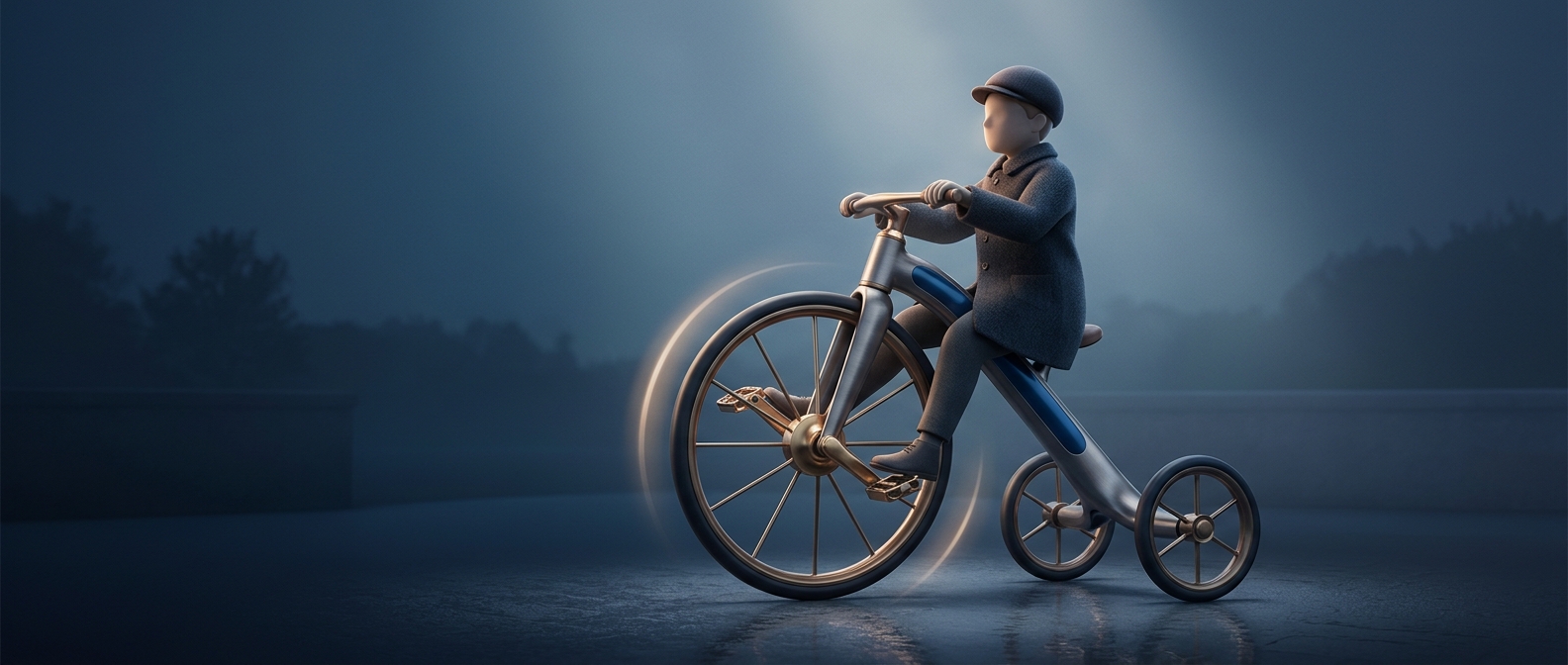
A Big Wheel tricycle puts the rider’s feet on cranks attached to the front wheel. Push a pedal down, and the crank turns that wheel directly. There is no chain carrying power to the back, as on a conventional bicycle. This simple arrangement makes the front wheel both the drive wheel and the steering wheel.
One wheel handles two jobs
On a bicycle, the front wheel steers while the rear wheel usually supplies propulsion. A Big Wheel combines those roles. When the rider pedals, the front tire pushes against the ground and moves the toy forward; when the handlebars turn, that same tire changes the direction of travel.
The layout keeps the drivetrain short and exposed: pedals, crank, and wheel are all in one place. It also means the rider’s legs help rotate the part being steered. During a turn, the wheel’s direction and the force from pedaling can interact, contributing to the wobbly, sometimes skidding feel that makes the toy behave differently from a bicycle.
A tradeoff built into the ride
Because the front wheel has to pull and steer at once, the rider cannot separate those actions as easily as on a bike. The rear wheels mainly support the back of the tricycle, while the broad, low seat keeps the rider close to the ground. That combination favors a playful, low-speed ride over bicycle-like efficiency: every pedal stroke is also a direct input to the wheel that decides where the tricycle goes.