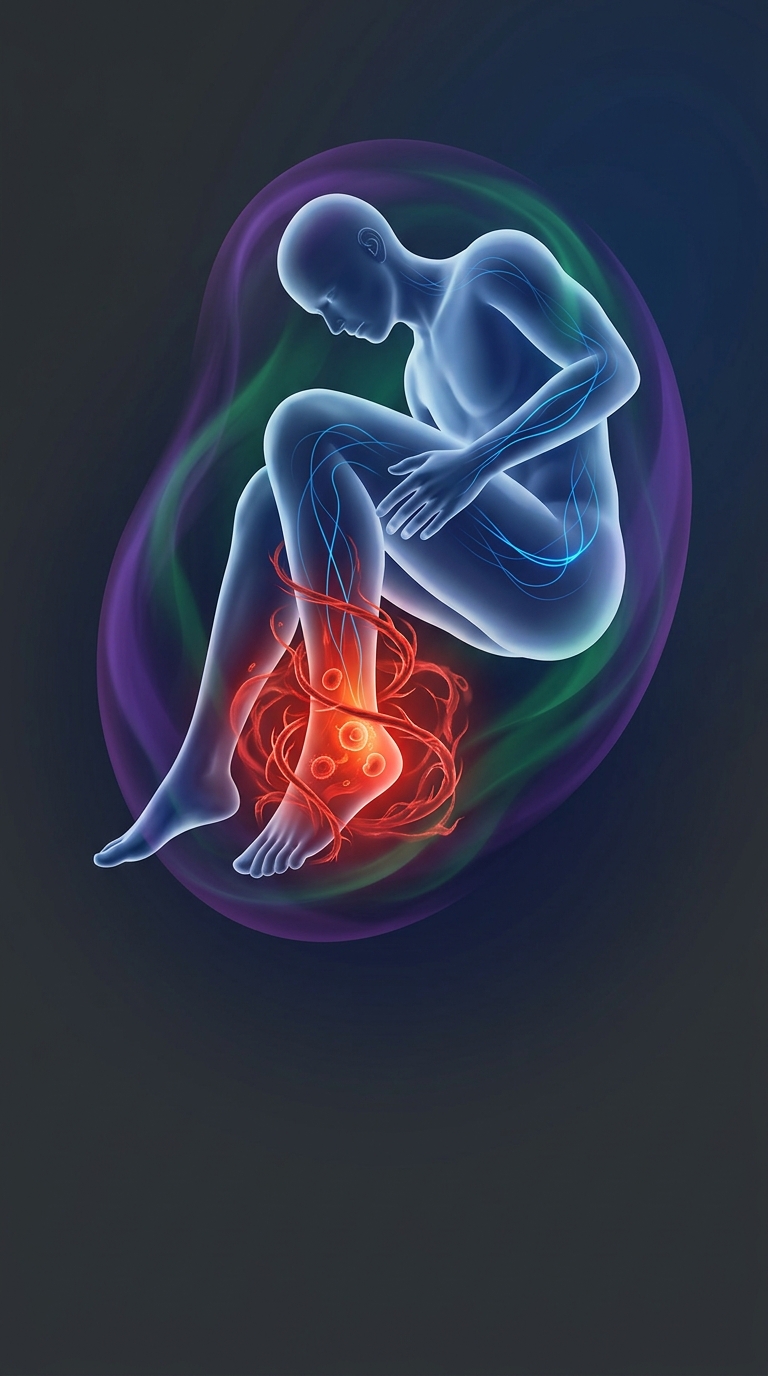
How an injury summons immune cells
The first task of inflammation is to turn a small injury into a local meeting point for the body’s defenses. Damaged cells and nearby immune cells release chemical messengers. Some, including histamine, act on the thin lining of nearby blood vessels; others help guide immune cells toward the affected tissue.
The vessel lining becomes easier to cross, and immune cells slow down, attach to it, and move into the tissue. The extra fluid also carries proteins that help contain threats and support the cleanup of damaged material. In this way, inflammation is not just a visible reaction: it changes the neighborhood so defense and repair can happen where they are needed.
Why the area can hurt—and why the response must stop
Swelling can press on surrounding tissue, while inflammatory chemicals make nearby pain-sensing nerves more sensitive. That combination helps explain why an injured spot may be tender even when it is no longer being touched. The discomfort can also discourage movement that might worsen the damage.
Once the threat is controlled and debris is cleared, the signals should shift toward calming the response and repairing tissue. If inflammation stays active, the same useful tools—fluid, immune cells, and chemical messengers—can keep irritating or damaging the area. The flare is valuable because it concentrates help; its success depends on the body lowering the alarm when the work is done.